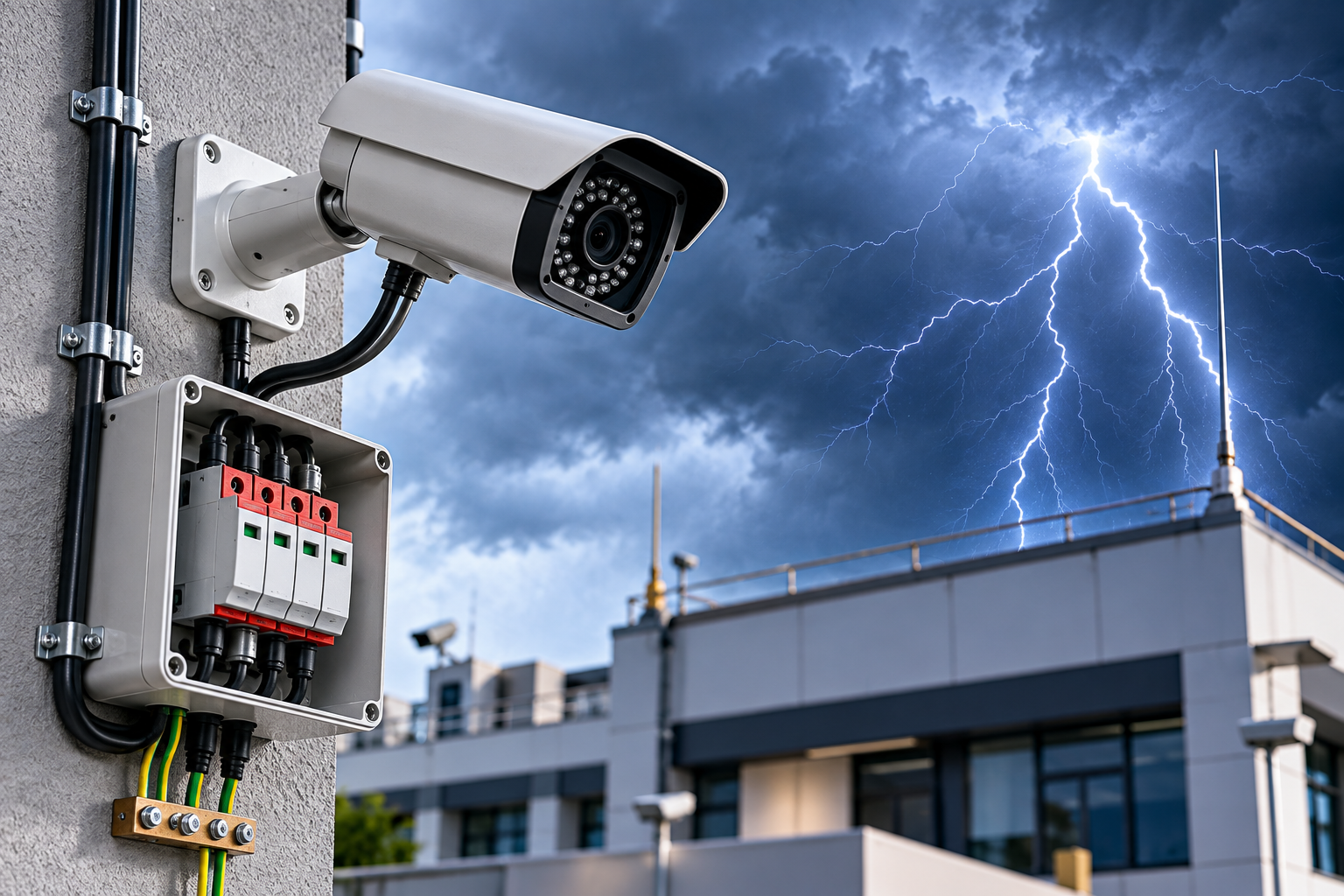
Why Is Your Building Still at Risk Even After Installing a Lightning Protection System?

Why Is Your Building Still at Risk Even After Installing a Lightning Protection System?

Published: September 14, 2026 | 8 Min Read

Why Is Your Building Still at Risk Even After Installing a Lightning Protection System?

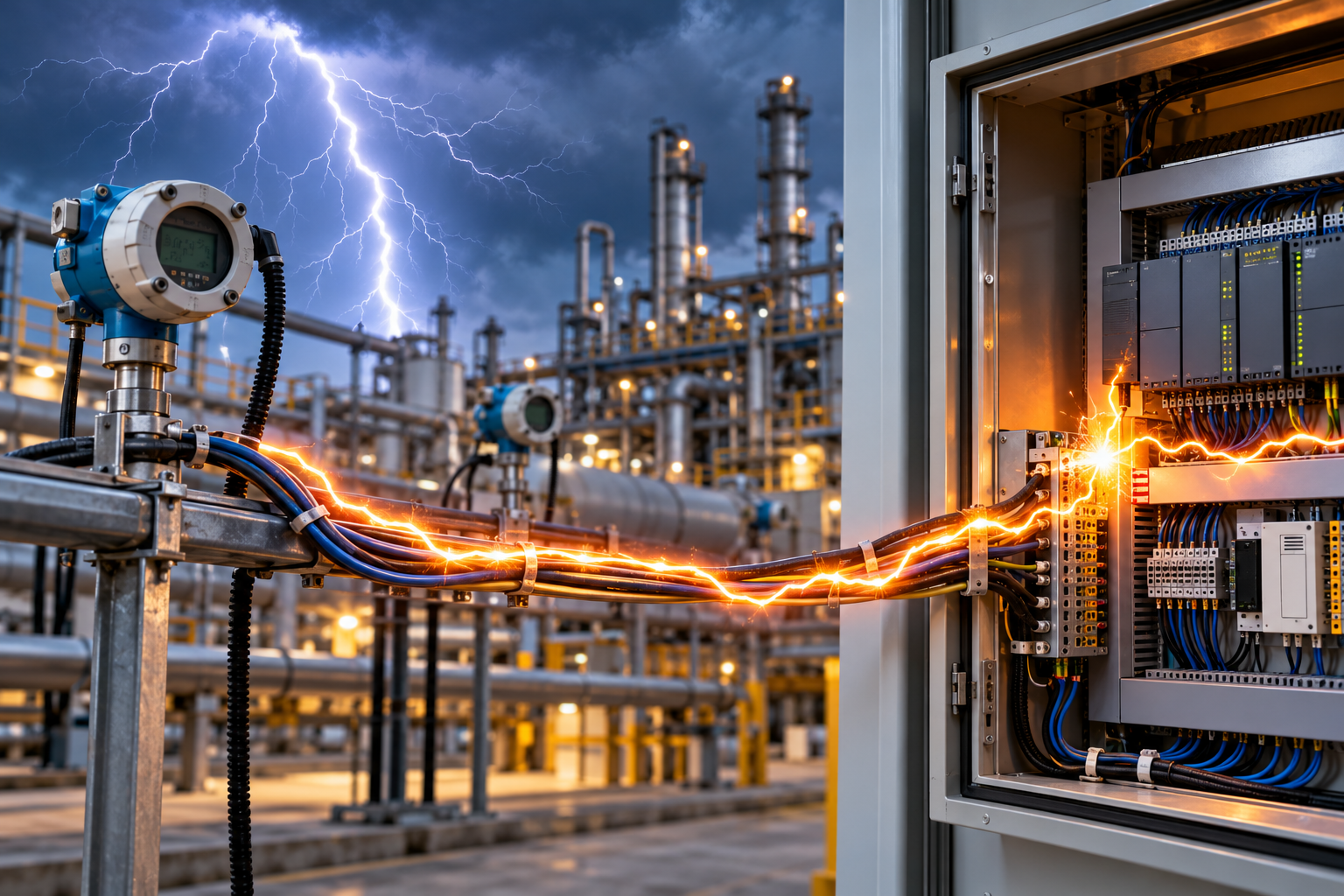
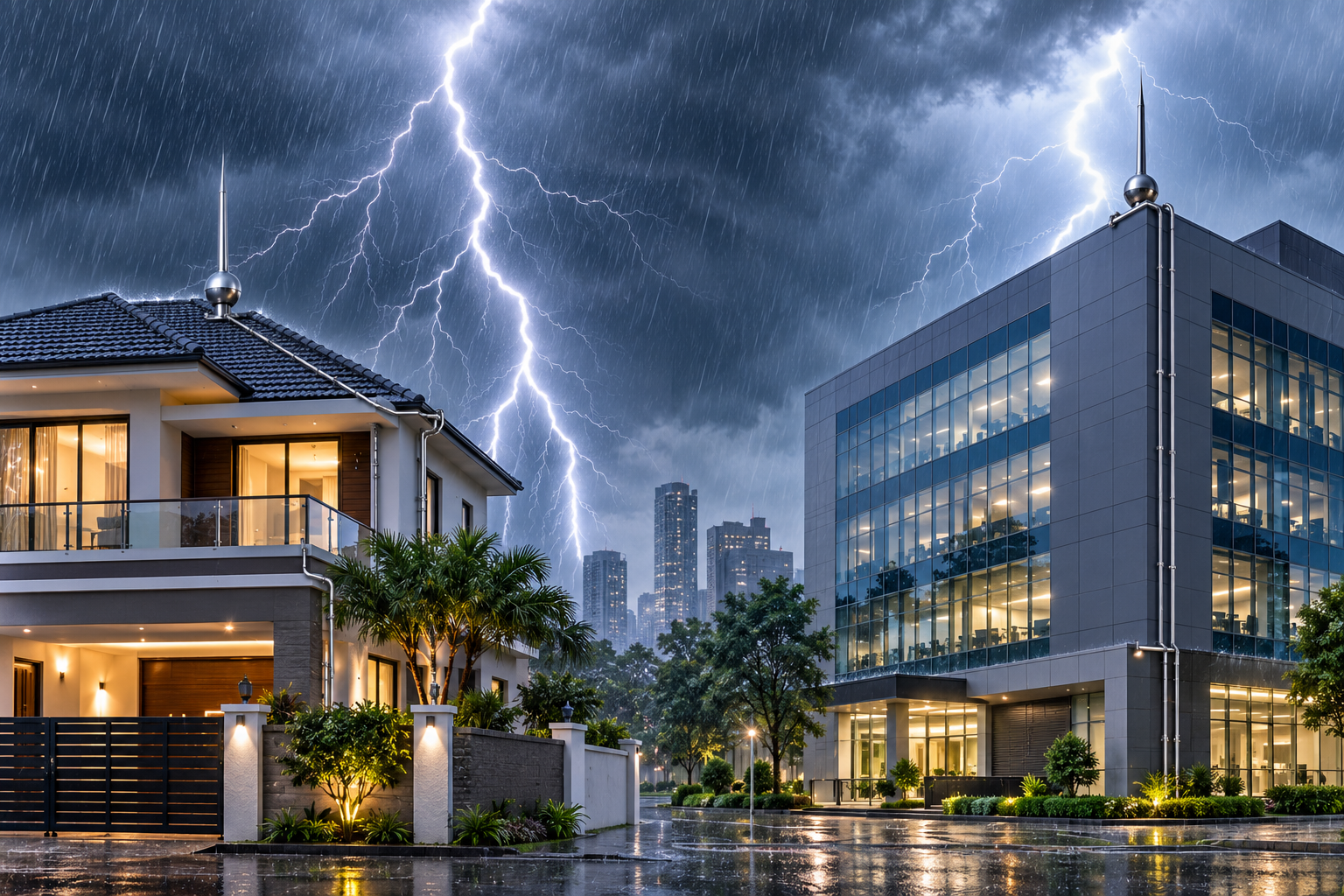
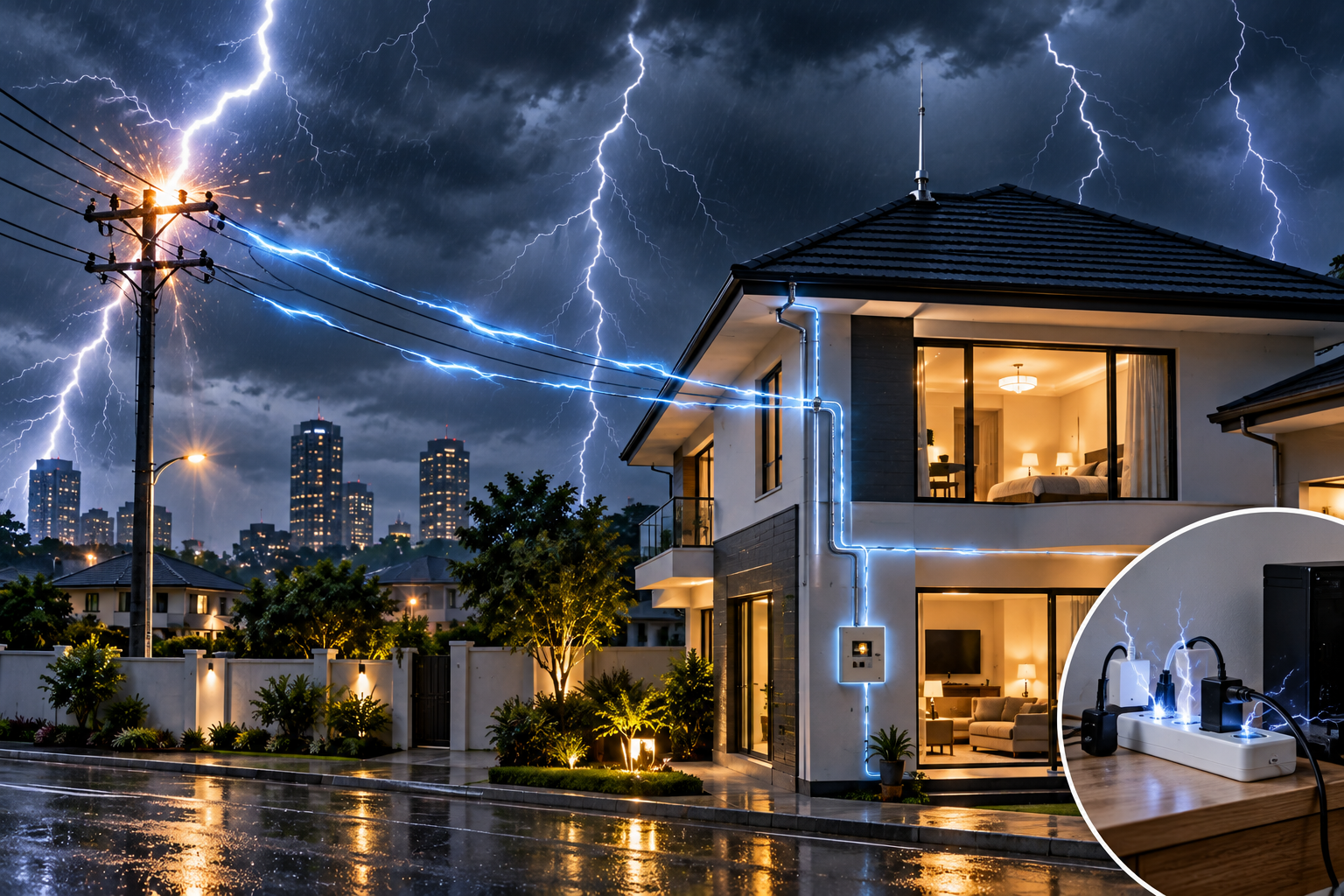
Modern building with lightning protection system during a thunderstorm

A lightning protection system is not just about installing a lightning arrester and leaving it there. For a protection system to continue functioning properly, the complete installation needs to be checked. Conductors, bonds, joints, earth electrodes and the overall installation condition all have a role to play. LES Ecotonik Systems recommends detailed testing and inspection of completed installations to verify that the system has been installed according to the correct specification and applicable requirements.

So, if your building already has a lightning protection system, the important question is not simply: “Is a lightning arrester installed?”

The better question is: “Is the complete protection system still in the right condition?”

What Does a Complete Lightning Protection System Involve?

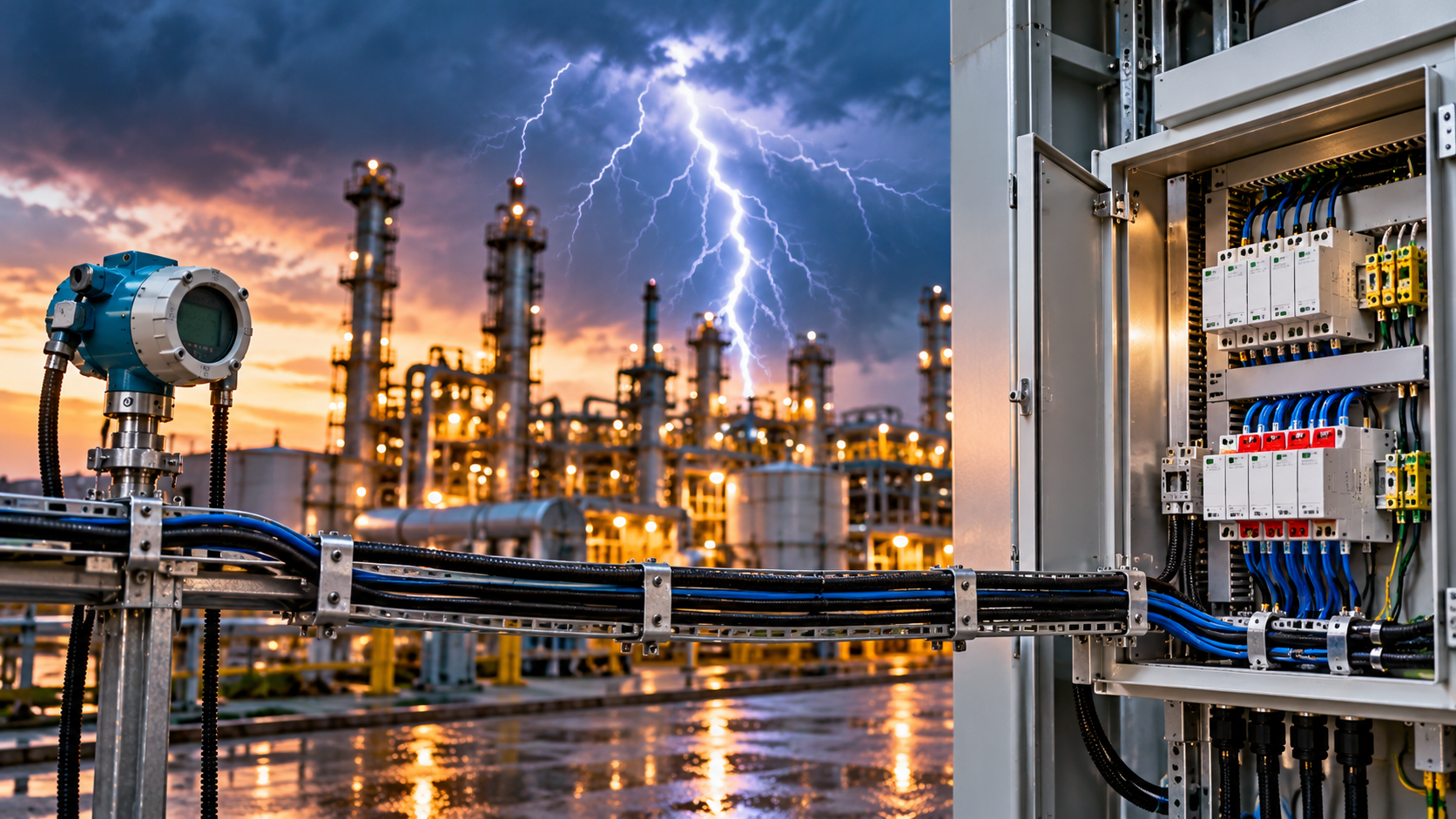
Complete lightning protection system with rooftop air terminals, conductors, earthing and surge protection

Lightning protection works as a system rather than as one isolated component. LES Ecotonik Systems provides solutions covering external lightning protection, surge protection, earthing and grounding systems, and bonding. The company also provides installation, testing, inspection and maintenance support for lightning protection systems.

This means checking only one component may not give a complete picture of the installation. The main areas that need attention include:

Protection Area What Needs Attention
Conductors Mechanical condition of the conductors
Bonds Condition of bonding connections
Joints Condition of joints and connections
Earth Electrodes Physical condition and installation
Earthing Correct design, installation and maintenance
Surge Protection Protection of electrical systems from sudden spikes and surges

A proper inspection brings these areas together instead of looking at the lightning arrester alone.

1. Check the Condition of the Conductors

The conductors form an important part of the lightning protection installation. During inspection, LES states that the mechanical condition of conductors should be checked and observations should be recorded.

This is important because simply having conductors installed does not tell you their current condition. A completed installation should therefore be inspected rather than assumed to remain unchanged indefinitely.

For an existing system, inspection can help identify whether maintenance is required and whether the installation continues to match the intended specification.

2. Inspect Bonds and Joints

The condition of bonds and joints is another part of the inspection process identified by LES. Connections within a lightning protection and earthing installation need to be checked as part of the overall system assessment.

LES specifically includes bonds and joints among the components that should be examined during completed-installation inspections.

This is why a visual check of only the lightning arrester is not enough. The complete installation should be considered.

3. Do Not Ignore the Earth Electrodes

The earth termination side is another important part of the system. LES states that the mechanical condition of earth electrodes should be checked during inspection.

Periodic inspections and tests help indicate what maintenance, if any, is needed. The earthing system also has a specific role within coordinated lightning and surge protection.

According to LES, the earthing system is responsible for safely dissipating lightning currents to the ground and plays an important role in the efficient operation of surge protection devices.

For this reason, lightning protection and earthing should not be considered completely separate activities.

You can explore the Earthing and Grounding Systems service page for more information about its earthing solutions.

4. Lightning Protection and Surge Protection Are Not the Same Thing

Another important point is the difference between external lightning protection and surge protection.

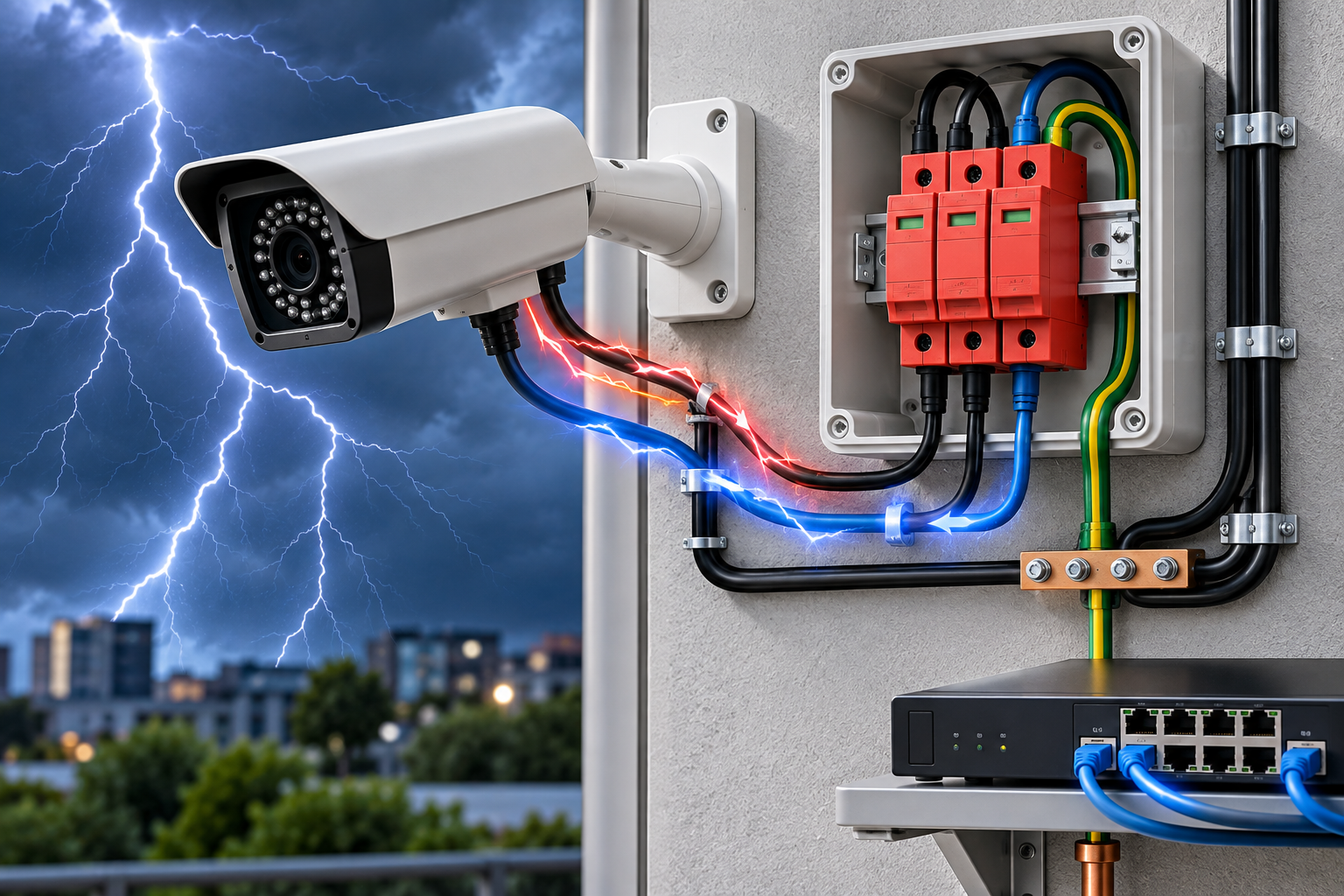
LES describes a Surge Protection Device (SPD) as a component of the electrical installation protection system. The device is connected in parallel to the circuit of the loads it protects.

When transient overvoltage occurs, the impedance of the SPD decreases so that surge current is driven through the SPD, bypassing the sensitive equipment.

This means a building’s protection strategy can involve different protection functions. External lightning protection addresses the lightning protection system, while surge protection is part of protecting electrical installations from sudden spikes and surges.

LES provides a complete range of power surge protection devices through its Surge Protective Devices offering.

5. Earthing Needs the Right Design and Installation

Earthing is not simply about putting an electrode into the ground. LES states that both HV and LV earth systems should be correctly designed and installed by qualified and experienced earthing specialists.

The company also provides support for designing, installing and maintaining earthing systems. This becomes particularly relevant when evaluating an existing lightning protection installation.

If the lightning protection system is being reviewed, the earthing arrangement should also be considered as part of the overall protection system.

For more information, visit the LES Earthing and Grounding Systems service page .

6. Installation Inspection Should Not Be Skipped

One of the clearest points on the LES website is that completed lightning protection installations should undergo testing and inspection.

LES’s engineering team undertakes detailed testing and inspection to verify that completed installations are in accordance with the correct specification and applicable requirements.

The inspection includes checking conductors, bonds, joints and earth electrodes, with observations recorded. This gives building owners and project teams a practical reason to review the condition of an existing installation instead of simply assuming that an older system is still functioning as intended.

7. Maintenance Is Part of the Protection System

Lightning protection should not be treated as a completely one-time activity. LES states that periodic inspections and tests indicate what maintenance, if any, is needed.

The company also highlights its commitment to helping customers keep lightning protection systems installed and maintained to the required standard, with installation services and continuous maintenance support.

That makes inspection and maintenance an important part of the overall protection process. A system that has been installed should also be assessed over time.

When Should an Existing Lightning Protection System Be Reviewed?

A review is especially useful when a project team needs to verify the current condition of an existing installation. The inspection should consider:

  • The mechanical condition of conductors
  • The condition of bonds
  • The condition of joints
  • The condition of earth electrodes
  • The earthing and grounding arrangement
  • The surge protection arrangement
  • Whether maintenance is required
  • Whether the completed installation matches the required specification

LES provides site assessment, installation guidance, testing, inspection and maintenance support as part of its lightning and electrical protection services.

Lightning Protection System Inspection: A Simple Checklist

Before considering an existing installation complete, review these areas:

  • Conductors checked
  • Bonds checked
  • Joints checked
  • Earth electrodes checked
  • Earthing system reviewed
  • Surge protection reviewed
  • Installation specification verified
  • Testing and inspection completed
  • Maintenance requirements identified

This checklist should not replace a professional inspection. It can instead help project teams understand the main areas that need attention.

Why the Complete System Matters

A lightning protection system should be considered as a complete arrangement rather than as a single product. LES Ecotonik Systems works across lightning protection, surge protection, earthing and grounding, with services covering design, installation, testing, inspection and maintenance.

Its product and service portfolio includes:

  • External Lightning Protection Devices
  • Surge Protective Devices
  • Earthing and Grounding Systems
  • Exothermic Welding
  • Control & Instrumentation
  • Transformer CT/PT solutions

LES also states that its products include devices based on NF C 17-102 (2011), UNE 21186:2011 and CPRI-tested devices, where applicable. The organisation is ISO 9001, ISO 14001 and ISO 45001 certified.

Frequently Asked Questions

Not necessarily. LES presents lightning protection as a broader system involving external lightning protection, earthing and grounding, surge protection and related components. Completed installations should also be inspected and tested.

LES states that the mechanical condition of conductors, bonds, joints and earth electrodes should be checked, with observations recorded during inspections.

According to LES, the earthing system safely dissipates lightning currents to the ground and also plays an important role in the efficient operation of surge protection devices.

LES describes Surge Protection Devices as components of electrical installation protection systems that protect loads from sudden spikes and surges in the power supply.

Yes. LES states that periodic inspections and tests indicate what maintenance, if any, is needed. LES also provides continuous maintenance support for lightning protection systems.

Need Your Lightning Protection System Checked?

If your building already has a lightning protection installation and you want to verify its condition, LES Ecotonik Systems can support you with testing, inspection, installation and maintenance of lightning protection systems.

Contact LES Ecotonik Systems

For project or service enquiries, contact LES Ecotonik Systems:

Phone: +91 98869 63195

Email: info@leslightning.com

Visit the official enquiry page to get in touch with the LES team.

Why Do Buildings Get Struck by Lightning? Risks, Warning Signs & How to Protect Your Facility

Why Do Buildings Get Struck by Lightning? Risks, Warning Signs & How to Protect Your Facility

Published: September 7, 2026 | 8 Min Read

Why Do Buildings Get Struck by Lightning? Risks, Warning Signs & How to Protect Your Facility

Building lightning protection system protecting an industrial facility during a storm

Every monsoon season, industrial units, IT parks, and commercial buildings across India report the same story: a sudden storm, a flash, and then a scramble to figure out what just got damaged.

If you’ve ever wondered why your building seems to be a magnet for lightning while the one next door never gets touched, the answer has less to do with bad luck and more to do with what’s installed on your roof.

What Makes a Structure a Lightning Target

Lightning takes the shortest, lowest-resistance path from the storm cloud to the ground.

A structure that stands taller than its surroundings, sits in an isolated or open area, or has exposed metal fittings on its roof effectively becomes that path.

This is why industrial sheds with large roof spans, telecom towers, and multi-building IT parks are frequently the ones reporting lightning-related damage; height and isolation are exactly the conditions lightning is drawn to.

What Happens When Lightning Strikes an Unprotected Building

The damage from an unprotected strike is rarely limited to the point of impact.

  • Direct strike damage shows up as fire risk at the strike point, structural damage, and physical damage to roofing and rooftop equipment.
  • Indirect damage is often the costlier surprise. A strike doesn’t need to hit your building directly to cause harm; the surge it generates can travel through power and data lines and damage electronics, control systems, and networking equipment inside the building.
  • Human safety risk is the part that’s easiest to overlook. Without a properly designed and earthed protection system in place, people and equipment near the structure remain exposed during a strike event.

How a Lightning Protection System Works

How a lightning protection system safely directs lightning from a building roof to grounding rods

A properly designed lightning protection system is built to intercept a strike and guide it safely to the ground rather than letting it find an unpredictable path through your building or its wiring.

LES Ecotonik Systems has been active in this field since 2005, offering a range of external lightning protection devices designed around recognised standards including NF C 17-102 (2011 edition) and UNE 21186:2011, with products tested by CPRI (Government of India).

The range includes ESE (Early Streamer Emission) air terminals such as the SIRIUS, IONIA, UMBRAECO, and LYRA terminals, along with lightning strike recorders and flash counters (STORMFLASH 15, STORMFLASH 60, and the STRIKERX lightning strike counter) that let you track and verify how your system is performing over time.

Warning Signs Your Facility May Be Under-Protected

If you’re not sure where your building stands, these are worth checking:

  • No visible air terminals on the highest points of your roofline or elevated rooftop equipment.
  • No lightning strike recorder or flash counter installed; without one, you have no record of whether your system has actually intercepted a strike, or how many.
  • Unexplained equipment failures during storms: repeated electronics issues that coincide with bad weather can point to surge exposure rather than routine equipment wear.
  • No documentation on when the system was last inspected or serviced.

Why a Site Survey Matters

Every building is different; height, layout, roof construction, and surrounding structures all affect the level of risk and the right protection design.

That’s why LES Ecotonik’s approach starts with understanding your site rather than recommending a generic product.

With more than 30 years of combined experience in the lightning protection field, the team works through site assessment, product selection, installation, and ongoing technical support as one continuous process, not a one-time sale.

LES Ecotonik Systems is a “Make in India” organisation and an ISO 9001, ISO 14001 & ISO 45001 certified company, with a PAN-India presence supporting projects across Delhi, Noida, Gurgaon, Jaipur, Ahmedabad, Bhopal, Lucknow, Nagpur, Pune, Hyderabad, Bhubaneswar, Kolkata, Ernakulam, Bengaluru, Chennai, and Mumbai.

Frequently Asked Questions

Tall, isolated structures, or those with exposed metal roofing and fittings, offer lightning a shorter path to the ground, making them more likely to be strike points than the surrounding area.

A site assessment that looks at your building’s height, layout, roof construction, and surrounding structures is the starting point for determining what protection your facility needs. LES Ecotonik offers this as part of its site survey process.

The external lightning protection range includes ESE air terminals (SIRIUS, IONIA, UMBRAECO, LYRA), lightning strike recorders (STORMFLASH 15, STORMFLASH 60), and lightning flash/strike counters (STRIKERX), designed around NF C 17-102 (2011) and UNE 21186:2011, and CPRI-tested.

Next Steps: Get a Free Site Survey

Lightning risk isn’t something you can assess by eye. If your facility has never had a professional site survey, or if it’s been a while since the last one, the safest next step is to get it looked at before the next storm season.

Not sure if your facility is adequately protected?

Request a free on-site lightning risk survey from LES Ecotonik’s team.

Call +91 98869 63195 / +91 63619 84430 or email info@leslightning.com .

What Causes CT Saturation and How Can It Be Prevented?

Published: August 31, 2026 | 8 Min Read

What Causes CT Saturation and How Can It Be Prevented?

A protection relay that refuses to trip during a genuine fault is every substation engineer’s nightmare, and more often than not, the real culprit hiding behind that failure is CT saturation. As a CT PT Transformer Manufacturer supplying protection and metering cores across India, LES Ecotonik System sees this issue resurface again and again during commissioning and fault investigation. Current transformer saturation distorts the secondary waveform exactly when accurate data matters most. If the relay engineer does not understand why, an entire protection scheme can quietly fail. Here is what actually drives CT saturation, and how good design keeps it from happening.

Inside a Current Transformer: Why Saturation Happens at All

Every CT has a magnetic core with limited ability to carry flux. As primary current rises, the core needs proportionally more flux to reproduce it accurately. Push past a point called the knee point voltage, and the core stops keeping up. The output waveform flattens and distorts instead of tracking true current, and the relay downstream starts receiving bad information at the worst possible moment.

The Real Triggers Behind Current Transformer Saturation

Current transformer saturation causes in industrial power protection systems

A handful of field conditions cause most saturation events, and they rarely act alone.

  • Heavy fault current with DC offset. A nearby fault can carry an asymmetrical DC component that drives saturation far faster than the symmetrical RMS value suggests.
  • Wrong CT ratio. A ratio picked without checking maximum fault current leaves no margin, so the core saturates before the relay sees the full fault.
  • Burden exceeding rated VA. Long cable runs, extra meters on the same core, or undersized cable cross-section all add resistance beyond the CT’s design burden.
  • Residual flux from a previous fault. Cores do not always demagnetize fully after a trip, lowering the threshold for the next saturation event.
  • Core material shortfalls. Low-grade silicon steel or an undersized core limits achievable knee point voltage from the start.

Where Saturation Problems Usually Originate

CT saturation can originate from several design and operating conditions. The following illustrative distribution shows how different causes can contribute to field saturation cases.

Root Cause & Illustrative Share of Field Cases

  • Fault current with DC offset – 35%
  • Incorrect CT ratio selection – 25%
  • Excessive secondary burden – 20%
  • Residual or remnant flux – 12%
  • Core material or design shortfall – 8%

*Figures reflect commonly reported field patterns during protection audits and are a directional guide for design review, not a certified statistic.

How Saturation Undermines Your Protection Relay

Once a CT saturates, secondary current no longer mirrors the primary fault accurately. Differential relays can see a false mismatch and trip when they should not, while overcurrent relays can under-read the fault and delay tripping past the coordination time set for that zone. In a differential or busbar zone, a saturated CT is often the single biggest reason behind a maloperation report.

Prevention Strategies That Actually Work

  • Size the CT ratio against maximum fault current , not just normal load current, so the core has headroom before it approaches saturation.
  • Keep secondary burden inside rated VA by shortening cable runs and separating protection cores from metering cores.
  • Choose a low-remanence core design where fast auto-reclose is expected, so residual flux does not stack up between events.
  • Verify with saturation curve testing before commissioning, not after a nuisance trip forces a site investigation.

Choosing the Right CT PT Transformer Manufacturer Makes the Difference

Correct sizing on paper only helps if the manufacturer builds to that knee point voltage and burden specification, batch after batch. LES Ecotonik System designs CT and PT units around documented saturation curves, so protection engineers get the margin they specify rather than a best-effort approximation.

Frequently Asked Questions

It is the point on a CT’s excitation curve where further voltage increase gives disproportionately little current gain, marking the practical accuracy ceiling.

Yes. A ratio chosen without checking maximum fault current leaves little margin, even if the CT looks correctly rated for normal load.

Usually not, but it can send a distorted signal that causes a missed, delayed, or unwanted trip.

Yes, especially after repeated faults or fast auto-reclose, since cores rarely demagnetize completely between events.

Final Word

CT saturation is rarely one dramatic failure. It is usually a quiet stack of undersized ratio, excess burden, and inadequate knee point voltage that only shows up when a real fault tests the system.

Specify correctly at the design stage, verify with saturation curve data, and work with a current transformer manufacturer who documents that data rather than hiding it in a generic catalog.

Need Help With Your CT Specification?

Get in touch with our engineering team to review your CT specification, or visit the LES Ecotonik System for our complete protection range.

Earthing Electrode vs Earthing Grid: Which Is Better for Industrial Projects?

Published: August 24, 2026 | 8 Min Read

Earthing Electrode vs Earthing Grid: Which Is Better for Industrial Projects?

Grounding design plays a crucial role in ensuring safe and reliable industrial operations, especially during plant commissioning. LES Ecotonik System, a trusted Earthing & Bonding Manufacturer in Mumbai, helps EPC contractors choose between earthing electrodes and grids based on factors such as load, soil resistivity, and site layout. Industrial substation earthing grid installation

Why This One Decision Shapes Your Entire Earthing System

An industrial earthing system is not a single component bolted on at the end of a project. It is a network that dissipates fault current safely into the soil, holds touch and step voltages within safe limits, and keeps sensitive instrumentation free of noise.

Undersize an electrode where a grid was needed, and earth resistance climbs the moment soil dries out in summer. Oversize a grid for a small distribution panel, and you have burned budget that could have gone into better surge protection instead.

What Exactly Is an Earthing Electrode?

A single electrode, typically a copper-bonded rod or pipe driven vertically into the ground, is the simplest form of grounding.

It works well for smaller loads such as distribution boards, standalone DG sets, or individual equipment earthing where fault current levels stay moderate.

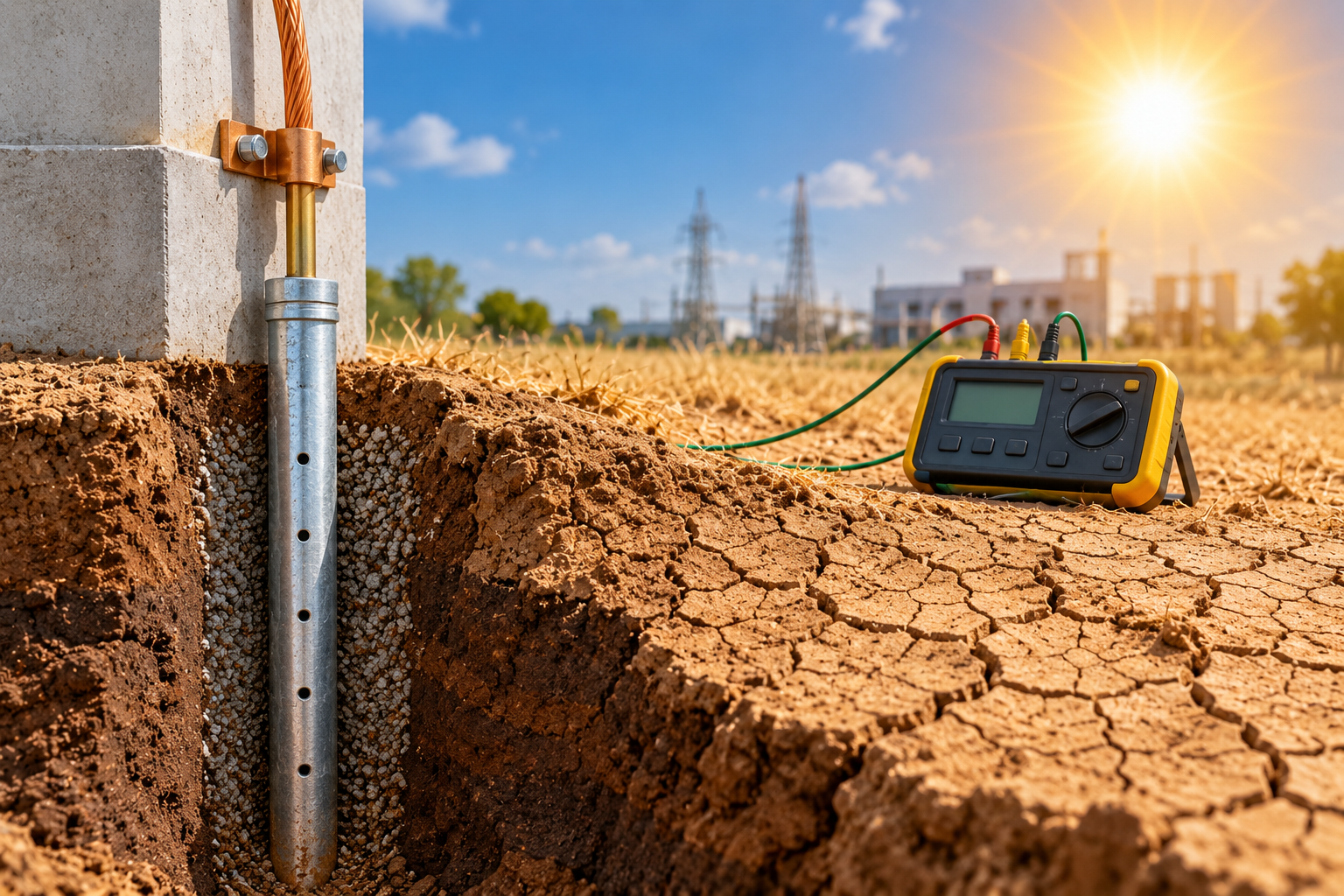
Electrodes are quick to install, need less trenching, and cost far less upfront. Their weak spot shows up in high-resistivity soil or rocky terrain, where a single rod alone cannot bring earth resistance down to the value your protection scheme demands.

Choosing the correct electrode material and installation method is important for achieving reliable long-term grounding performance.

What Is an Earthing Grid, and Where Does It Actually Belong?

An earthing grid is a mesh of interconnected conductors buried across the plant footprint, usually paired with backfill compounds such as GREM or TERRACARBO to lower resistivity around the mesh.

This is the standard for substations, large transformer yards, and process plants carrying heavy fault current because the mesh spreads potential gradients evenly and helps keep step and touch voltages within safe human exposure limits.

Industrial grounding grids are commonly designed with reference to standards such as IS 3043 and IEEE Std 80 for appropriate substation grounding applications.

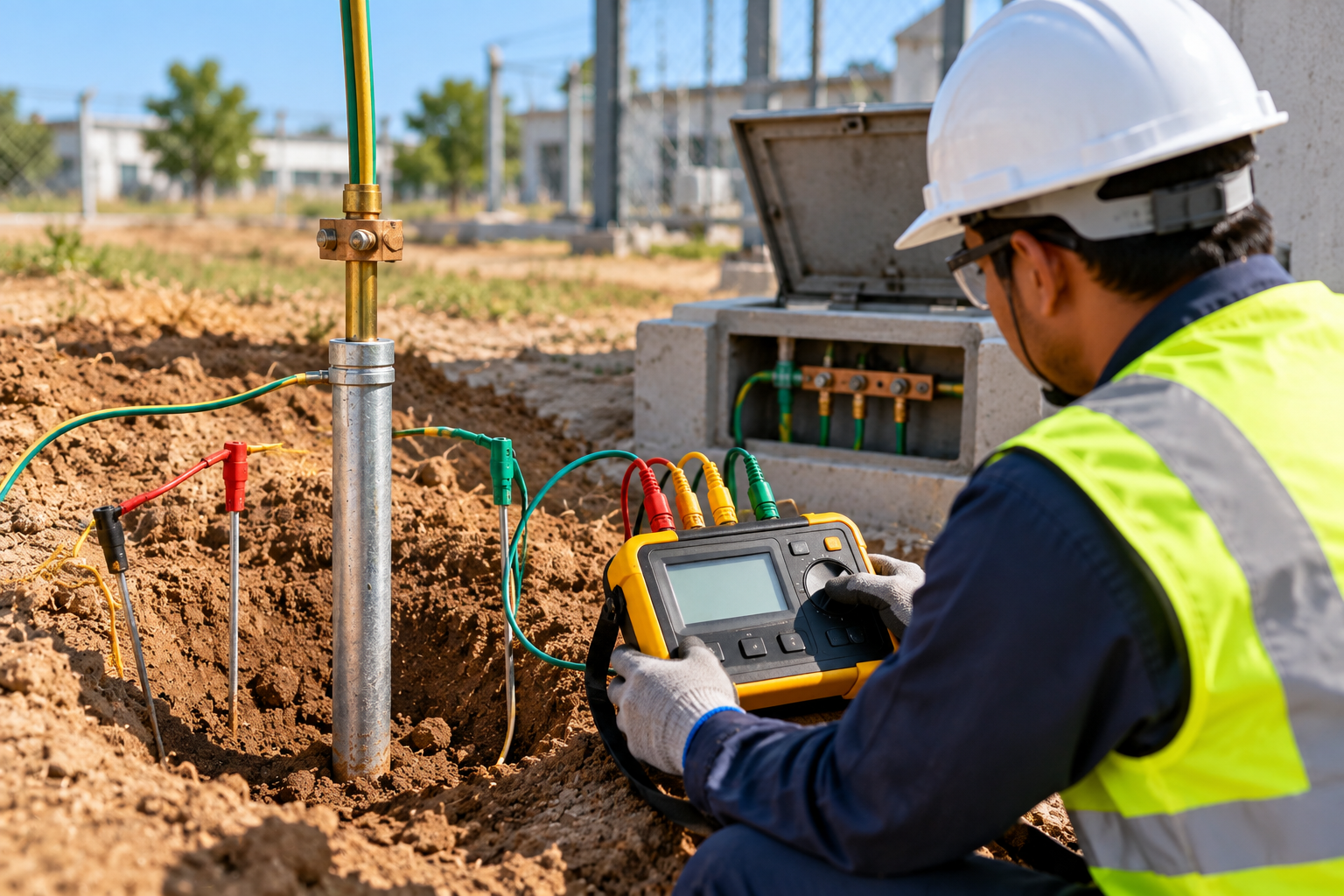
Site engineer performing earth resistance testing with digital earth tester

Earthing Electrode vs Earthing Grid: A Side-by-Side Look

Parameter Earthing Electrode Earthing Grid
Best suited for Small panels, DG sets, single equipment Substations, transformer yards, process plants
Fault current handling Low to moderate High
Sensitivity to soil resistivity High, performs poorly in rocky or dry soil Lower, mesh spreads current across a wider area
Installation footprint Minimal, single point Requires trenching across the plant layout
Upfront cost Lower Higher, but justified by risk profile
Maintenance Simple, easy to test and replace Needs periodic testing across multiple grid points
Typical earth resistance target Under 5 ohms for many panels Often under 1 ohm for substations

How Mumbai’s Soil Conditions Tip the Balance

Soil resistivity varies sharply across Mumbai’s industrial suburbs. Reclaimed coastal land, saline pockets, and hard basalt patches inland behave differently once you drive a rod or lay a grid.

A plant near the coast may get away with a shallow electrode thanks to naturally moist soil, while a facility on rocky terrain in Thane or Taloja will likely need a grid backed by conductive backfill compound to hit workable earth resistance.

This is why a soil resistivity survey, not a generic spec sheet, should decide the design.

So Which One Should Your Project Actually Use?

In practice, most large industrial projects do not pick one over the other. They combine both.

A grounding network built around a grid handles the substation and transformer yard, while individual electrodes tie in smaller panels, junction boxes, and standalone equipment back into that same network.

As an earthing system manufacturer in Mumbai , LES Ecotonik System typically recommends a resistivity survey first, then a hybrid layout that meets IS 3043 requirements without over-engineering the smaller sections of the plant.

You can browse our full range of earthing and grounding systems to see the components that go into both approaches.

Frequently Asked Questions

Not always. A grid is essential where fault current is high or soil resistivity is poor, but a single electrode is often perfectly adequate for smaller, low-risk loads. The right choice comes from a resistivity survey, not a blanket rule.

Annual testing is the general practice, with additional checks after major fault events, monsoon season, or any excavation near the grounding network that could disturb buried conductors.

Yes. Additional electrodes can be bonded into an existing grid to improve overall earth resistance, provided the connection uses proper exothermic welding rather than mechanical clamps that degrade over time.

Final Word

Neither an earthing electrode nor an earthing grid is inherently better. The right call comes down to fault current, soil resistivity, and how critical the load is.

Get the survey done before you finalize either, and lean on a manufacturer who understands regional soil behavior rather than a one-size-fits-all catalog specification.

Need Help Choosing the Right Earthing System?

For plant-specific recommendations, talk to our earthing design team and we will help size the right system for your site.

Do Rooftop Solar Panels Need Lightning Protection?

Published: August 17, 2026 | 8 Min Read

Do Rooftop Solar Panels Need Lightning Protection?

Rooftop solar panels during a lightning thunderstorm

Quick Answer: Yes. Rooftop solar panels can be exposed to direct lightning strikes as well as induced surges from nearby storms. Since solar systems contain sensitive equipment such as inverters, DC combiner boxes, monitoring systems, and control electronics, basic earthing alone is not enough. A properly designed lightning and surge protection system provides an additional layer of protection.

Why This Question Comes Up So Often

Many solar EPC contractors and homeowners assume that a rooftop system passing electrical inspection with standard grounding is automatically protected against lightning. This is one of the most common misunderstandings in the industry,and the gap is rarely explained during installation.

As a Lightning Arrester Manufacturer working across multiple states in India, we hear this question often, usually after a nearby storm damages an inverter with no visible cause Learn more about LES Ecotonik Systems

How Lightning and Surges Actually Damage Solar Systems

Direct Strikes

A rooftop is often one of the tallest points on a building, and solar panels are installed directly on this elevated surface. This can increase their exposure to lightning compared with equipment positioned at ground level.

Induced Surges – The Bigger, Less Understood Risk

A lightning bolt does not have to strike the solar panel directly to cause damage. A lightning strike within a few hundred metres can induce a powerful voltage spike into nearby wiring, including solar cables and grid connections.

During India’s monsoon season, these indirect surge events can create significant risks for solar installations, yet they are often overlooked during system planning.

What Typically Gets Damaged

  • Inverter internal components
  • DC combiner boxes
  • Monitoring and communication modules
  • Wiring and connected control equipment

Does Standard Solar Installation Already Include Lightning Protection?

This is where most confusion happens. A typical solar installation includes basic equipment earthing and standard DC and AC circuit breakers. However, it usually does not include a properly rated external arrester or a coordinated DC surge protection device sized specifically for the system.

Earthing protects people and equipment against fault currents and electric shock. It does not by itself stop a high-energy surge from damaging sensitive inverter components.

These are separate layers of protection, and confusing earthing with surge protection is one of the main reasons rooftop solar systems remain vulnerable.

Get your existing installation audited by our team to identify potential protection gaps.

When Is Lightning Protection Necessary for Rooftop Solar?

Nearby lightning strike causing a surge through solar cables to the inverter

Rather than treating lightning protection as a blanket requirement, it is useful to consider several practical risk factors before selecting the appropriate protection system.

  1. Building height relative to nearby structures and trees
  2. Regional thunderstorm and monsoon activity in your area
  3. System size and the replacement cost of the inverter
  4. Presence of sensitive monitoring or IoT-connected equipment

A small rooftop system in a low-storm-activity area has a different risk profile from a large commercial rooftop array in a high-thunderstorm zone.

Reviewing these factors with a qualified engineer provides a realistic protection strategy instead of relying on a generic installation approach.

What a Complete Rooftop Solar Protection Setup Looks Like

External Lightning Protection

External protection includes air terminals positioned according to recognised rolling sphere or protection angle methods, properly rated down conductors, and a dedicated earthing arrangement.

Internal Surge Protection

Internal protection, in the form of a solar surge protection device, uses Type 1 and Type 2 SPDs on both the DC and AC sides to absorb surge energy before it reaches the inverter.

This differs from surge protection for solar parks, which is designed for utility-scale ground-mounted plants. However, the underlying principle of solar inverter surge protection remains similar.

View our Surge Protective Devices range for additional information about surge protection solutions.

Earthing and Bonding

Earthing and bonding for the solar array should not be considered a replacement for surge protection devices. Both systems work together to provide a more complete protection strategy.

Explore Earthing and Grounding Systems for more information.

Common Myths EPC Contractors and Homeowners Believe

  • Panels are grounded, so we’re covered – Grounding manages fault current and shock risk, but it does not eliminate surge energy.
  • My inverter has built-in surge protection – Many inverters include a basic, limited-rating MOV, but this is not necessarily the same as a coordinated, site-rated SPD system.
  • We rarely get lightning here – Induced surges can travel through grid-connected lines, so lightning several kilometres away can still create damaging electrical transients.

How to Check If Your Rooftop System Is Protected

Engineer inspecting solar inverter SPD connections and earthing
  1. Confirm whether an SPD is fitted at the DC combiner box and check its rating.
  2. Verify that there is a separate SPD on the AC side near the inverter output.
  3. Ask for the documented earth resistance test value.
  4. Check whether the SPD is Type 1, Type 2, or a combined unit.
  5. Confirm that the SPD and lightning protection setup follows recognised standards such as NF C 17-102 and UNE 21186:2011, and is CPRI tested.

Why Work With an Experienced Lightning Arrester Manufacturer?

Every rooftop is different. Building height, local storm activity, system size, and cable routing can all affect the appropriate level of protection.

Working with an established Lightning Arrester Manufacturer means the system can be engineered around actual site conditions instead of relying on a generic protection kit.

LES ECOTONIK SYSTEM has been active in lightning protection, surge protection, and earthing since 2005. The company is a Make in India organisation and holds ISO 9001, ISO 14001, and ISO 45001 certification. See our quality standards and certifications

Frequently Asked Questions

Yes. Induced surges can travel through grid connections regardless of how often lightning strikes locally, so low-activity areas are not completely risk-free.

Requirements can vary by state and building type. It is best to confirm the applicable local codes and project requirements for your specific rooftop installation rather than assume a blanket rule.

Many manufacturers exclude lightning and surge-related damage from warranty coverage when proper external protection was not installed. It is therefore important to check the specific warranty terms of your inverter.

A surge protection device, or SPD, protects connected equipment from surge energy entering through wiring. A lightning arrester is designed to intercept a direct lightning strike and safely divert the associated current to earth.

Do Rooftop Solar Panels Really Need Lightning Protection?

Rooftop solar systems face a real and often invisible risk from induced surges, not just direct lightning strikes. Standard solar installation covers basic electrical safety but usually does not provide complete lightning and surge protection.

If you are unsure whether your rooftop solar system is properly protected, it is worth getting the installation assessed before the next storm season.

Need a Site-Specific Solar Protection Assessment?

LES ECOTONIK SYSTEM designs and manufactures lightning and surge protection solutions engineered for real site conditions across India. Get in touch with our team for a site-specific assessment before the next storm season.

Visit our homepage to explore our complete range of lightning, surge protection, and earthing solutions.