
Published: November 9, 2026 | 8 Min Read
How to Prepare a Lightning Protection System Specification for EPC and Industrial Projects

Lightning protection is an essential part of electrical safety planning for industrial facilities, commercial buildings, and infrastructure projects. A properly designed system helps protect structures, electrical installations, equipment, and people from lightning-related risks.
For EPC contractors, electrical consultants, and project engineers, preparing a detailed lightning protection system specification is an important step before procurement and installation. An incomplete specification can lead to missing components, unsuitable product selection, installation difficulties, and coordination issues during project execution.
A complete specification should clearly define the project requirements, applicable standards, product categories, technical parameters, installation responsibilities, inspection procedures, and documentation requirements.
This guide explains how to prepare a lightning protection system specification for EPC and industrial projects.
1. Understand the Project Requirements
Before preparing the technical specification, understand the project scope and site conditions. Every industrial facility has different structural, electrical, and environmental requirements.
Start by collecting essential project information, including:
- Type of building or industrial facility.
- Building height, dimensions, and roof structure.
- Location and surrounding environmental conditions.
- Electrical distribution arrangement.
- Presence of sensitive electrical and electronic equipment.
- Existing earthing and lightning protection installations.
- Areas requiring additional protection, such as substations, control rooms, and communication facilities.
A proper site assessment helps engineers identify potential risks and determine the appropriate protection requirements.
For example, a manufacturing facility with large metallic structures and sensitive automation equipment may require a coordinated approach covering external lightning protection, bonding, earthing, and surge protection.
2. Identify the Applicable Lightning Protection Standards
Technical specifications should identify the standards relevant to the project, product category, and installation method.
Some important standards include:
| Standard | Application |
|---|---|
| IEC 62305 | Protection against lightning, including risk management and system design. |
| IEC 61643 | Surge protective devices. |
| IS 3043 | Code of practice for earthing. |
| IEC 61869 | Instrument transformers. |
| NF C 17-102 | ESE lightning protection systems, where applicable. |
| UNE 21186 | ESE lightning protection systems, where applicable. |
The project specification should identify the applicable edition and relevant requirements. Engineers must also consider applicable Indian regulations, client requirements, and project-specific technical conditions.
It is important to distinguish between product testing and complete installation compliance. A tested product does not automatically establish that the entire lightning protection system is correctly designed or installed.
3. Define the Required Lightning Protection Components
A complete specification should identify the product categories required for the project.
Depending on the design, these may include:
External Lightning Protection Components
- Air terminals or lightning arresters.
- Down conductors.
- Conductor holders and supports.
- Test joints and inspection points.
- Earth electrodes and associated accessories.
Internal Electrical Protection Components
- Surge Protective Devices (SPDs).
- Equipotential bonding conductors.
- Bonding clamps and connectors.
- Protection devices for relevant power and communication circuits.
Monitoring and Accessories
- Lightning strike counters.
- Inspection and testing accessories.
- Connection and termination components.
The actual components and quantities should be determined through engineering assessment and approved project drawings.
For suitable equipment options, refer to the external lightning protection devices offered by LES Ecotonik Systems.
4. Prepare a Detailed Technical Bill of Quantities (BOQ)
The Bill of Quantities is an important document for procurement and project execution. It helps contractors identify the required materials, quantities, and technical specifications.
A well-prepared BOQ should include product descriptions, material specifications, installation locations, and relevant technical requirements.
| Product Category | Details to Include in the BOQ |
|---|---|
| Lightning air terminals | Type, material and design requirements. |
| Down conductors | Material, dimensions, routing and accessories. |
| Earthing electrodes | Type, material and installation requirements. |
| Bonding components | Connection type, material and application. |
| Surge protection devices | Application, voltage rating and protection characteristics. |
| Strike counters | Type, installation location and compatibility. |
| Accessories | Clamps, supports, connectors and test joints. |
Avoid using generic product descriptions without defining the necessary technical characteristics. Clear BOQ descriptions make it easier to compare supplier submissions and reduce procurement misunderstandings.
5. Specify Earthing and Bonding Requirements
Earthing and bonding are essential parts of an effective lightning protection arrangement.
The specification should explain how the earth termination system will be designed and connected to the relevant conductive parts of the installation.
Important considerations include:
- Soil resistivity and site conditions.
- Earth electrode type and arrangement.
- Conductor material and dimensions.
- Connection methods and joint integrity.
- Bonding of relevant metallic structures and services.
- Accessibility for inspection and testing.
- Coordination with the electrical installation’s earthing arrangement.
The required earthing design should be based on applicable standards, engineering calculations, and site conditions rather than an arbitrary resistance value.
LES provides earthing and grounding solutions for different electrical and industrial applications.
6. Include Surge Protection Requirements
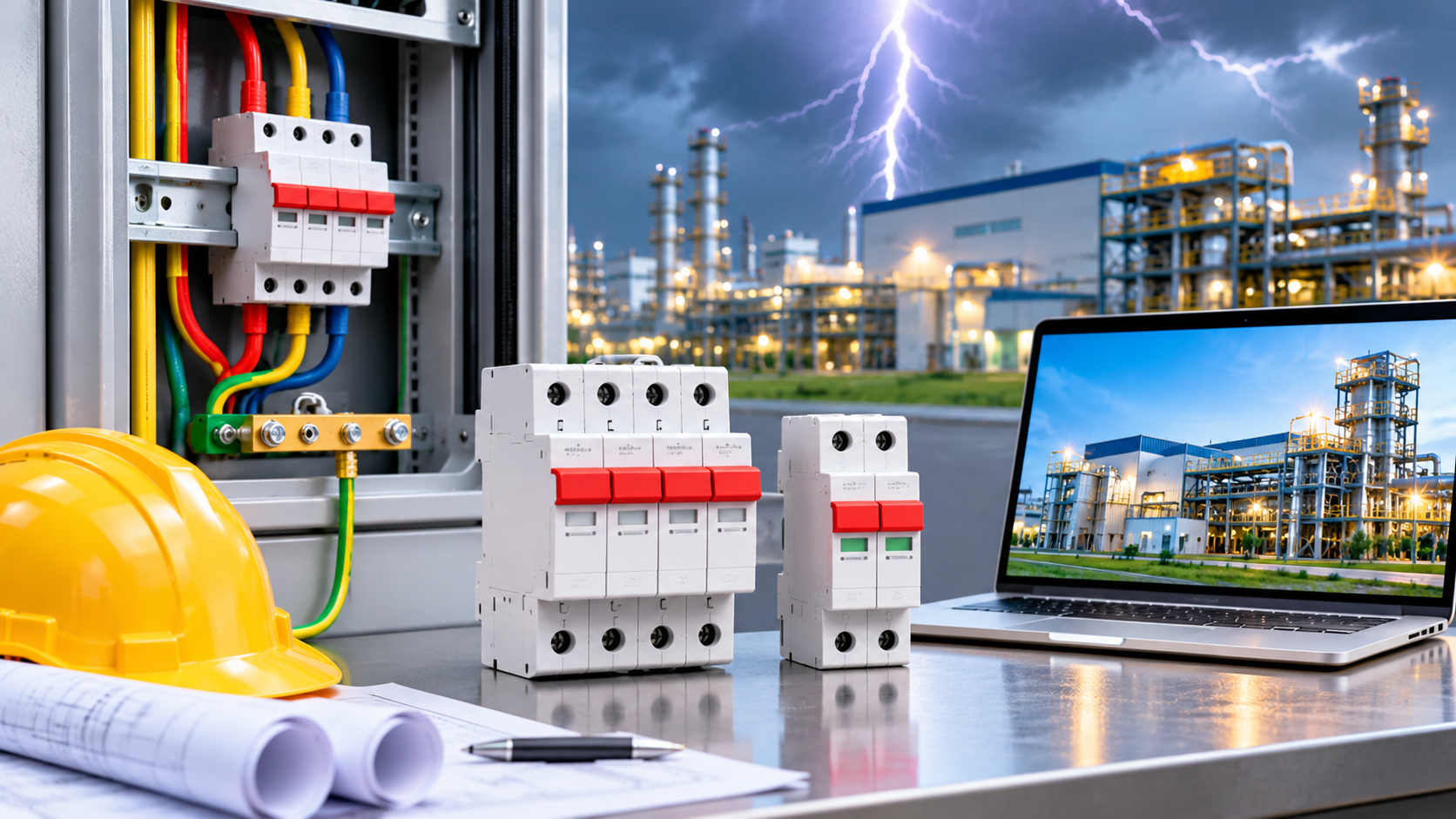
External lightning protection alone may not protect every connected electrical or electronic system against transient overvoltages.
Surge Protective Devices help limit transient overvoltages and divert surge currents, subject to correct selection, installation and coordination.
The specification should consider:
- Incoming power supply arrangements.
- Main distribution boards and sub-distribution boards.
- Sensitive automation and control equipment.
- Communication and data lines.
- Instrumentation circuits.
- SPD type, voltage protection level, and discharge characteristics.
- Coordination between protection stages.
The appropriate SPD selection depends on the electrical system, exposure conditions, equipment requirements, and applicable standards.
Explore the available surge protection devices for industrial and electrical protection applications.
7. Evaluate the Manufacturer and Supplier
Selecting a technically capable manufacturer or supplier is important for maintaining product quality and project coordination.
Before approving a supplier, review the following:
- Manufacturing experience and product range.
- Applicable quality management certifications.
- Product datasheets and technical specifications.
- Relevant test reports and certificates.
- Compliance documentation.
- Technical support and product selection assistance.
- Installation guidance and after-sales support.
For projects involving specialised lightning protection products, confirm that the proposed equipment matches the approved technical specification.
Do not compare suppliers only by product names. Compare their actual technical characteristics and supporting documentation.
8. Define Installation, Inspection and Testing Requirements
The technical specification should clearly explain the installation and verification requirements.
Installation Requirements May Include:
- Following approved technical drawings.
- Using specified materials and accessories.
- Maintaining the designed conductor routes and connections.
- Providing appropriate bonding arrangements.
- Protecting conductors from mechanical damage.
- Maintaining accessibility for inspection.
Inspection and Testing Requirements May Include:
- Visual inspection of installed components.
- Checking conductor continuity.
- Inspecting joints and connections.
- Testing earthing arrangements using appropriate methods.
- Verifying SPD installation and status.
- Recording inspection and test results.
The acceptance criteria and testing procedures should be defined in the project documents according to the applicable standards and design requirements.
9. Prepare the Technical Documentation
Documentation supports procurement approval, installation verification, and future maintenance.
The supplier and installation contractor should provide relevant documents according to their contractual responsibilities.
Important documents include:
- Product technical datasheets.
- General arrangement drawings.
- Approved installation drawings.
- Material submittals.
- Relevant test certificates.
- Quality inspection records.
- Installation and commissioning reports.
- As-built drawings.
- Operation and maintenance instructions.
Maintaining these documents helps facility teams understand the installed system and plan future inspections.
10. Common Mistakes to Avoid When Preparing Specifications
Incomplete technical specifications can create challenges during procurement and execution.
Avoid these common mistakes:
- Copying specifications from unrelated projects without reviewing site conditions.
- Mentioning products without defining technical parameters.
- Ignoring bonding and internal surge protection.
- Omitting accessories and connection requirements from the BOQ.
- Not defining inspection and testing responsibilities.
- Accepting product documentation without checking its relevance.
- Failing to coordinate lightning protection with electrical and structural drawings.
- Not maintaining final installation and testing records.
A coordinated specification helps EPC teams reduce ambiguity and improve project execution.
11. Final Checklist Before Approving the Specification
Use this checklist before releasing the lightning protection specification for procurement.
- Project scope and site details are documented.
- Applicable standards and editions are identified.
- Lightning protection design requirements are defined.
- Air terminals and down conductors are specified.
- Earthing and bonding requirements are included.
- Surge protection requirements are evaluated.
- BOQ includes relevant products and accessories.
- Supplier documentation requirements are listed.
- Installation and testing responsibilities are defined.
- Commissioning and handover documents are identified.
Frequently Asked Questions
It should include project requirements, applicable standards, lightning protection components, earthing, bonding, surge protection, technical datasheets, installation procedures, inspection and testing requirements.
IEC 62305 is a key lightning protection standard. IEC 61643 covers surge protective devices, while IS 3043 addresses earthing practices. Other standards may apply depending on the selected products and project requirements.
A BOQ should identify air terminals, down conductors, earth electrodes, bonding components, SPDs, accessories, quantities, and relevant technical specifications.
Industrial facilities often contain automation systems, control panels, communication networks, and sensitive electrical equipment. Properly selected and coordinated SPDs help protect connected equipment against transient overvoltages.
Depending on the project scope, documents may include technical datasheets, product drawings, applicable test reports, certificates, installation guidance, and quality documentation.
Yes. The project should define inspection procedures, continuity and earthing tests where applicable, SPD verification, acceptance criteria, and the required commissioning records.
Conclusion
Preparing a complete lightning protection system specification is an important responsibility in EPC and industrial projects. It requires coordination between external lightning protection, earthing, bonding, surge protection, procurement, and installation teams.
By defining the project requirements, selecting suitable products, identifying applicable standards, and specifying proper testing procedures, project engineers can improve technical clarity and support reliable system implementation.
LES Ecotonik Systems provides lightning protection, surge protection, earthing and bonding solutions, along with product and technical support for industrial and infrastructure requirements.
Planning an EPC or Industrial Project?
Contact LES Ecotonik Systems to discuss your lightning protection requirements and get technical assistance for your project.
Get in Touch Today
Phone: +91 98869 63195
Email: info@leslightning.com
Website: https://leslightning.com/