How to Choose the Right Lightning Arrester for High-Rise Buildings in Mumbai

Best Lightning Arrester Manufacturer in Mumbai, India

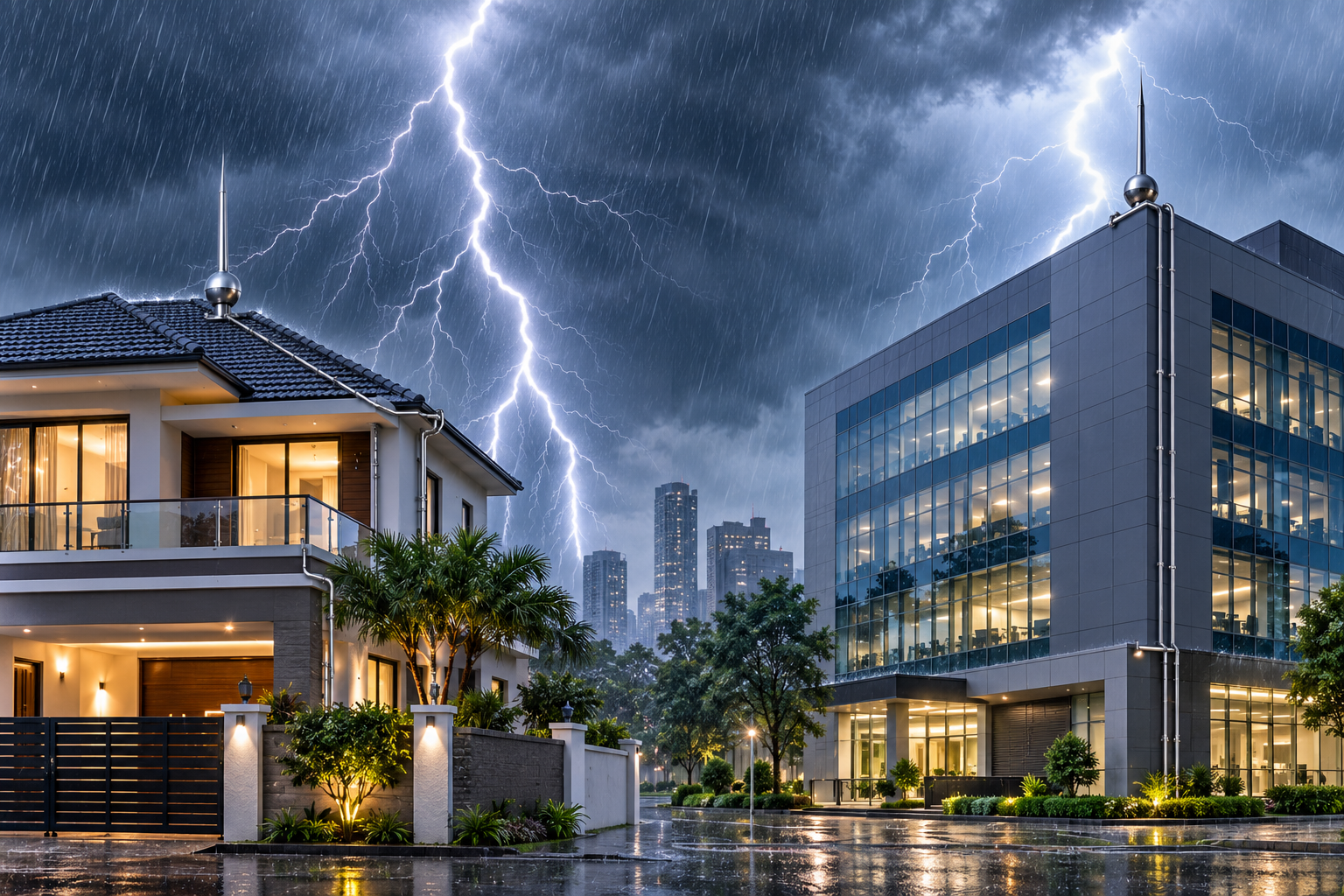
How to Choose the Right Lightning Arrester for High-Rise Buildings in Mumbai

Mumbai is one of India’s most dynamic cities. It is home to towering residential skyscrapers, iconic commercial towers, five-star hotels, sprawling IT parks, and critical infrastructure that runs around the clock. With the Arabian Sea on one side and a tropical monsoon climate dominating nearly half the year, Mumbai also experiences some of the most intense thunderstorm activity in the country. For high-rise buildings in this city, the risk of a direct lightning strike or an indirect surge is not theoretical. It is a real, recurring threat that demands serious engineering attention.

Choosing the right lightning arrester for a high-rise building in Mumbai is not as simple as picking any device off a catalogue. It requires understanding the building’s height, structure, occupancy type, electrical load, and the level of protection required under Indian and international standards. This guide walks you through exactly what to consider before making that decision.

Understanding Why High-Rise Buildings Face Greater Lightning Risk

Height is the primary factor that determines lightning vulnerability. The taller a structure is, the more likely it is to intercept a lightning discharge. In Mumbai, buildings above 45 metres are already classified as high-rise under local regulations, and many towers in areas like Worli, Bandra Kurla Complex, Nariman Point, and Powai exceed 100 to 200 metres.

At these heights, a building does not just receive downward lightning strokes. It can also trigger upward lightning, which originates from the structure itself and travels toward charged storm clouds. Upward lightning is far more common in very tall buildings and carries enormous energy that standard low-grade arresters cannot handle.

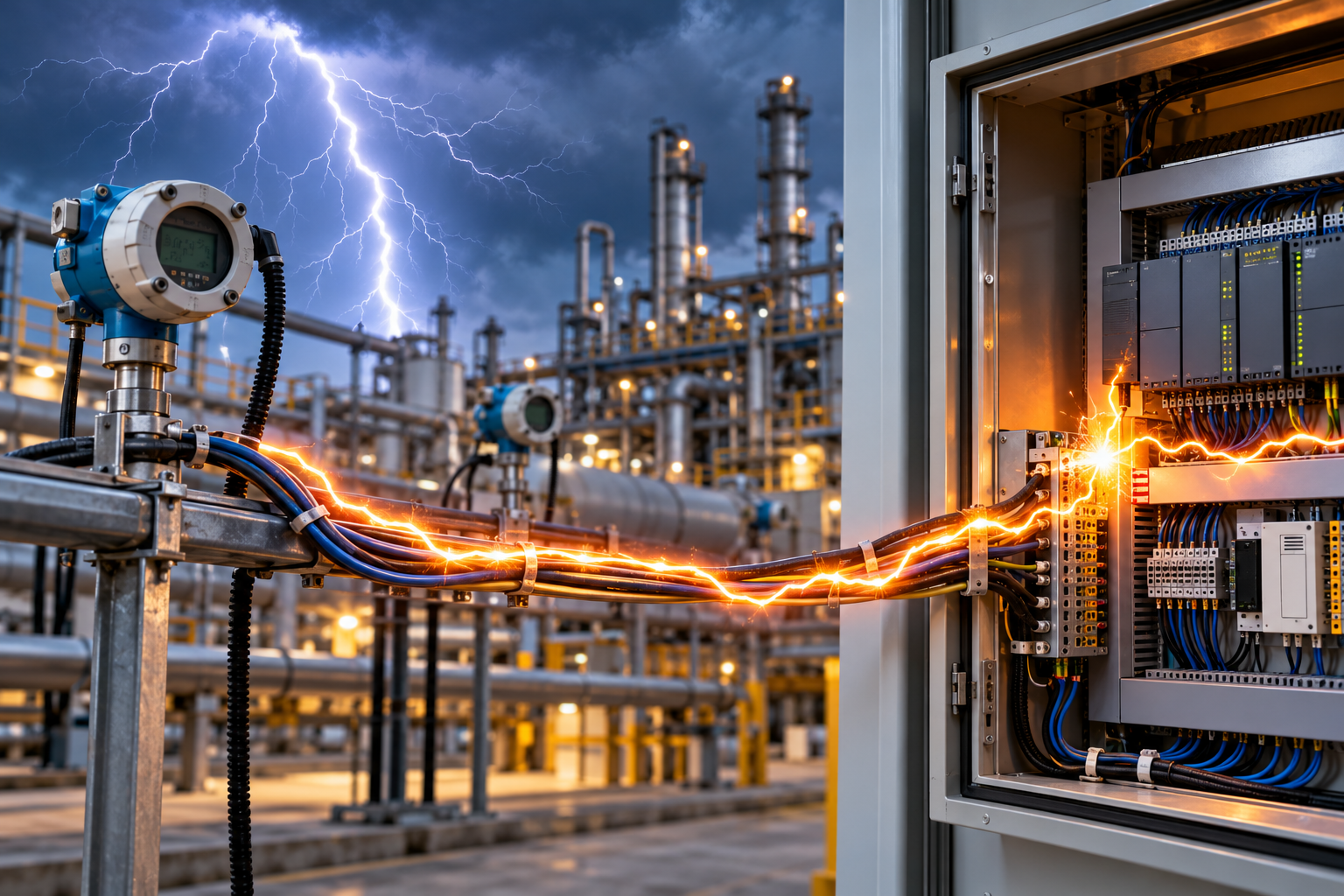
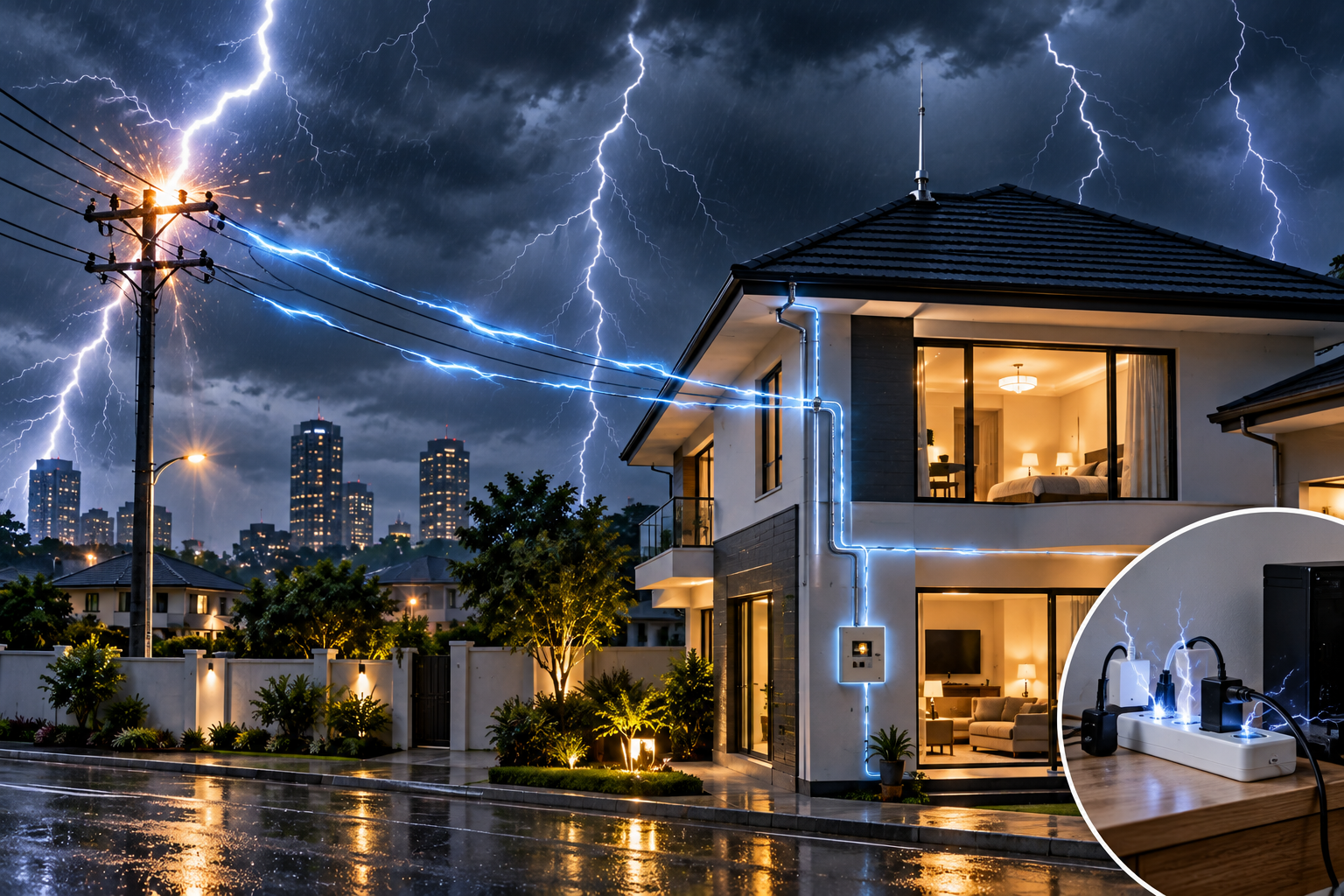
Additionally, high-rise buildings in Mumbai house sensitive systems including centralised air conditioning, elevators, fire alarm networks, data servers, CCTV systems, and emergency power backups. A single lightning event, even without a direct strike, can send a surge through the electrical network and damage all of these systems simultaneously.

Key Factors to Consider When Choosing a Lightning Arrester

Selecting the right lightning arrester for a Mumbai high-rise involves evaluating several technical and site-specific parameters.

Building Height and Structural Profile

The height and shape of the building determine the protection radius needed. Taller and irregularly shaped structures need arresters with wider protection zones. Early Streamer Emission arresters, commonly known as ESE arresters, are widely used for high-rise applications because they offer a larger protection radius compared to conventional Franklin rod systems.

Risk Assessment as per IEC 62305

Before any arrester is selected, a formal lightning risk assessment must be conducted as per IEC 62305, which is the international standard for lightning protection. This assessment calculates the annual probability of a lightning strike based on the building’s location, height, occupancy, and the average ground flash density of the region. Mumbai has a high ground flash density due to its coastal tropical climate, which means the risk level is typically higher than in many other Indian cities.

The outcome of this assessment determines the Lightning Protection Level required, ranging from LPL I to LPL IV, where LPL I offers the highest degree of protection. Most high-rise buildings with critical occupancy in Mumbai fall under LPL I or LPL II categories.

Type of Arrester Technology

There are two primary technologies used in high-rise lightning protection:

Conventional lightning protection systems use a network of air terminals, down conductors, and earth termination systems to intercept and safely conduct lightning to the ground. They are reliable, widely proven, and fully compliant with IEC 62305.

ESE lightning arresters use an active triggering mechanism that emits an upward leader earlier than a conventional rod, extending the protection zone significantly. They are particularly effective for large rooftop areas, terraces, and open structures atop high-rise buildings.

For most Mumbai high-rises, a combination of both approaches delivers the most comprehensive protection, especially when the building has rooftop mechanical equipment, antennas, or helipads.

Surge Protection Integration

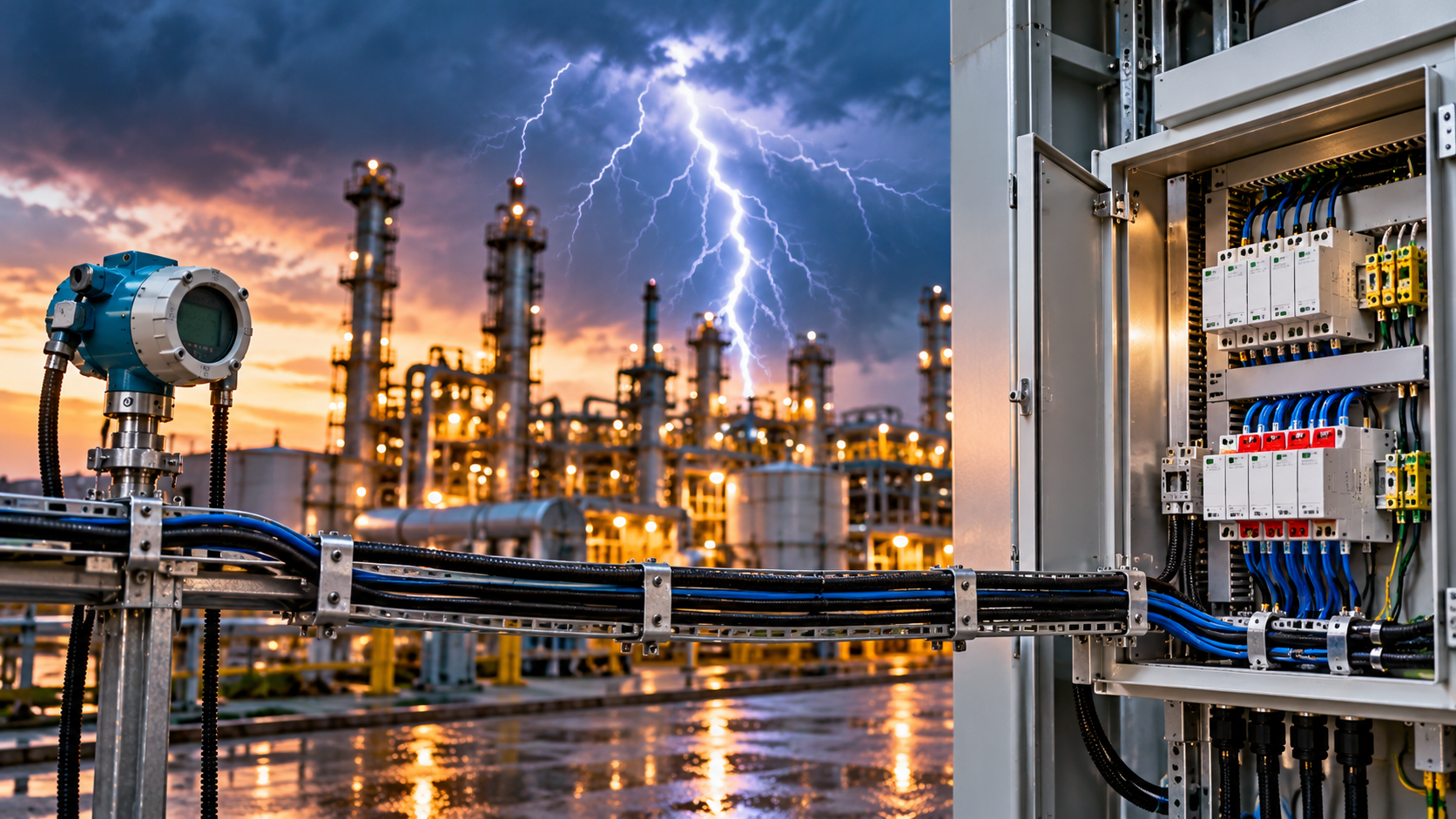
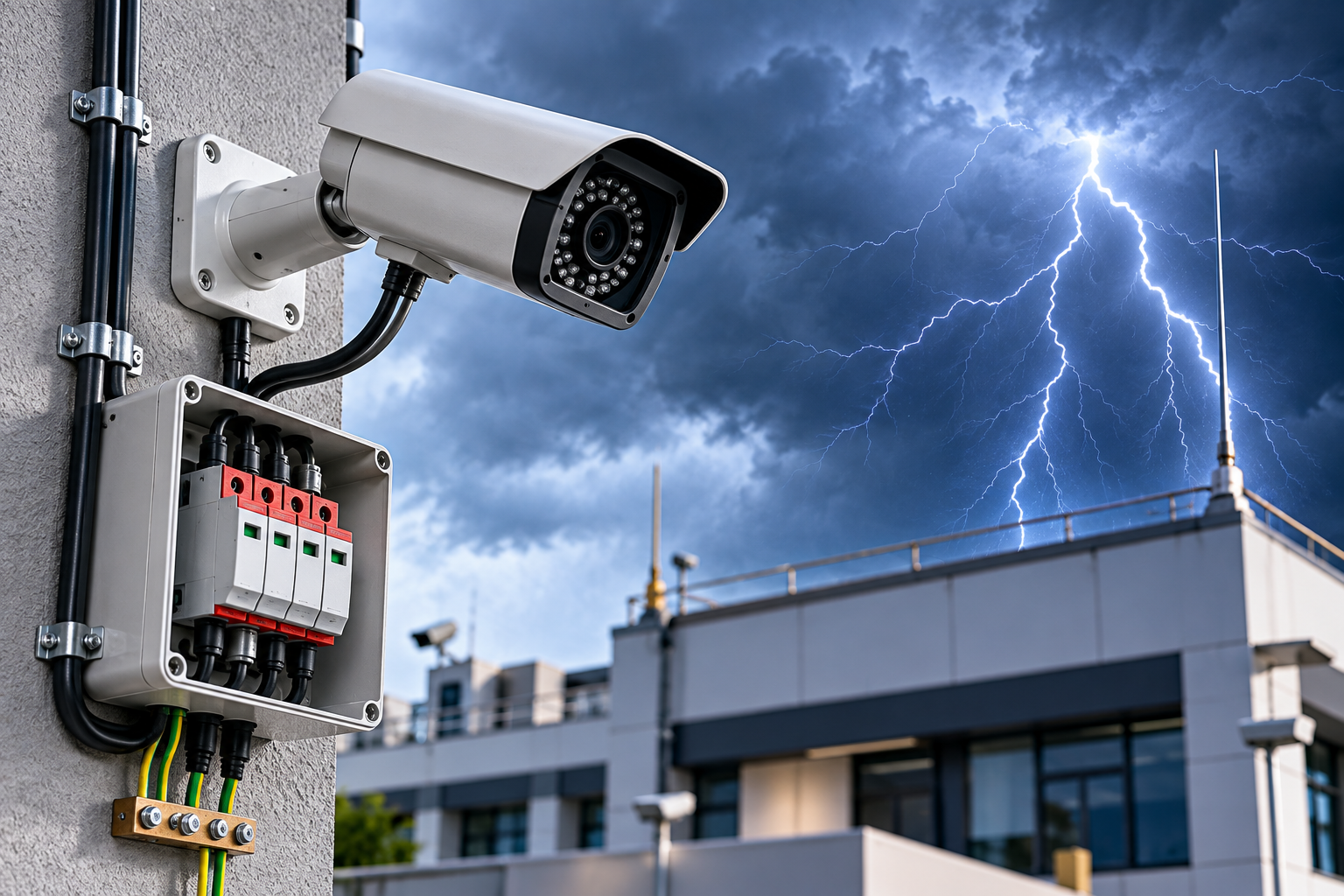
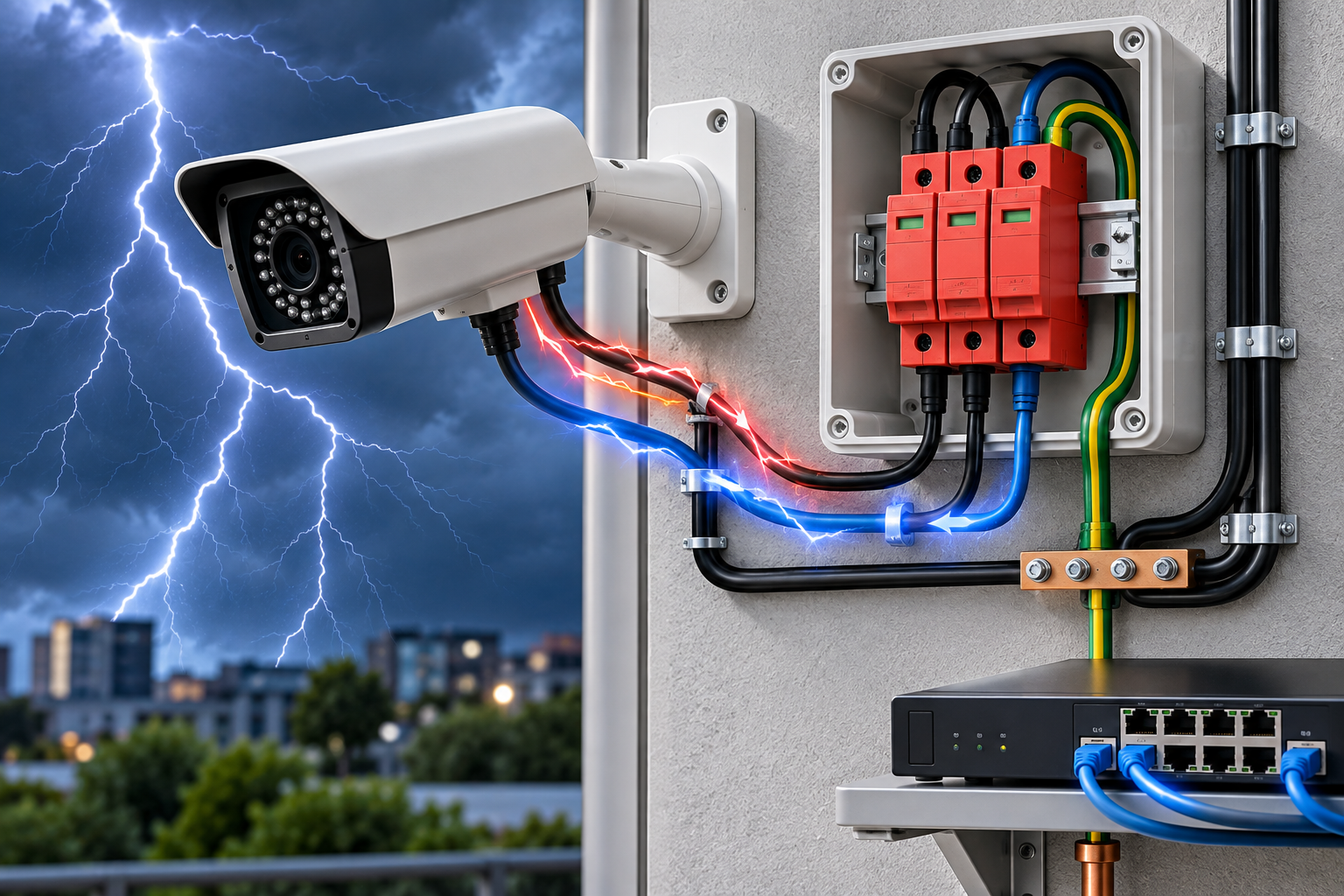
A lightning arrester protects the structure from a direct strike, but it does not by itself protect internal electrical and electronic systems from induced surges. High-rise buildings must also install Surge Protection Devices at the main distribution board, sub-distribution boards, and at the point of use for sensitive equipment. This layered protection approach ensures that the energy from a lightning event does not enter and damage the building’s internal systems even if the structural protection is functioning correctly.

Material Quality and Certification

The quality of the materials used in lightning protection systems directly impacts how long and how effectively the system performs. Copper and aluminium are the preferred conductor materials. Stainless steel and copper-bonded rods are used for earth electrodes. All components must carry relevant certifications and comply with IS 2309, IEC 62305, and NFC 17-102 standards where applicable.

Buildings in Mumbai’s coastal zones face additional challenges from salt-laden air and high humidity, which accelerate corrosion. It is critical to select arresters and conductors that are rated for coastal and high-humidity environments.

Maintenance and Inspection Planning

A lightning protection system is not a one-time installation. It requires periodic inspection, especially after major thunderstorm seasons. High-rise buildings in Mumbai should schedule annual inspections that include checking the condition of air terminals, verifying the integrity of down conductors, measuring earth resistance, and testing SPD functionality. Any system that cannot be inspected and maintained over time is a liability, not a safety measure.

Why LES Ecotonik Systems Is the Trusted Choice Among Lightning Arrester Manufacturers in Mumbai

When it comes to protecting high-rise buildings in Mumbai, LES Ecotonik Systems stands among the most experienced and trusted Lightning Arrester Manufacturers in Mumbai. With ISO 9001, 14001, and 45001 certifications and over three decades of field experience, LES Ecotonik Systems brings technical depth and product reliability that building developers, EPC contractors, and facility managers rely on.

Every solution offered by LES Ecotonik Systems is engineered after a thorough site assessment, ensuring that the arrester type, protection level, conductor sizing, and earthing design are all matched precisely to the building’s profile and occupancy requirements.

What Makes LES Ecotonik Systems the Right Partner as a Lightning Arrester Manufacturer in Mumbai

LES Ecotonik System offers a complete range of lightning protection products including ESE arresters, conventional air terminal systems, aluminium conductor systems, surge protection devices, and earthing solutions, all tested and certified to international standards.

Their engineering team works directly with architects, structural consultants, and MEP contractors during the design phase, ensuring that the lightning protection system is integrated correctly from the construction stage rather than added as an afterthought. This approach significantly reduces installation costs and improves the long-term reliability of the protection system.

For Mumbai’s high-rise developers, facility managers, and safety consultants, partnering with LES Ecotonik Systems as a dedicated Lightning Arrester Manufacturer in Mumbai means access to IEC-compliant products, qualified installation support, and dependable after-sales service throughout the building’s lifecycle.

Conclusion

Mumbai’s skyline continues to grow taller, and so does the responsibility of protecting the people and infrastructure within these structures. Choosing the right lightning arrester for a high-rise building is a technical decision that must account for building height, risk level, arrester technology, surge protection integration, material quality, and long-term maintenance.

LES Ecotonik Systems, a leading Lightning Arrester Manufacturer in Mumbai provides the engineering expertise, certified products, and complete protection solutions that Mumbai’s high-rise buildings demand. When it comes to lightning safety, there is no room for compromise, and LES Ecotonik Systems ensures you never have to make one.

5 Warning Signs Your Lightning Arrester Needs to Be Replaced Right Now

ESE Lightning Arrester Manufacturer & Exporter

5 Warning Signs Your Lightning Arrester Needs to Be Replaced Right Now

Most building owners install a lightning arrester and forget about it. It sits through scorching summers, heavy monsoons, and cold winters. Years pass. Nobody checks it. Then one lightning strike happens and the damage reveals a silent truth: the arrester stopped working long ago.

A lightning arrester is not a permanent fixture. It is a protective device with a working lifespan. When it ages, corrodes, or gets physically damaged, it loses its ability to divert high-voltage surges away from your building and equipment. The result can be catastrophic electrical damage, fires, equipment failure, and in worst cases, loss of life.

Your arrester will always show signs before it completely fails. You just need to know what to look for.

Sign 1: Visible Physical Damage or Corrosion on the Arrester Body

Take a close look at the lightning arrester on your rooftop or mast. If you notice any of the following, that arrester is no longer reliable:

Cracks or chips in the outer housing
Broken or deformed fins
Green or white oxidation deposits around terminal connections
Corrosion at the down conductor joints or base

The outer casing protects the internal metal oxide varistor elements that do the actual protective work. Once that casing is compromised, moisture, dust, and pollutants enter and destroy the internals. Corroded connections raise electrical resistance and reduce the arrester’s ability to respond when a surge hits. A cracked or corroded arrester is essentially no protection at all.

Sign 2: Your Arrester Is More Than 10 to 15 Years Old

Lightning arresters are built to last, but not forever. The effective operational life of a lightning arrester is between 10 and 15 years under normal conditions.

In India, degradation happens faster because of:

Temperatures peaking above 45 degrees Celsius in many regions
High monsoon humidity for months at a stretch
Salt-laden coastal air in cities like Mumbai
Industrial pollutants in zones like Noida and Pune

Degraded arresters often look completely fine from a distance. This is why age alone is a valid replacement trigger. Check your installation date records. If those records do not exist, treat that as a warning sign in itself and arrange for a professional inspection immediately.

Sign 3: Abnormal Leakage Current During Testing

A healthy lightning arrester has extremely low leakage current. When internal components deteriorate, particularly the metal oxide varistor blocks, leakage current increases beyond safe limits. This kind of failure is invisible to the naked eye. The arrester looks intact from outside while quietly losing its protective capability from within.

Watch out for:

Leakage current readings above the manufacturer’s specified threshold
Inconsistent readings across multiple test cycles
Any reading flagged by your electrical engineer as outside safe range

If your facility operates critical equipment, data servers, manufacturing machinery, or hospital systems, annual testing is not optional. Any reading outside safe limits means the arrester must be replaced before the next monsoon season.

Sign 4: Frequent Equipment Damage or Unexplained Power Surges

If you have been experiencing any of the following, your lightning protection system is not doing its job:

Repeated damage to electronic equipment after storms
Circuit breakers tripping during thunderstorms
Sudden failure of electrical panels
Unexplained voltage fluctuations

A functioning arrester should intercept surge energy before it reaches your internal electrical network. Repeated incidents of equipment burnout indicate the arrester has lost its clamping capacity and is allowing dangerous surge energy to pass through instead of diverting it to the ground.

Do not keep replacing damaged equipment without addressing the root cause. If the arrester has handled multiple significant lightning events, the cumulative energy absorption may have exhausted its protective capacity permanently.

Sign 5: Loose or Degraded Down Conductor and Earth Connection

A lightning arrester functions as a complete system. The arrester on the roof, the down conductor along the building, and the earthing electrode in the ground all work together. If any part of this chain is compromised, the entire system fails.

Check for these issues:

Loose clamps or broken sections in the down conductor
Conductor that has come away from the wall or developed a gap
Visible rust on conductor joints
Earth pit resistance above acceptable limits as per IS 3043

High earth resistance makes your entire lightning protection system ineffective regardless of how good the arrester is. Everything must work together for real protection.

How LES Ecotonik Systems Keeps You Protected

LES Ecotonik Systems is one of India’s most trusted names in lightning protection, surge protection, and earthing solutions with over two decades of experience. As a certified Lightning Arrester Manufacturer, LES Ecotonik System delivers ISO-compliant products meeting IEC 62305 and NF C 17-102 standards.

LES Ecotonik Systems offers ESE lightning arresters, conventional lightning protection systems, surge protective devices, earthing and bonding solutions, and CT PT transformers, all built for India’s demanding climate and long-term reliability. Site assessment, installation guidance, and replacement support are also part of the complete service.

Conclusion

A damaged or degraded lightning arrester creates a false sense of security while offering zero real protection. Physical corrosion, old age, high leakage current, repeated surge damage, and compromised earthing are all clear signals that your system needs immediate attention. Do not wait for the next storm to find out. Act on these warning signs now, choose a certified product from a reliable Lightning Arrester Manufacturer like LES Ecotonik Systems, and ensure your building, your equipment, and the people inside are genuinely protected.

ESE Lightning Arrester vs Conventional Lightning Arrester: Which One Does Your Building Need?

Custom Lightning Arrester Manufacturer in Chennai | Durable Solutions

Introduction

Every building that stands above the ground carries a risk during a thunderstorm. Lightning does not discriminate between a small office block and a large industrial facility. What matters is height, exposure, and the presence of conductive materials. The real question for every building owner, architect, or facility manager is not whether to install lightning protection but which type of system to install.

Two technologies dominate the lightning protection market today. The first is the conventional lightning arrester, which has been used for centuries. The second is the ESE lightning arrester, a more advanced system that has gained wide adoption across commercial and industrial projects globally. Both protect buildings from direct lightning strikes. But they work differently, cover different areas, and suit different types of structures. This blog explains both clearly so you can make an informed decision for your building.

What Is a Conventional Lightning Arrester?

A conventional lightning arrester, also known as a Franklin rod or spike arrester, is a passive protection device. It is a pointed metal rod, typically made of copper or aluminium, installed at the highest point of a structure. It does not actively attract lightning. Instead, it provides a preferred low-resistance termination point for a lightning strike that is already descending toward the structure.

When lightning approaches, the conventional rod intercepts the downward leader and channels the massive electrical current safely through the down conductors into the earthing system buried in the ground. The energy is then safely dispersed into the earth without damaging the structure or its contents.

Conventional arresters are straightforward, durable, and cost-effective. They have no moving parts, require no power supply, and need very little maintenance. However, the protection zone they cover is directly determined by their installation height. A taller rod protects a wider area, but for large or complex structures, multiple rods and an interconnected network of conductors are needed to achieve complete coverage.

What Is an ESE Lightning Arrester?

ESE stands for Early Streamer Emission. An ESE lightning arrester is an active device that goes a step beyond passive protection. When storm conditions develop and the atmospheric electric field starts building up, the ESE arrester internally generates and emits an upward ionised streamer ahead of time. This upward streamer travels toward the descending lightning leader faster than natural streamers would form from the same point.

The result is that the ESE arrester intercepts the lightning strike from a greater horizontal distance than a conventional rod of the same height. This early interception creates a significantly wider cone of protection around the arrester, which is called the protection radius.

ESE arresters are designed and tested under international standards including NF C 17-102 and UNE 21186. The protection radius is calculated based on the installation height and the advance time of the arrester, which is a measured parameter that indicates how much earlier the ESE device emits its streamer compared to a natural rod. A higher advance time means a wider protection radius.

For example, an ESE arrester with an advance time of 60 microseconds installed at a height of 10 metres above a structure can protect a radius of 70 to 107 metres depending on the class of protection required. A conventional rod at the same height would protect a much smaller zone of 10 to 30 metres.

Key Differences Between ESE and Conventional Lightning Arresters

The most important difference is the protection radius. An ESE arrester covers a much larger area from a single installation point compared to a conventional rod. For wide structures, large rooftops, open industrial yards, or multi-building campuses, this means fewer units are needed to achieve complete protection.

The second difference is the mechanism. A conventional arrester is completely passive. It waits for a strike to come to it. An ESE arrester actively prepares and reaches out toward the approaching strike, intercepting it earlier and from further away.

The third difference is the applicable standard. Conventional systems follow IEC 62305, which uses the rolling sphere method and protection angle method for layout design. ESE systems follow NF C 17-102 or UNE 21186, which define the advance time measurement and protection radius calculation method specific to early streamer devices.

The fourth difference is cost. Conventional systems using multiple rods, mesh conductors, and extensive down conductor networks can be more expensive to install for large structures. A single well-placed ESE arrester covering the same area may offer a more cost-effective solution when the full system cost is calculated.

Which Type of Structure Needs Which System?

The right choice depends on the size, shape, and use of your building.

Conventional lightning arresters work best for smaller residential buildings, compact commercial structures, low-rise buildings, or locations where a mesh system of multiple rods can be practically laid out across the rooftop. They are also the preferred choice where a distributed network of protection points is more practical than a single central unit.

ESE lightning arresters are the better choice for large industrial plants, warehouses, factory sheds, open storage yards, telecom towers, rooftop equipment platforms, stadiums, airports, fuel storage facilities, and any structure where achieving complete coverage from fewer installation points is both technically and economically preferable. For heritage structures or buildings where visible rooftop installations must be minimised, a single ESE unit is far less intrusive than a full mesh system.

For high-rise buildings, both systems can be used depending on the risk assessment and protection class required. The decision should always be made by a qualified lightning protection engineer who conducts a site-specific risk assessment as per IEC 62305 before recommending a system.

Common Mistakes When Choosing Between ESE and Conventional Systems

Many building owners make the mistake of choosing based on cost alone. Picking the cheapest option without a proper risk assessment often results in incomplete protection, compliance failures, and expensive retrofits later.

Another common mistake is assuming that one conventional rod is sufficient for a large building. A single Franklin rod protects only the area within its limited cone. For a 40-metre wide factory shed, one rod at the ridge will leave large portions of the building unprotected.

Similarly, some buyers assume that any ESE device will cover their entire facility regardless of its specifications. Every ESE arrester has its own coverage zone, shaped by three factors working together: how early it emits its streamer, how high it is mounted, and what level of protection the building demands. These must be calculated correctly for each specific project.

Always insist on protection layout drawings from your supplier that show the calculated protection zones overlaid on your building plan. This is the only way to confirm that your system provides complete, gap-free coverage.

Why LES Lightning Is the Trusted Name for Both Systems as a Leading Lightning Arrester Manufacturer in Chennai

Whether your project calls for a conventional system, an ESE system, or a combination of both, working with a manufacturer who understands both technologies in depth is essential. LES Lightning, operating as LES Ecotonik System, is one of India’s most experienced names in complete lightning protection solutions. As a trusted Lightning Arrester Manufacturer in Chennai, LES Lightning supplies both conventional lightning rods and CPRI tested ESE lightning arresters that comply with IEC 62305, NF C 17-102, and UNE 21186 standards. Every project is supported by a detailed risk assessment, protection layout design, and full documentation so your system is compliant, complete, and audit-ready from day one.

Get the Right System for Your Building from LES Lightning, Your Lightning Arrester Manufacturer in Chennai

Choosing between ESE and conventional lightning arresters is a technical decision that must be based on your specific building dimensions, risk level, and protection class requirements. LES Lightning makes this process straightforward. As a leading Lightning Arrester Manufacturer in Chennai, LES Lightning provides pre-project consultation, site-specific protection radius calculations, product supply, installation support, and post-installation testing across Chennai and all major cities in India. With ISO 9001, 14001, and 45001 certification and over three decades of field experience, LES Lightning is the partner you can rely on when safety is non-negotiable. Visit www.leslightning.com today to request a site assessment and find out exactly which system your building needs.

Conclusion

ESE and conventional lightning arresters are both proven technologies, but they are not interchangeable. A conventional rod is passive, reliable, and ideal for smaller or simpler structures. An ESE arrester is active, covers a wider area, and is the preferred choice for large industrial and commercial buildings where complete coverage from fewer units is needed. The right choice is always based on a proper risk assessment, correct protection class selection, and compliance with applicable international standards. Never choose a system based on price alone or without professional engineering support. With a reliable Lightning Arrester Manufacturer in Chennai like LES Lightning guiding your project from assessment to installation, you can be confident that your building is protected correctly, completely, and in full compliance with the standards that matter.

LES Lightning | LES Ecotonik Systems | Lightning Arrester Manufacturer in Chennai | www.leslightning.com

Lightning Arrester Installation Guide: Step by Step for Industrial and Commercial Building

Industrial Lightning Arrester Manufacturer in Jaipur | Long-Lasting Systems

Introduction

A lightning strike lasts less than a second. But the damage it leaves behind can take months to repair and cost lakhs of rupees. For industrial plants, warehouses, commercial buildings, and IT facilities, the risk is not just financial. It is operational, safety-related, and in some cases irreversible.

Installing a lightning arrester is one of the most important protective steps any building owner or facility manager can take. But installation is not simply about fixing a rod on a rooftop. A proper lightning arrester installation follows a defined process, covers every component of the system, and must comply with international standards like IEC 62305. This step by step guide walks you through the complete installation process in plain, practical language.

Step 1: Conduct a Site Risk Assessment

Before any product is purchased or any work begins, a thorough site risk assessment must be completed. This assessment evaluates the lightning threat level for your specific location based on factors like the local ground flash density, the size and height of the structure, the type of activities carried out inside, and the value of equipment and human life at risk.

The risk assessment determines the Lightning Protection Level required for your building. There are four levels ranging from LPL I for the highest risk structures like hospitals and data centres to LPL IV for lower risk buildings. The protection level directly decides what type of arrester you need, how many, and where they must be placed.

Skipping the risk assessment is the most common and most costly mistake made in lightning protection projects. Without it, the system may be undersized, incorrectly positioned, or simply not compliant with safety standards.

Step 2: Select the Right Type of Lightning Arrester

Once the risk level is determined, the next step is selecting the correct arrester type. There are two main categories used in industrial and commercial installations.

A conventional lightning arrester, also known as a Franklin rod or spike arrester, is a passive device mounted at the highest point of the structure. It provides a preferred strike point and channels the current safely to earth. It works best for smaller structures or as part of a multi-rod system for larger footprints.

An ESE lightning arrester, which stands for Early Streamer Emission, actively emits an upward leader during a thunderstorm to intercept the lightning at a greater distance. This gives it a significantly wider protection radius and makes it the preferred choice for large industrial sites, open yards, telecom towers, stadiums, and multi-building campuses.

Your selection must match the protection level identified in the risk assessment and must comply with applicable standards such as IEC 62305 for conventional systems or NF C 17-102 for ESE systems.

Step 3: Design the Air Termination System

The air termination system is the part of the installation that intercepts the lightning strike. It includes the lightning arrester itself along with any additional rods, mesh conductors, or catenary wires placed on the rooftop or elevated surfaces.

The positioning of the air terminal must be calculated using the rolling sphere method, the protective angle method, or the mesh method depending on the shape and complexity of the structure. The goal is to ensure that every vulnerable part of the roof and structure falls within the calculated protection zone of the installed arrester.

For flat industrial rooftops, mesh conductors are often used alongside a central ESE rod to achieve full coverage. For structures with equipment like HVAC units, cooling towers, or antenna masts on the roof, each elevated element must be checked against the protection radius to confirm it is shielded.

Step 4: Install the Down Conductors

Down conductors are the cables that carry the lightning current from the air terminal at the top of the building safely down to the earthing system at ground level. They must be made of materials with high conductivity and low resistance, typically copper or aluminium, and must be sized to handle the high current of a direct strike without overheating or melting.

The number of down conductors required depends on the size of the building and the protection level. Larger buildings need multiple down conductors spaced evenly around the perimeter to distribute the lightning current and reduce the magnetic field effects inside the structure.

Down conductors must be routed as straight and vertical as possible, avoiding sharp bends that increase impedance. They must be securely fixed to the outer wall of the building at regular intervals using approved clamps and brackets. Where conductors pass through or near metallic structures, proper separation distances must be maintained to prevent side flashing.

Step 5: Install the Earthing System

The earthing system serves as the final destination where lightning current is safely absorbed and neutralized into the ground. No matter how well designed the rest of the system is, it will not function properly without a reliable, low-resistance earthing setup.

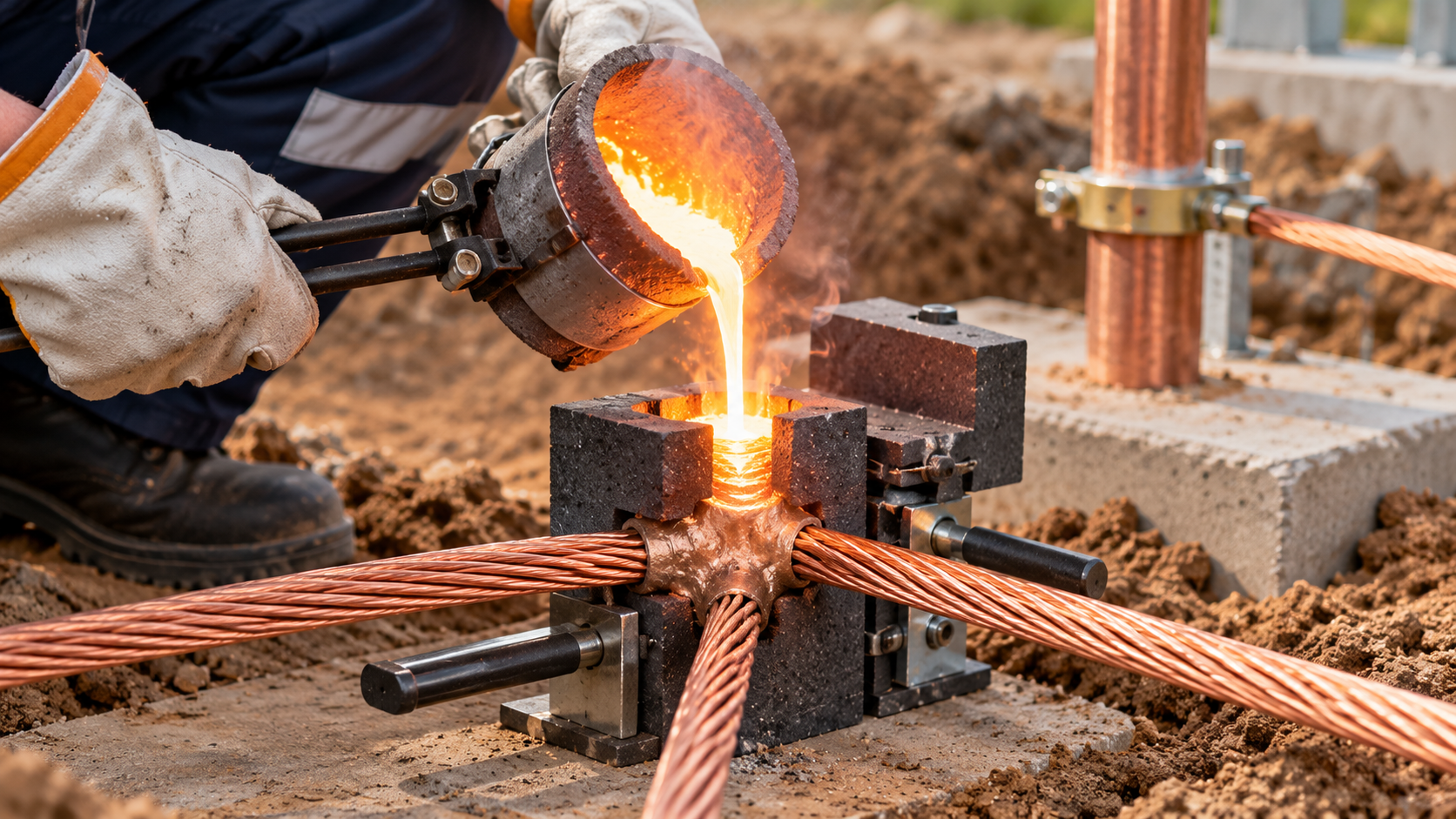
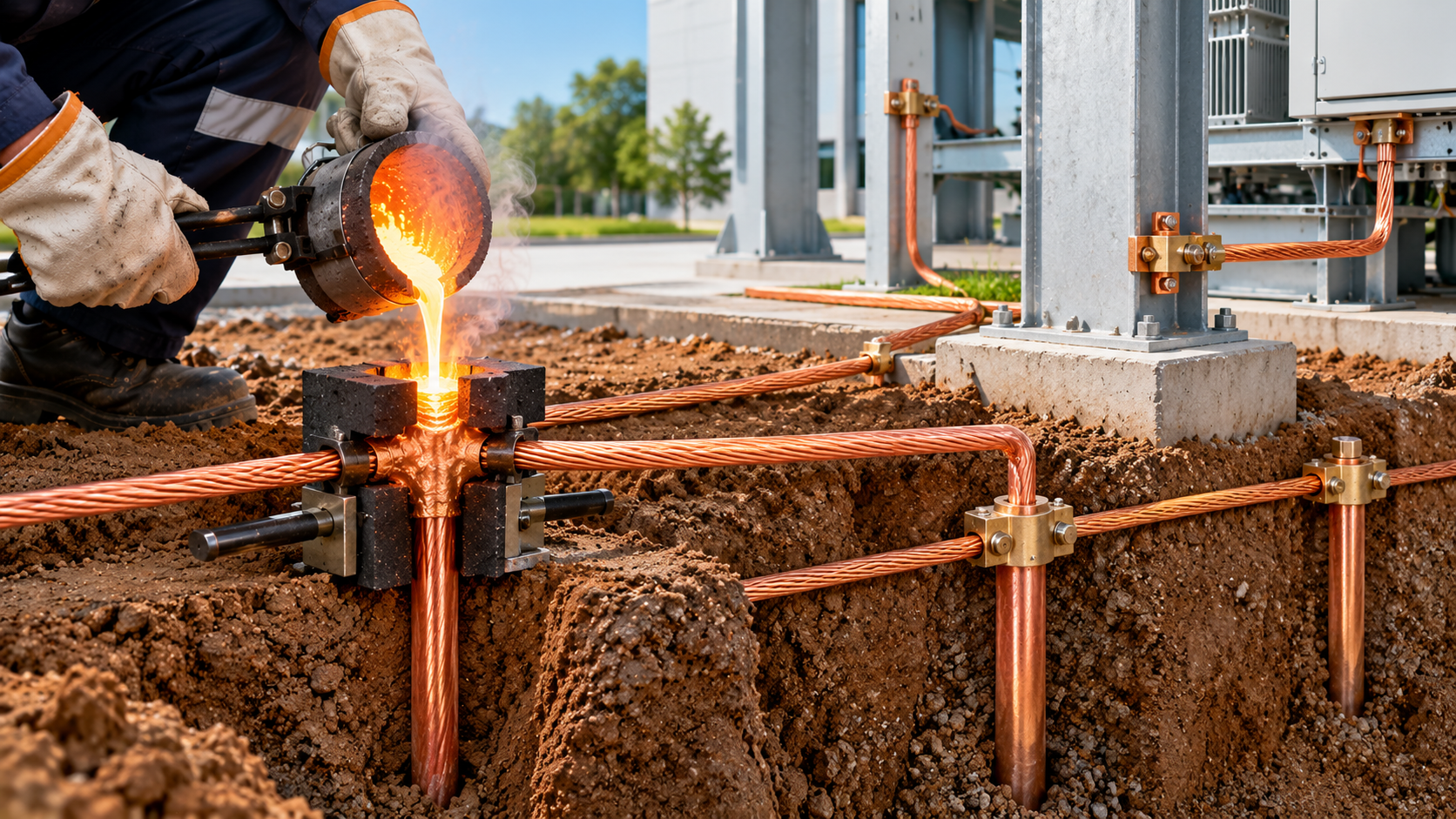
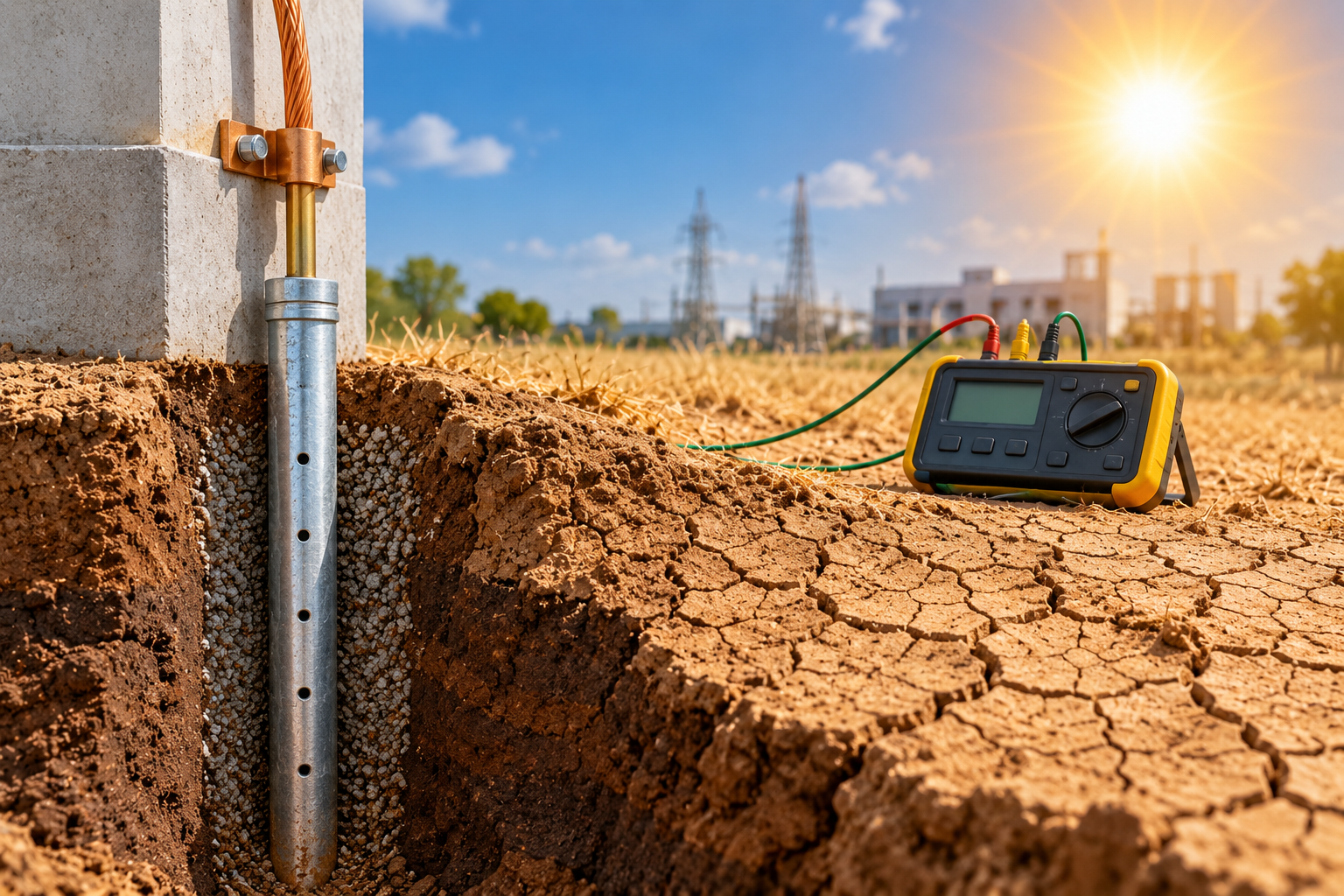
Earth electrodes, typically copper bonded rods, are driven into the ground at the base of each down conductor. In areas where soil resistivity is high, such as rocky terrain or sandy soil, chemical earthing compounds or multiple interconnected rods are used to bring the earth resistance down to the required level, generally below 10 ohms and ideally below 1 ohm for critical installations.

All earth electrodes must be interconnected through a ring earth conductor that runs around the base of the building. This ring equalises the potential across all electrodes and significantly improves the performance of the overall system.

Step 6: Install Equipotential Bonding and Surge Protection

A complete lightning protection installation does not stop at the air terminal and earth electrode. Internal protection is equally important. Equipotential bonding connects all metal services entering the building, including water pipes, gas pipes, data cables, and power lines, to the earthing system. This ensures there is no dangerous voltage difference between any two points inside the building when lightning current flows through the system.

Surge Protection Devices must be installed at the main electrical panel, sub-panels, and at sensitive equipment terminals to protect against conducted surges that travel through power and data lines during a nearby or direct lightning event. Without SPDs, even a well-earthed system can allow damaging transient voltages to reach critical equipment.

Step 7: Test, Inspect and Document

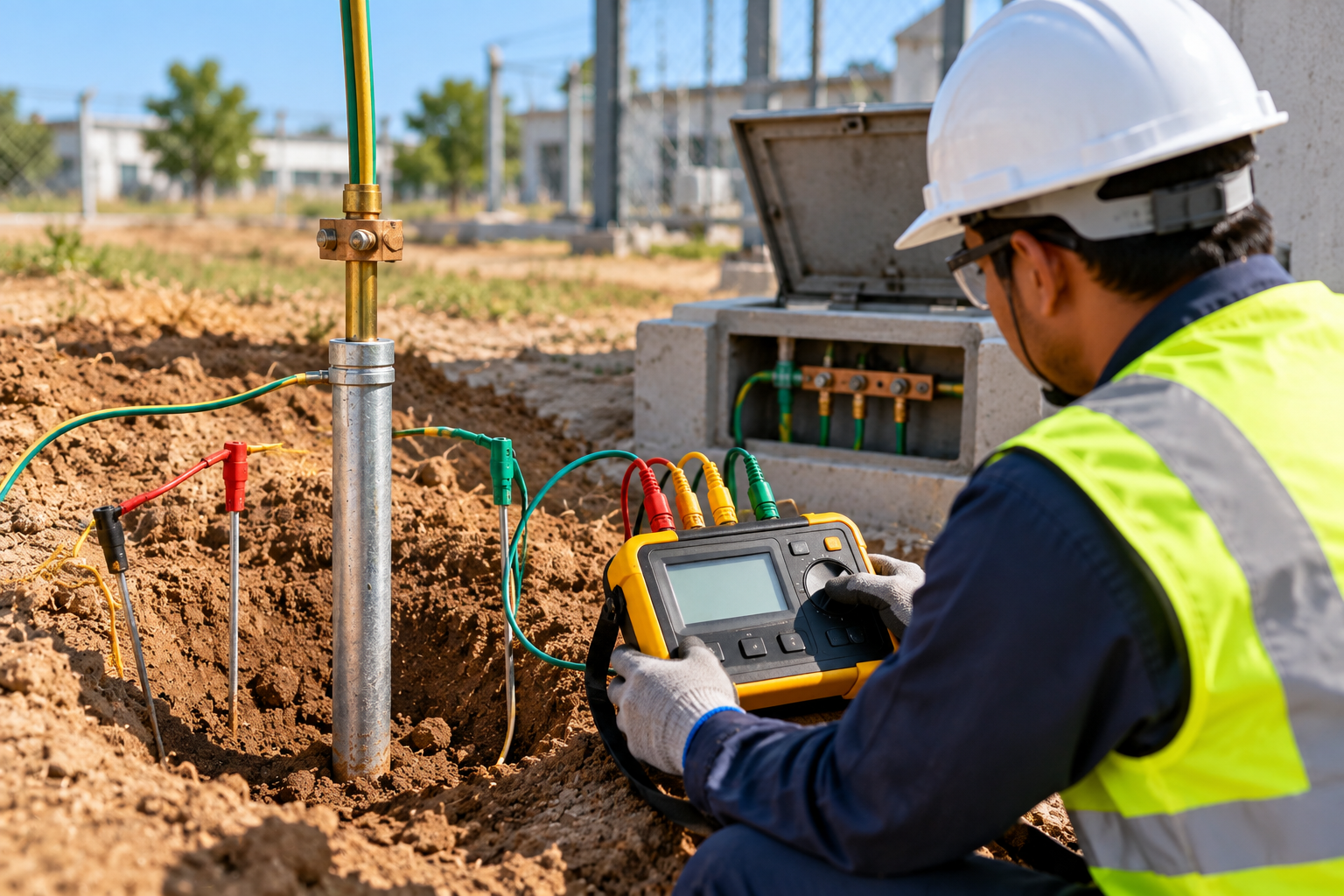
After installation is complete, every part of the system must be tested and documented before the building is considered protected. Earth resistance testing must confirm that resistance values meet the required standard. Visual inspections must verify that all connections are secure, all conductors are properly routed, and all components are installed as per the design drawings.

A full set of as-built drawings, test reports, and compliance certificates must be prepared and kept on file. These documents are required for regulatory inspections, insurance purposes, and future maintenance visits.

The system must be re-inspected at regular intervals, typically every one to two years, to check for corrosion, mechanical damage, or changes in earth resistance over time.

Why LES Ecotonik Systems Is the Right Partner for Your Installation as a Trusted Lightning Arrester Manufacturer in Hyderabad

A step by step process is only as good as the team and products behind it. LES Ecotonik System brings over three decades of experience in designing and supplying complete lightning protection systems for industrial and commercial buildings across India. As a leading Lightning Arrester Manufacturer in Hyderabad, LES Ecotonik Systems provides ESE arresters, conventional rods, down conductors, earth electrodes, bonding hardware, and surge protection devices that fully comply with IEC 62305, NF C 17-102, and CPRI tested standards. Every product leaves the facility with complete test documentation so your installation is audit-ready from day one.

Plan Your Installation with LES Ecotonik Systems, Your Reliable Lightning Arrester Manufacturer in Jaipur

Whether you are protecting a new industrial facility, upgrading an existing system, or designing lightning protection for a large commercial complex, LES Ecotonik Systems is equipped to support your project from risk assessment to final testing. As a trusted Lightning Arrester Manufacturer in Jaipur, LES Ecotonik Systems offers pre-bid consultation, protection layout design, product supply, and post-installation technical support across every stage of the project. With ISO 9001, 14001, and 45001 certification and a nationwide service presence, LES Ecotonik Systems is the one partner you need for lightning protection that is correctly installed, fully compliant, and genuinely effective. Visit www.leslightning.com today to get started.

Conclusion

Installing a lightning arrester correctly is a multi-step process that goes far beyond placing a rod on a rooftop. It begins with a proper risk assessment, moves through careful design of the air termination, down conductors, and earthing system, and ends with full testing and documentation. Every step matters. Missing even one can leave your building exposed to the full force of a direct strike. For industrial and commercial buildings in India where the cost of downtime, equipment loss, and fire damage is high, a properly installed lightning protection system is one of the most valuable safety investments you can make. With a proven Lightning Arrester Manufacturer in Hyderabad and Lightning Arrester Manufacturer in Jaipur like LES Ecotonik Systems guiding your project, you can be confident that every step is done right.

What Is Earthing and Bonding and Why Every Building Needs Both

Trusted Earthing & Bonding Manufacturer in Mumbai – High Performance Solutions

Introduction

Every building that uses electricity carries a hidden risk. Electrical faults, lightning surges, and unexpected voltage spikes can cause fires, equipment damage, and fatal electric shocks. Most people think about fire alarms and circuit breakers when it comes to building safety. But two of the most important and most overlooked safety systems are earthing and bonding.

These two systems work quietly in the background of every safe building. You cannot see them in action, but when something goes wrong electrically, they are the reason lives are saved and equipment is protected. This blog explains what earthing and bonding are, how they differ, and why every building must have both installed correctly.

What Is Earthing?

Earthing, also called grounding, is the process of connecting the electrical system of a building directly to the earth through a conducting path. The earth itself acts as a large neutral body that safely absorbs electrical current without building up dangerous voltage.

In a correctly earthed building, if a fault occurs such as a live wire touching a metal casing or a sudden lightning surge, the fault current immediately flows through the earthing conductor into an earth electrode buried in the ground. This path offers very low resistance, so the current takes it safely instead of travelling through a person or damaging equipment.

The key components of an earthing system are the earth electrode buried in the soil, the earthing conductor connecting it to the electrical system, and the main earthing terminal inside the building. A properly earthed building keeps the voltage of all exposed metal parts at zero. Touching a switch or metal surface is safe even during a fault. Without earthing, a fault could make the entire metal structure of a building live with electricity, turning every surface into a potential lethal hazard.

What Is Bonding?

Bonding connects all the different metal parts inside a building to each other and to the earthing system. Think about all the conductive elements in a typical building: metal water pipes, gas pipes, air conditioning ducts, structural steel, cable trays, lifts, and electrical panels. Each of these can carry a different electrical potential during a fault.

If one metal part becomes live and another nearby has a different voltage, the difference between those two potentials can cause a dangerous spark, an arc flash, or electric shock to anyone who touches both at the same time. Bonding eliminates this risk by ensuring all metal parts are at the same electrical potential. This is called equipotential bonding and it is one of the most critical safety features in any building.

There are two types. Main bonding connects incoming metal services like water and gas pipes to the main earthing terminal. Supplementary bonding is used in high-risk areas like bathrooms and plant rooms where people are in close contact with water and conductive surfaces simultaneously.

Earthing vs Bonding: The Key Difference

A direct comparison helps explain exactly how these two systems work differently. Earthing protects against faults by giving fault current a safe path into the ground. Bonding protects against voltage differences between metal parts by keeping everything at the same potential at all times.

Both are needed. Neither alone is sufficient. A building with only earthing but no bonding can still have dangerous voltage differences between metal parts during a fault. A building with only bonding but no earthing has no safe path for fault current to escape. Together they create a complete electrical safety system.

Why Every Building Must Have Both

In India, earthing and bonding are legal requirements under the Indian Electricity Rules, the National Building Code, and Bureau of Indian Standards specifications. Every electrical installation must have a properly designed earthing and bonding system before approval and commissioning.

Beyond compliance, the practical reasons are clear. Buildings without proper earthing and bonding face damaged equipment from surges, electrocution risks from metal surfaces carrying unexpected voltage, electrical fires from fault current travelling through unintended paths, and rejected insurance claims when investigations reveal missing systems.

For hospitals, data centres, industrial plants, and telecom towers the stakes are even higher. Sensitive equipment and life-critical systems depend entirely on a stable earthing and bonding system to function safely and reliably.

How LES Ecotonik Systems Delivers Reliable Solutions as a Trusted Earthing & Bonding Manufacturer in Chennai

Designing an earthing and bonding system correctly requires both engineering expertise and high-quality materials. LES Ecotonik System is one of India’s most trusted names in electrical safety, providing complete solutions for commercial, industrial, and infrastructure projects across the country. Businesses and infrastructure projects across Chennai trust LES Ecotonik Systems for their earthing needs, making them a go-to Earthing & Bonding Manufacturer in Chennai for copper bonded earth rods, earth plates, chemical earthing systems, bonding conductors, and all related hardware that fully comply with IS, IEC, and international quality standards. Every product is built for long service life, corrosion resistance, and consistent performance even in challenging soil conditions.

Choose LES Ecotonik Systems as Your Earthing & Bonding Manufacturer in Mumbai

From high-rise commercial towers to large industrial campuses, LES Ecotonik Systems has delivered earthing and bonding systems for some of India’s most demanding projects. As a trusted Earthing & Bonding Manufacturer in Mumbai, LES Ecotonik Systems provides end-to-end support including site assessment, system design, product supply, installation guidance, and post-installation testing to ensure every system meets regulatory and safety requirements. With ISO 9001, 14001, and 45001 certification and over three decades of field experience, LES Ecotonik Systems is the partner you can trust for protection that is built right. Visit www.leslightning.com or contact the LES Ecotonik Systems team today to discuss your requirements.

Conclusion

Earthing and bonding are the fundamental safety backbone of every electrical installation. Earthing gives fault current a safe path to the ground and prevents dangerous voltages from building up on metal surfaces. Bonding ensures all metal parts in the building stay at the same electrical potential, eliminating voltage difference risks. Together they protect people from electrocution, equipment from surge damage, and buildings from electrical fires. Every building owner, facility manager, and contractor has a responsibility to ensure both systems are correctly designed, installed, and regularly tested. With a reliable Earthing & Bonding Manufacturer in Chennai and Earthing & Bonding Manufacturer in Mumbai like LES Ecotonik Systems by your side, your building’s safety foundation is built right from the ground up.