
Published: October 26, 2026 | 8 Min Read
Why Should You Plan Earthing Before Your Building’s Final Electrical Installation?
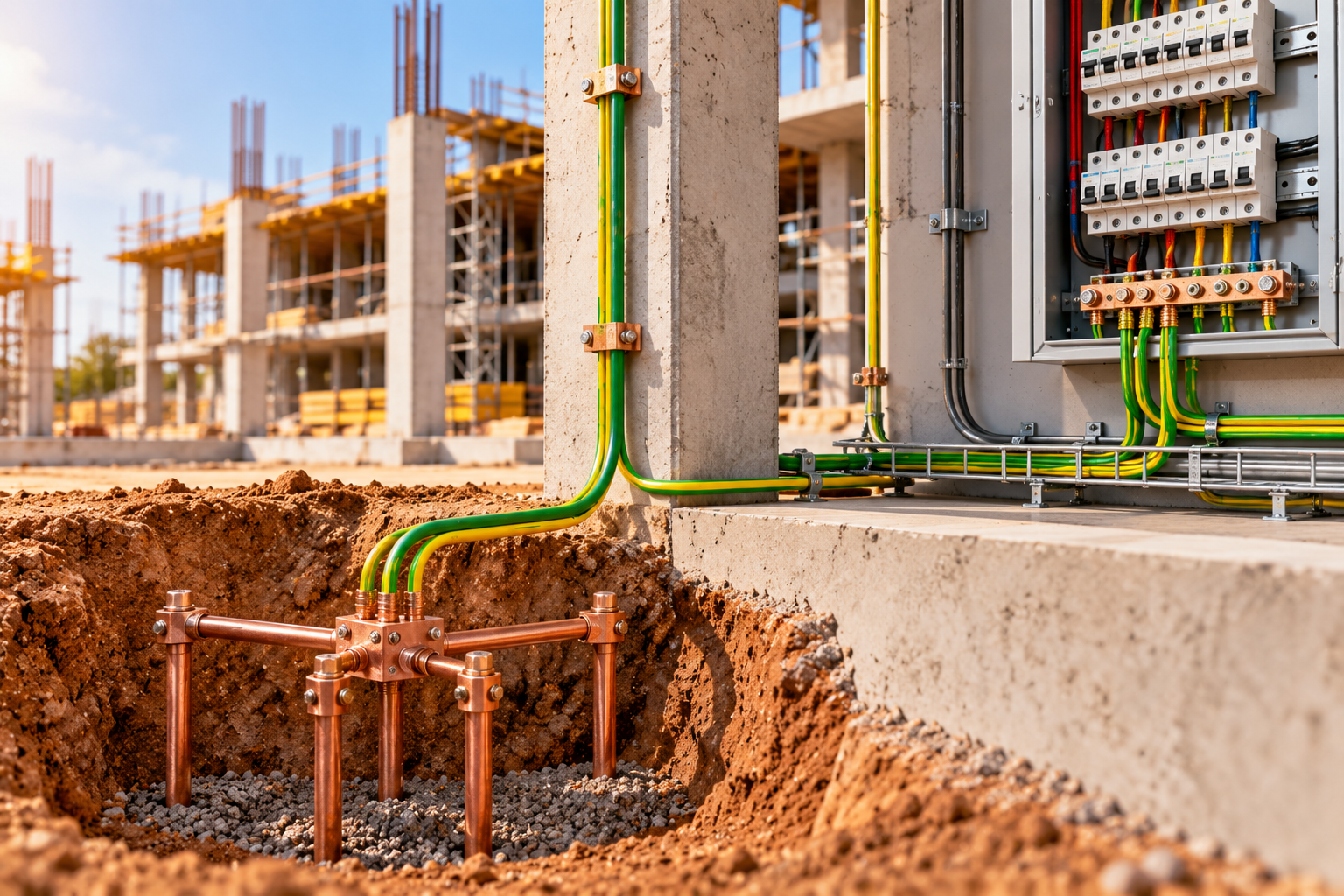
Earthing is an essential part of electrical safety and a coordinated lightning and surge protection system. However, it should not be treated as a last-minute addition to a building project.
Planning earthing before the final electrical installation helps engineers coordinate the grounding arrangement, conductors, earth electrodes, bonding connections, and other protection components with the building’s electrical requirements.
For residential, commercial, and industrial projects, the earthing system must be designed and installed correctly by qualified and experienced specialists. Understanding its role early in the project helps ensure that the earthing arrangement is considered as part of the overall electrical protection system.
What Is Earthing in a Building?
Earthing, also known as grounding, connects relevant parts of an electrical installation to the earth through an appropriate grounding arrangement.
An earthing system may include:
- Earth electrodes.
- Earthing conductors.
- Connections and joints.
- Bonding connections.
- Other components selected according to the electrical installation and project requirements.
Earthing also plays an important role in lightning protection. It provides a path for lightning currents to dissipate into the ground and supports the efficient operation of surge protection devices (SPDs).
Learn more about earthing and grounding systems offered by LES Ecotonik Systems.
Why Should You Plan Earthing Before the Final Electrical Installation?
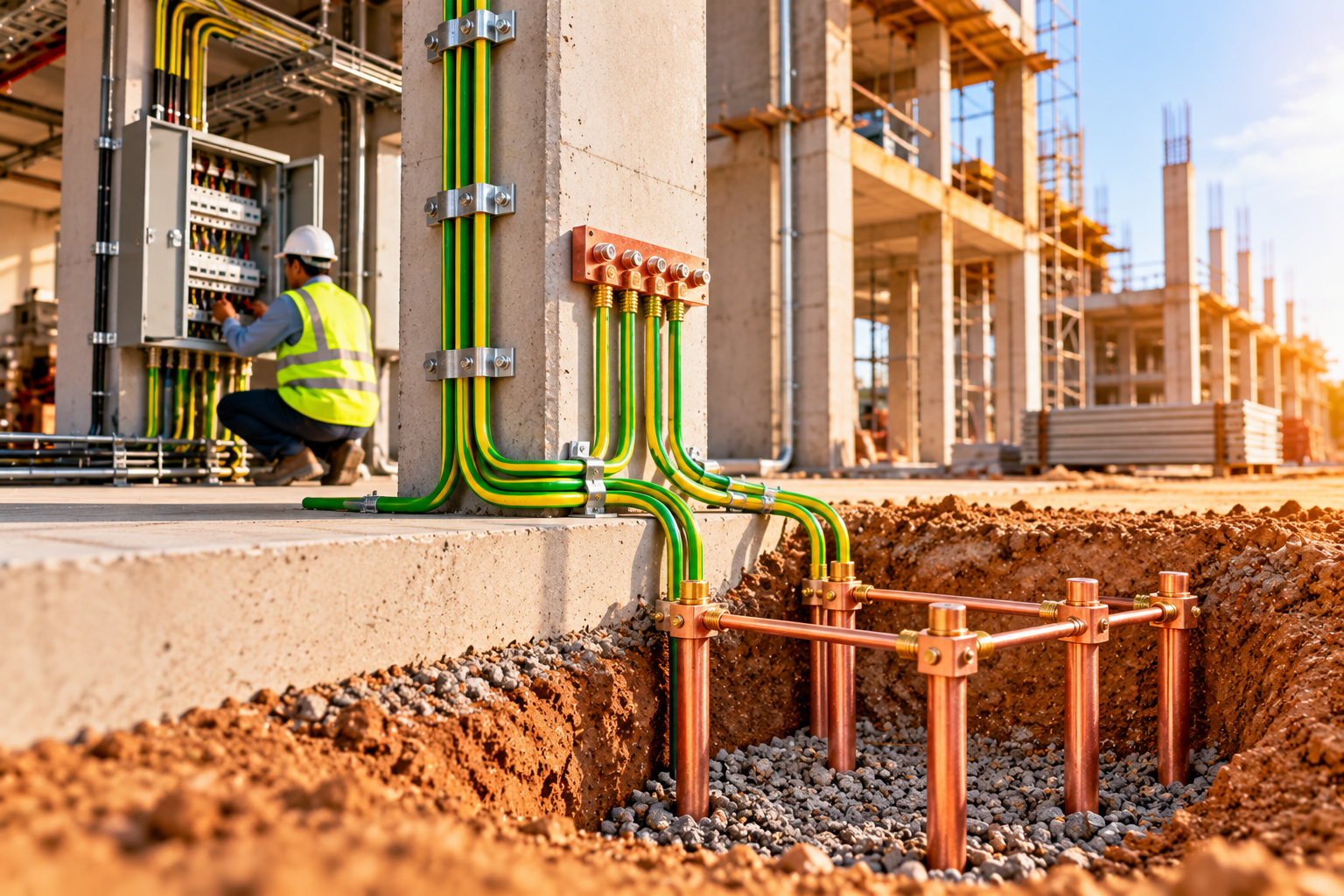
1. To Coordinate Earthing With the Electrical System Design
Earthing should be considered alongside the building’s electrical requirements rather than addressed only after the installation is complete.
The grounding arrangement, conductors, electrodes, and connections must be selected according to the intended application and project specifications.
Early planning allows engineers to consider how earthing, bonding, and other electrical protection components work together within the overall installation.
2. To Consider Earthing and Bonding Together
Earthing and bonding are related but serve different functions within an electrical protection system.
Earthing provides a connection to the earth, while bonding connects relevant conductive parts to help manage electrical potential differences.
Both need to be considered as part of the protection design. The appropriate arrangement depends on the building’s electrical installation and project requirements.
3. To Coordinate Lightning and Surge Protection
Earthing is an important part of a coordinated lightning and surge protection system. Its role extends beyond the building’s conventional electrical installation.
A complete protection arrangement may involve external lightning protection, earthing, bonding, and surge protection devices.
| Protection Component | Role in the Protection System |
|---|---|
| External lightning protection | Forms part of the building’s lightning protection arrangement. |
| Earthing system | Provides a path for lightning currents to dissipate into the ground. |
| Bonding | Helps manage electrical potential differences between connected conductive parts. |
| Surge Protection Devices (SPDs) | Protect electrical loads against sudden voltage spikes and surges in the power supply. |
These components should be considered together when developing the building’s electrical protection strategy.
Read more about the role of earthing in lightning protection .
4. To Select Suitable Components and Connection Methods
An earthing system is made up of interconnected components, and their suitability depends on the installation design.
Before selecting components, project teams should consider:
- The intended earthing arrangement.
- Compatibility between conductors and connection components.
- The relationship between earthing and bonding.
- Project specifications and technical documentation.
- Applicable inspection and testing requirements.
The connection method is also an important consideration. Exothermic welding, for example, can be used to create welded connections between compatible conductors or components in suitable earthing applications.
5. To Plan Inspection and Testing Requirements
Earthing design and installation should include consideration of the inspection and testing required for the completed system.
The condition of conductors, bonds, joints, and earth electrodes should be checked during appropriate inspections. Observations should be recorded, and periodic inspections and tests help identify whether maintenance is required.
Planning these requirements early helps ensure that verification is considered as part of the overall installation process.
What Should Be Considered Before Finalising the Earthing Design?
The following checklist provides a practical starting point for project teams.
| Planning Consideration | What Needs to Be Reviewed |
|---|---|
| Electrical requirements | The intended grounding arrangement and installation requirements. |
| Earthing components | The suitability of conductors, earth electrodes, and connections. |
| Bonding | The relationship between earthing and bonding arrangements. |
| Lightning protection | How earthing fits into the coordinated protection system. |
| Surge protection | The relationship between the earthing system and SPDs. |
| Inspection and testing | The requirements for checking the completed installation. |
The final design and installation should be carried out by qualified and experienced earthing specialists in accordance with the applicable standards and project requirements.
Why Is Professional Earthing Design Important?
Every electrical installation has its own requirements. Selecting components without considering the complete system may not address the needs of the particular project.
LES Ecotonik Systems provides earthing system design, installation, and maintenance services. Its technical team also undertakes testing and inspection of completed installations to check whether the installation meets the relevant specifications and applicable requirements.
Explore LES Ecotonik Systems’ electrical protection services for more information about earthing, grounding, and related protection solutions.
Plan Your Earthing System With LES Ecotonik Systems
Planning earthing before the final electrical installation is an important step in coordinating your building’s electrical protection requirements.
Looking for professional support with earthing system design, installation, testing, or maintenance? Contact LES Ecotonik Systems to discuss your project requirements.