
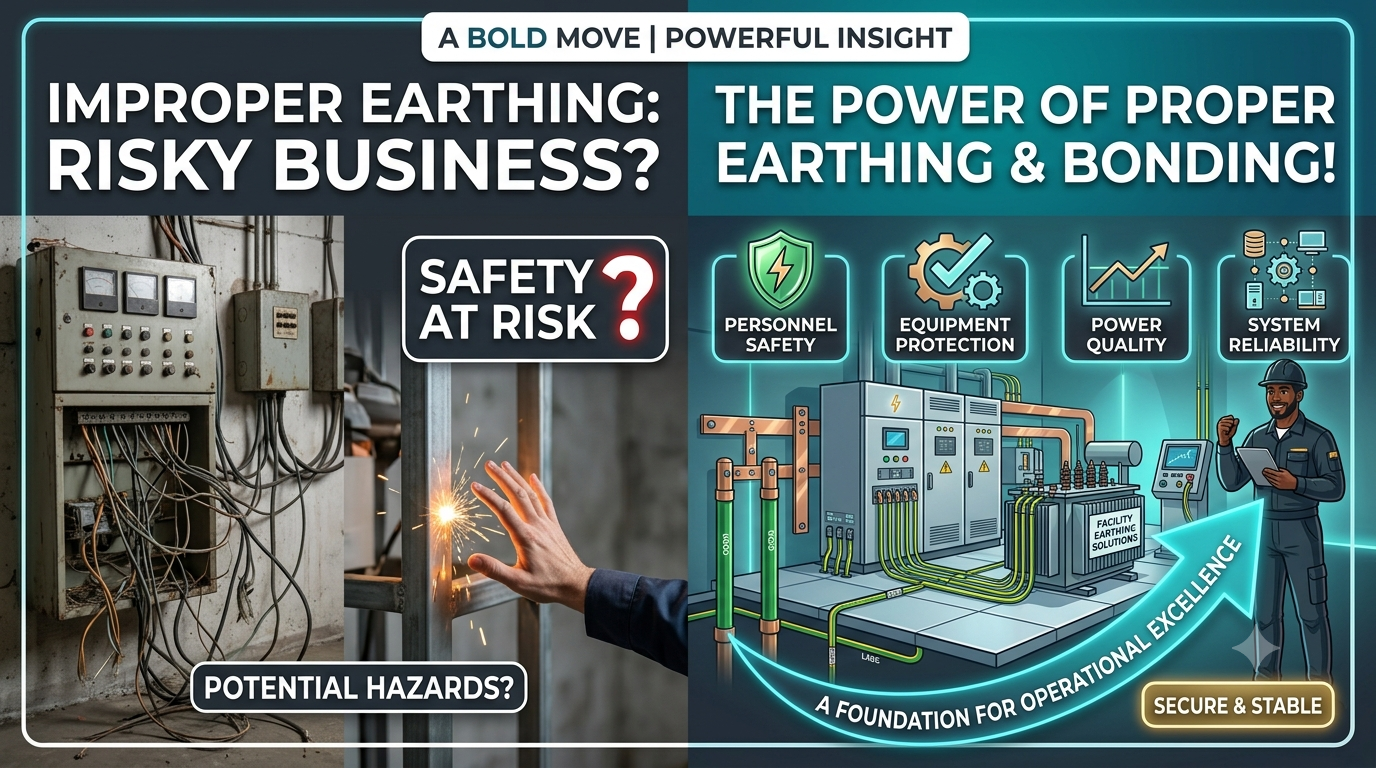
Top 10 Benefits of Proper Earthing and Bonding for Industrial Facilities
Introduction
Every industrial facility depends on a stable and safe electrical system, and at the heart of that safety lies one often underestimated component: earthing and bonding. Without a correctly designed earthing system, even the most advanced machinery and protection devices cannot function reliably. As a leading Earthing and Bonding Manufacturer in Bhubaneswar, LES Ecotonik Systems works closely with manufacturing plants, refineries, and processing units to build earthing systems that stand the test of time.
What Earthing and Bonding Actually Do
Earthing provides a safe path for fault current to travel into the ground, while bonding connects all metallic parts of a structure so they remain at the same electrical potential. Together, these two systems prevent electric shock, reduce fire risk, and protect equipment from voltage imbalances. For industrial units in Bhubaneswar, where humidity, soil resistivity, and coastal weather patterns vary significantly, a properly engineered earthing design is essential.
Top 10 Benefits for Industrial Facilities
- Protection of Human Life:A correctly bonded system ensures that exposed metal parts never carry dangerous voltage, protecting workers from accidental electric shock during equipment failure.
- Reduced Equipment Damage: When fault current has a clear and low-resistance path to earth, sensitive machinery and control panels are far less likely to suffer internal damage during electrical faults.
- Improved Surge Protection Performance: Surge protection devices can only perform well when connected to a low-resistance earth. Without solid earthing, even the best surge arrester will underperform.
- Fire Risk Reduction:Uncontrolled fault currents generate heat. A proper earthing and bonding network channels this energy safely away, lowering the chance of electrical fires in production areas.
- Stable Voltage Reference:Bonding keeps all connected equipment at the same potential, preventing dangerous voltage differences between machines, structures, and piping systems.
- Compliance with National Standards: Facilities that follow IS 3043 and related earthing standards avoid regulatory penalties and pass safety audits with confidence.
- Lower Insurance and Liability Risk: Insurers often review electrical safety documentation before issuing industrial policies. A verified earthing system can support better terms and fewer disputes during claims.
- Extended Equipment Lifespan:Motors, transformers, and control systems experience less electrical stress when earthing resistance is kept within recommended limits, extending their operational life.
- Better Performance of Sensitive Electronics: PLCs, sensors, and automation systems are highly sensitive to electrical noise. Correct bonding minimizes interference and supports accurate, stable operation.
- Protection During Lightning Events: A well-designed earthing network works alongside lightning protection systems to safely dissipate strike energy, reducing the risk of catastrophic damage to structures and equipment.
Common Earthing Mistakes Seen in Industrial Plants
- Using undersized earth electrodes that cannot handle actual fault currents
- Ignoring soil resistivity testing before installation
- Failing to bond metallic pipework, ladders, and structural steel
- Skipping periodic earth resistance testing after installation
- Mixing incompatible metals, which leads to corrosion over time
How LES Ecotonik Systems Supports Industrial Clients in Bhubaneswar
As an established Earthing and Bonding Manufacturer in Bhubaneswar, LES Ecotonik Systems(Link: Home page) provides complete earthing solutions including chemical earth electrodes, earthing strips, exothermic welding for permanent connections, and full bonding networks designed for industrial environments. Our engineers begin every project with a soil resistivity study, ensuring the system is designed around actual site conditions rather than generic assumptions.
Designing an Earthing System That Lasts
A durable earthing system is built on more than just correct sizing; it depends on the right materials and installation practices suited to local ground conditions. Facilities in Bhubaneswar should consider the following when planning a new system or upgrading an existing one:
- Selecting corrosion-resistant materials suited to local soil chemistry and moisture levels
- Using chemical earth electrodes in areas where soil resistivity is naturally high
- Installing multiple earth pits connected in parallel to reduce overall resistance
- Keeping earth pits away from underground pipelines or foundations to avoid interference
- Maintaining clear documentation of pit locations and resistance readings for future reference
Getting Started
Industrial facility owners in Bhubaneswar looking to upgrade or install a new earthing system should start with a professional site assessment. Our team at LES Ecotonik Systems can visit your facility, test soil conditions, and recommend the right combination of electrodes, conductors, and bonding points.
Conclusion
Earthing and bonding are not optional add-ons; they are the foundation of electrical safety in any industrial facility. From protecting workers to extending equipment life and supporting surge protection performance, the benefits are too significant to ignore. As a dependable Earthing and Bonding Manufacturer in Bhubaneswar, LES Ecotonik Systems is ready to help your facility build a safer, more reliable electrical environment.