
Published: September 28, 2026 | 10 Min Read
Why Does Earthing Resistance Increase During Summer?
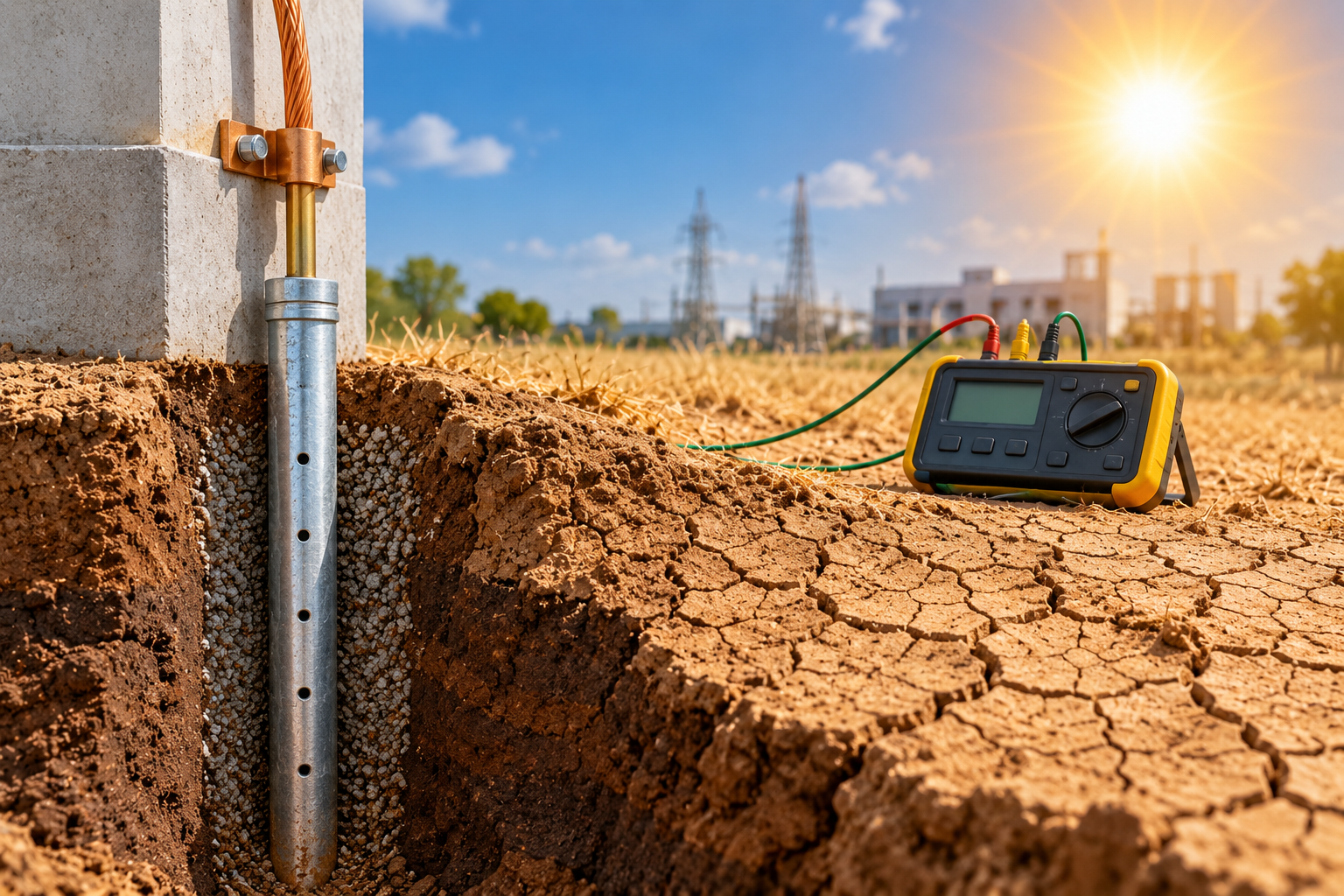
Earthing is an important part of electrical safety because it provides a controlled path for fault and surge currents to dissipate into the ground. However, an earthing system that performs well during wet or moderate conditions may show higher resistance during summer.
The main reason is often changes in soil moisture and soil resistivity. As the ground becomes dry, its ability to conduct electrical current can decrease. However, seasonal changes are not the only possible cause. The condition of the electrode, connections, backfill material and overall earthing design can also influence measured resistance.
Understanding the cause is important before attempting corrective action.
7 Causes of Increased Earthing Resistance During Summer
1. Loss of Soil Moisture
Dry weather reduces the moisture content around the earth electrode. Since moisture contributes to the electrical conductivity of soil, prolonged drying can increase soil resistivity and result in a higher measured earthing resistance.
This is particularly relevant in areas where summer temperatures are high and rainfall is limited.
2. Increased Soil Resistivity
Soil resistivity varies according to factors such as moisture, temperature, soil composition and mineral content. When summer conditions cause the soil to become significantly drier, its resistivity can increase.
Therefore, an increase in measured resistance does not automatically mean that the electrode has failed.
3. Poor Electrode-to-Soil Contact
An earth electrode needs effective contact with the surrounding soil. Drying, settlement or changes in the surrounding soil can affect this contact.
If the electrode is not adequately installed or the surrounding material has deteriorated, seasonal changes may make the problem more noticeable.
4. Corrosion of Earth Electrodes
Metallic electrodes and conductors can deteriorate over time, particularly when exposed to aggressive soil conditions.
Corrosion can reduce the effective condition of the electrode and its connections. If resistance continues to increase across different seasons, the electrode and associated connections should be inspected rather than assuming that summer dryness is the only cause.
5. Loose or Deteriorated Connections
A properly installed earthing electrode can still show problems if connections between the electrode, earthing conductor and bonding points become loose or deteriorated.
Common areas to inspect include:
- Earth conductor connections
- Clamps and terminals
- Jointing points
- Inspection chambers
- Connections to the main earthing network
- Corroded contact surfaces
6. Inadequate Earthing Electrode Arrangement
One electrode may not always provide the required performance for a particular electrical installation. Soil conditions, fault-current requirements and the overall system design need to be considered when determining the appropriate earthing arrangement.
If resistance remains high even after seasonal conditions improve, the earthing design itself may need technical evaluation.
7. Changes in Backfill or Surrounding Material
The material surrounding an electrode can influence its contact with the soil. Settlement, drying, deterioration or unsuitable installation practices may affect the electrical characteristics around the electrode.
For this reason, inspection should consider both the electrode and the surrounding installation rather than focusing only on the measured resistance value.
Summer Earthing Problems: What Should You Check?
| Possible Cause | What Changes During Summer | What to Inspect |
|---|---|---|
| Soil moisture loss | Ground becomes drier | Soil condition around electrode |
| Higher soil resistivity | Electrical conductivity may decrease | Seasonal resistance measurements |
| Poor soil contact | Drying or settlement may affect contact | Electrode installation |
| Electrode corrosion | Existing deterioration may become significant | Electrode and exposed connections |
| Loose connections | Connection quality may deteriorate | Clamps, joints and terminals |
| Inadequate electrode arrangement | Existing system may not meet requirements | Overall earthing design |
| Backfill deterioration | Surrounding conditions may change | Backfill and electrode surroundings |
How Can You Investigate a Rise in Earthing Resistance?
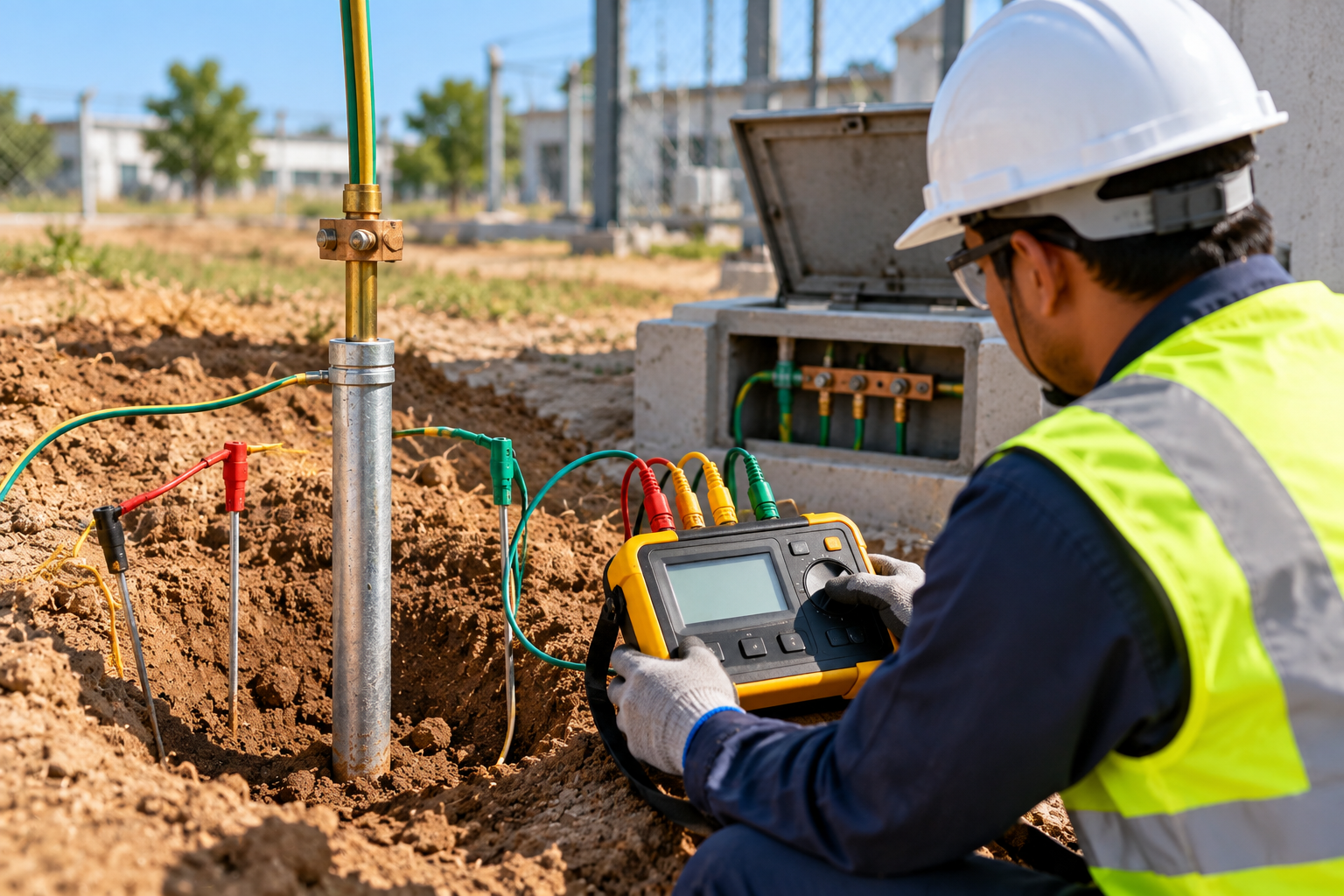
Start by comparing the current measurement with previous test results. Seasonal measurements can help determine whether the increase is temporary or part of a longer-term trend.
Next, inspect the accessible connections, electrode condition and earthing conductors. The soil conditions around the electrode should also be considered.
If the resistance remains higher than expected, a qualified electrical professional can evaluate the earthing arrangement, soil conditions and electrode configuration to determine the appropriate corrective action.
For installations requiring reliable grounding, proper electrode selection and installation are essential. LES Ecotonik Systems provides earthing and bonding solutions designed for different electrical and industrial applications.
Learn more about G.I. Pipe Electrode earthing solutions .
You can also explore Surge Protective Devices for additional protection against electrical surge-related risks.
Key Points to Remember
- Summer dryness can increase soil resistivity and affect earthing resistance.
- Higher resistance does not necessarily mean the earth electrode has failed.
- Moisture, soil type, electrode condition and connections can all influence measurements.
- Corrosion should be considered when resistance increases over a longer period.
- Loose or deteriorated connections can affect the effectiveness of an earthing system.
- Seasonal measurements are useful for identifying performance trends.
- Persistent high resistance requires inspection of the complete earthing system, not just the electrode.
Frequently Asked Questions
The most common seasonal factor is reduced soil moisture. As the soil becomes drier, its resistivity can increase, which may result in higher measured earthing resistance.
No. Soil moisture and resistivity can change significantly with weather conditions. However, persistent or progressively increasing resistance should be investigated for electrode deterioration, connection problems or design limitations.
Yes. Corrosion can affect the condition of electrodes, conductors and connections and may contribute to increased resistance over time.
The appropriate inspection and testing frequency depends on the type of installation, environmental conditions, applicable requirements and maintenance practices. Periodic testing helps identify changes before they become larger problems.
Check soil conditions, electrode condition, connections, conductors, inspection chambers, surrounding material and the overall earthing arrangement. A qualified professional should evaluate the system where resistance remains high.
Adding moisture may temporarily influence soil conditions, but it does not address underlying issues such as corrosion, poor connections, inadequate electrode installation or unsuitable earthing design.
A properly designed and maintained earthing system supports electrical safety and provides a suitable path for fault and surge currents, depending on the installation and protection scheme.
Conclusion
An increase in earthing resistance during summer is often associated with soil drying and increased soil resistivity, but several other factors can contribute. Electrode condition, corrosion, connections, surrounding material and the overall earthing design should all be considered when investigating a change.
Rather than treating seasonal resistance variation as an isolated issue, monitoring the system over time and inspecting the complete earthing arrangement can provide a clearer understanding of its performance. For industrial, commercial and other critical installations, selecting and maintaining an appropriate earthing system is an important part of electrical protection.
Need Reliable Earthing Solutions?
Explore our G.I. Pipe Electrode solutions for reliable earthing applications.
You can also learn more about Surge Protective Devices for electrical and surge protection requirements.