Published: September 14, 2026 | 8 Min Read
Why Is Your Building Still at Risk Even After Installing a Lightning Protection System?
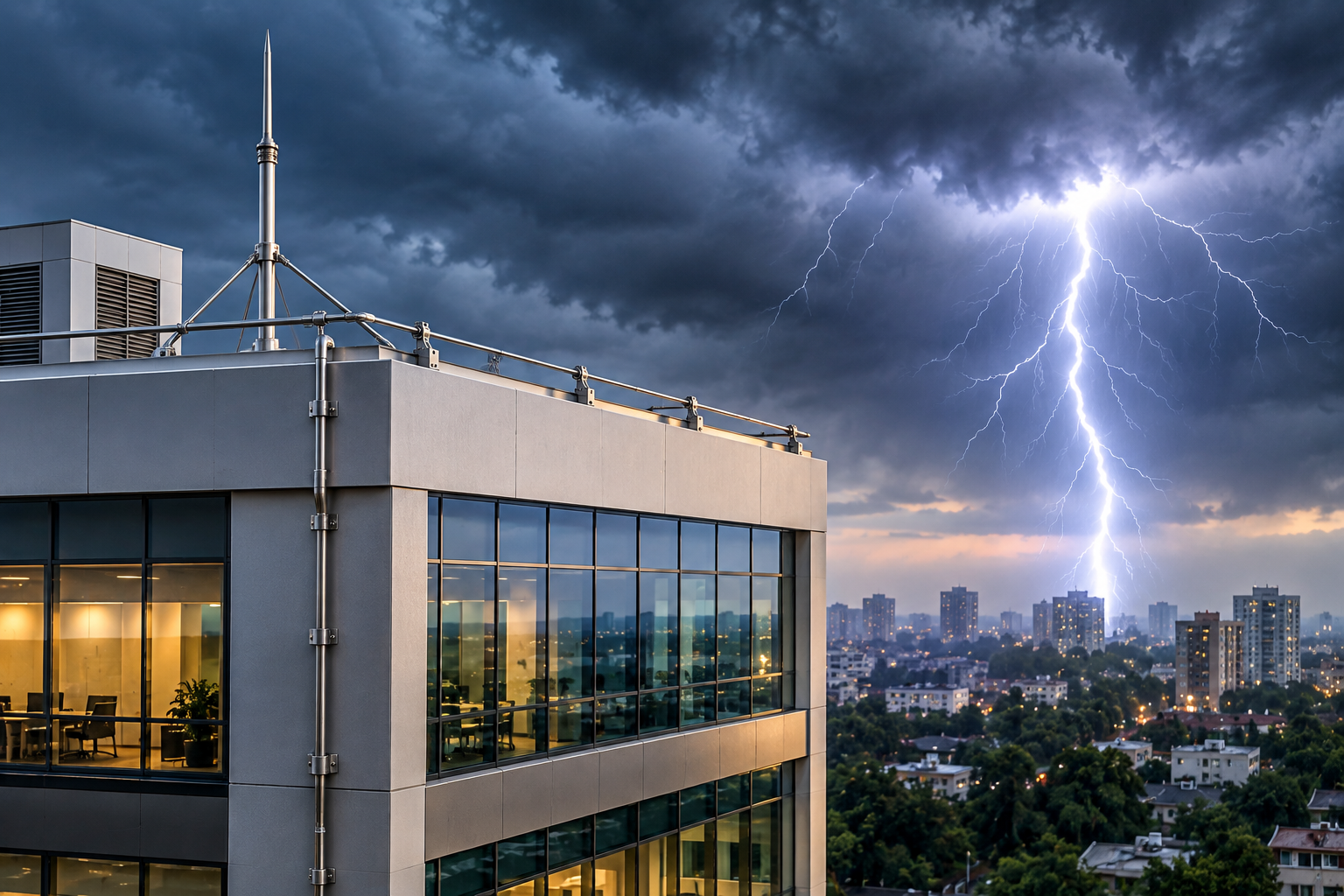
A lightning protection system is not just about installing a lightning arrester and leaving it there. For a protection system to continue functioning properly, the complete installation needs to be checked. Conductors, bonds, joints, earth electrodes and the overall installation condition all have a role to play. LES Ecotonik Systems recommends detailed testing and inspection of completed installations to verify that the system has been installed according to the correct specification and applicable requirements.
So, if your building already has a lightning protection system, the important question is not simply: “Is a lightning arrester installed?”
The better question is: “Is the complete protection system still in the right condition?”
What Does a Complete Lightning Protection System Involve?
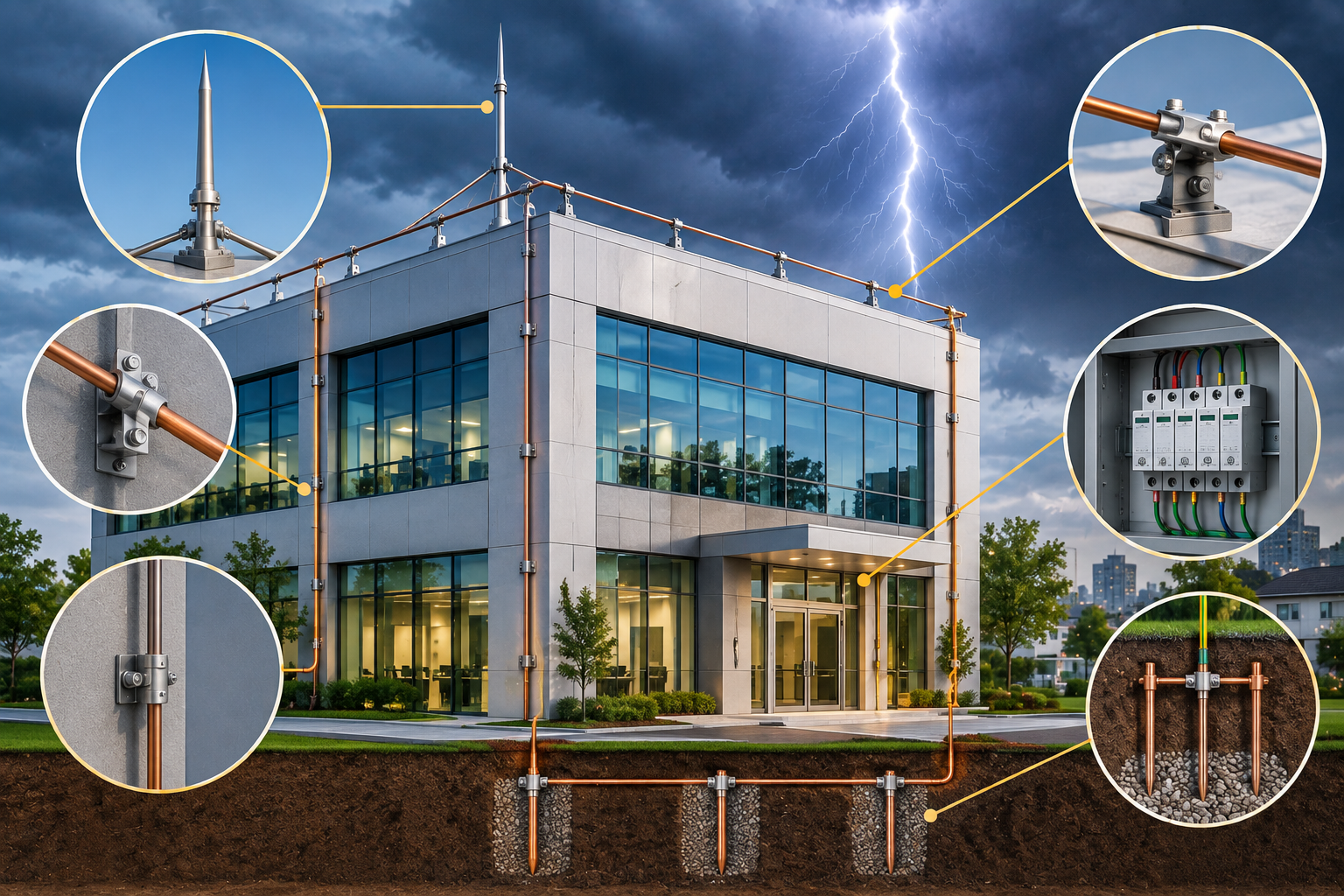
Lightning protection works as a system rather than as one isolated component. LES Ecotonik Systems provides solutions covering external lightning protection, surge protection, earthing and grounding systems, and bonding. The company also provides installation, testing, inspection and maintenance support for lightning protection systems.
This means checking only one component may not give a complete picture of the installation. The main areas that need attention include:
| Protection Area | What Needs Attention |
|---|---|
| Conductors | Mechanical condition of the conductors |
| Bonds | Condition of bonding connections |
| Joints | Condition of joints and connections |
| Earth Electrodes | Physical condition and installation |
| Earthing | Correct design, installation and maintenance |
| Surge Protection | Protection of electrical systems from sudden spikes and surges |
A proper inspection brings these areas together instead of looking at the lightning arrester alone.
1. Check the Condition of the Conductors
The conductors form an important part of the lightning protection installation. During inspection, LES states that the mechanical condition of conductors should be checked and observations should be recorded.
This is important because simply having conductors installed does not tell you their current condition. A completed installation should therefore be inspected rather than assumed to remain unchanged indefinitely.
For an existing system, inspection can help identify whether maintenance is required and whether the installation continues to match the intended specification.
2. Inspect Bonds and Joints
The condition of bonds and joints is another part of the inspection process identified by LES. Connections within a lightning protection and earthing installation need to be checked as part of the overall system assessment.
LES specifically includes bonds and joints among the components that should be examined during completed-installation inspections.
This is why a visual check of only the lightning arrester is not enough. The complete installation should be considered.
3. Do Not Ignore the Earth Electrodes
The earth termination side is another important part of the system. LES states that the mechanical condition of earth electrodes should be checked during inspection.
Periodic inspections and tests help indicate what maintenance, if any, is needed. The earthing system also has a specific role within coordinated lightning and surge protection.
According to LES, the earthing system is responsible for safely dissipating lightning currents to the ground and plays an important role in the efficient operation of surge protection devices.
For this reason, lightning protection and earthing should not be considered completely separate activities.
You can explore the Earthing and Grounding Systems service page for more information about its earthing solutions.
4. Lightning Protection and Surge Protection Are Not the Same Thing
Another important point is the difference between external lightning protection and surge protection.
LES describes a Surge Protection Device (SPD) as a component of the electrical installation protection system. The device is connected in parallel to the circuit of the loads it protects.
When transient overvoltage occurs, the impedance of the SPD decreases so that surge current is driven through the SPD, bypassing the sensitive equipment.
This means a building’s protection strategy can involve different protection functions. External lightning protection addresses the lightning protection system, while surge protection is part of protecting electrical installations from sudden spikes and surges.
LES provides a complete range of power surge protection devices through its Surge Protective Devices offering.
5. Earthing Needs the Right Design and Installation
Earthing is not simply about putting an electrode into the ground. LES states that both HV and LV earth systems should be correctly designed and installed by qualified and experienced earthing specialists.
The company also provides support for designing, installing and maintaining earthing systems. This becomes particularly relevant when evaluating an existing lightning protection installation.
If the lightning protection system is being reviewed, the earthing arrangement should also be considered as part of the overall protection system.
For more information, visit the LES Earthing and Grounding Systems service page .
6. Installation Inspection Should Not Be Skipped
One of the clearest points on the LES website is that completed lightning protection installations should undergo testing and inspection.
LES’s engineering team undertakes detailed testing and inspection to verify that completed installations are in accordance with the correct specification and applicable requirements.
The inspection includes checking conductors, bonds, joints and earth electrodes, with observations recorded. This gives building owners and project teams a practical reason to review the condition of an existing installation instead of simply assuming that an older system is still functioning as intended.
7. Maintenance Is Part of the Protection System
Lightning protection should not be treated as a completely one-time activity. LES states that periodic inspections and tests indicate what maintenance, if any, is needed.
The company also highlights its commitment to helping customers keep lightning protection systems installed and maintained to the required standard, with installation services and continuous maintenance support.
That makes inspection and maintenance an important part of the overall protection process. A system that has been installed should also be assessed over time.
When Should an Existing Lightning Protection System Be Reviewed?
A review is especially useful when a project team needs to verify the current condition of an existing installation. The inspection should consider:
- The mechanical condition of conductors
- The condition of bonds
- The condition of joints
- The condition of earth electrodes
- The earthing and grounding arrangement
- The surge protection arrangement
- Whether maintenance is required
- Whether the completed installation matches the required specification
LES provides site assessment, installation guidance, testing, inspection and maintenance support as part of its lightning and electrical protection services.
Lightning Protection System Inspection: A Simple Checklist
Before considering an existing installation complete, review these areas:
- Conductors checked
- Bonds checked
- Joints checked
- Earth electrodes checked
- Earthing system reviewed
- Surge protection reviewed
- Installation specification verified
- Testing and inspection completed
- Maintenance requirements identified
This checklist should not replace a professional inspection. It can instead help project teams understand the main areas that need attention.
Why the Complete System Matters
A lightning protection system should be considered as a complete arrangement rather than as a single product. LES Ecotonik Systems works across lightning protection, surge protection, earthing and grounding, with services covering design, installation, testing, inspection and maintenance.
Its product and service portfolio includes:
- External Lightning Protection Devices
- Surge Protective Devices
- Earthing and Grounding Systems
- Exothermic Welding
- Control & Instrumentation
- Transformer CT/PT solutions
LES also states that its products include devices based on NF C 17-102 (2011), UNE 21186:2011 and CPRI-tested devices, where applicable. The organisation is ISO 9001, ISO 14001 and ISO 45001 certified.
Frequently Asked Questions
Not necessarily. LES presents lightning protection as a broader system involving external lightning protection, earthing and grounding, surge protection and related components. Completed installations should also be inspected and tested.
LES states that the mechanical condition of conductors, bonds, joints and earth electrodes should be checked, with observations recorded during inspections.
According to LES, the earthing system safely dissipates lightning currents to the ground and also plays an important role in the efficient operation of surge protection devices.
LES describes Surge Protection Devices as components of electrical installation protection systems that protect loads from sudden spikes and surges in the power supply.
Yes. LES states that periodic inspections and tests indicate what maintenance, if any, is needed. LES also provides continuous maintenance support for lightning protection systems.
Need Your Lightning Protection System Checked?
If your building already has a lightning protection installation and you want to verify its condition, LES Ecotonik Systems can support you with testing, inspection, installation and maintenance of lightning protection systems.
Contact LES Ecotonik Systems
For project or service enquiries, contact LES Ecotonik Systems:
Phone: +91 98869 63195
Email: info@leslightning.com
Visit the official enquiry page to get in touch with the LES team.