Published: August 17, 2026 | 8 Min Read
Do Rooftop Solar Panels Need Lightning Protection?
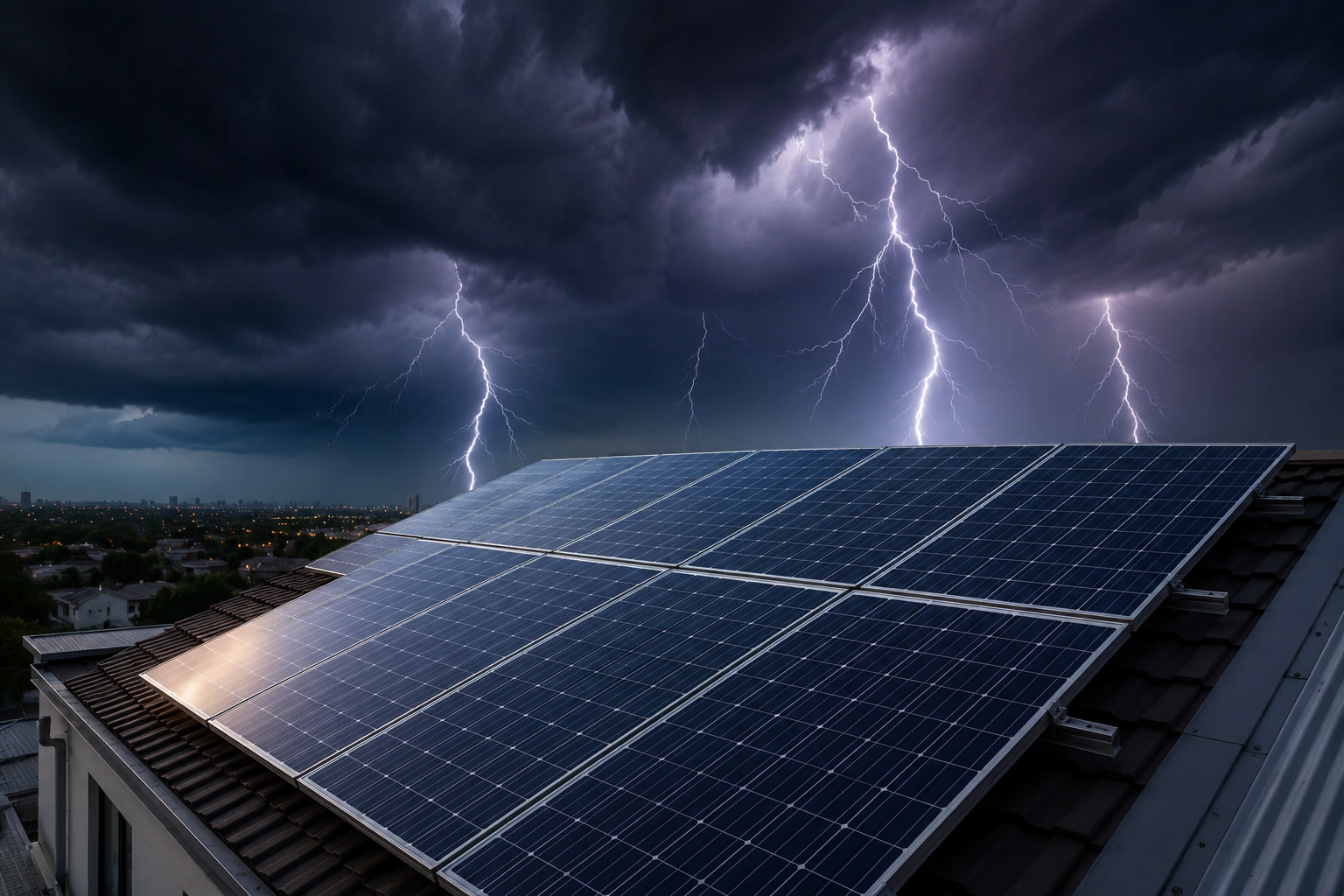
Quick Answer: Yes. Rooftop solar panels can be exposed to direct lightning strikes as well as induced surges from nearby storms. Since solar systems contain sensitive equipment such as inverters, DC combiner boxes, monitoring systems, and control electronics, basic earthing alone is not enough. A properly designed lightning and surge protection system provides an additional layer of protection.
Why This Question Comes Up So Often
Many solar EPC contractors and homeowners assume that a rooftop system passing electrical inspection with standard grounding is automatically protected against lightning. This is one of the most common misunderstandings in the industry,and the gap is rarely explained during installation.
As a Lightning Arrester Manufacturer working across multiple states in India, we hear this question often, usually after a nearby storm damages an inverter with no visible cause Learn more about LES Ecotonik Systems
How Lightning and Surges Actually Damage Solar Systems
Direct Strikes
A rooftop is often one of the tallest points on a building, and solar panels are installed directly on this elevated surface. This can increase their exposure to lightning compared with equipment positioned at ground level.
Induced Surges – The Bigger, Less Understood Risk
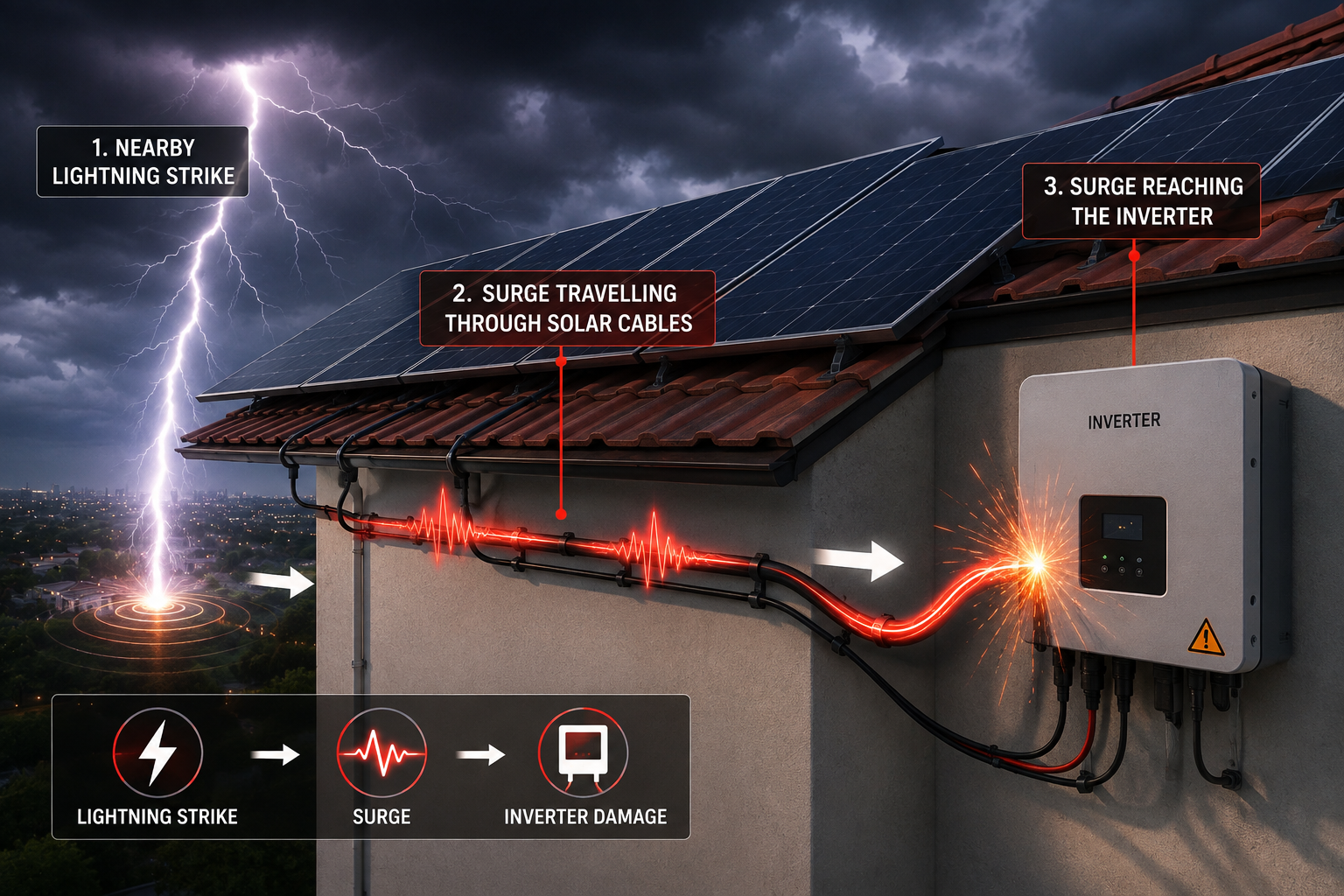
A lightning bolt does not have to strike the solar panel directly to cause damage. A lightning strike within a few hundred metres can induce a powerful voltage spike into nearby wiring, including solar cables and grid connections.
During India’s monsoon season, these indirect surge events can create significant risks for solar installations, yet they are often overlooked during system planning.
What Typically Gets Damaged
- Inverter internal components
- DC combiner boxes
- Monitoring and communication modules
- Wiring and connected control equipment
Does Standard Solar Installation Already Include Lightning Protection?
This is where most confusion happens. A typical solar installation includes basic equipment earthing and standard DC and AC circuit breakers. However, it usually does not include a properly rated external arrester or a coordinated DC surge protection device sized specifically for the system.
Earthing protects people and equipment against fault currents and electric shock. It does not by itself stop a high-energy surge from damaging sensitive inverter components.
These are separate layers of protection, and confusing earthing with surge protection is one of the main reasons rooftop solar systems remain vulnerable.
Get your existing installation audited by our team to identify potential protection gaps.
When Is Lightning Protection Necessary for Rooftop Solar?
Rather than treating lightning protection as a blanket requirement, it is useful to consider several practical risk factors before selecting the appropriate protection system.
- Building height relative to nearby structures and trees
- Regional thunderstorm and monsoon activity in your area
- System size and the replacement cost of the inverter
- Presence of sensitive monitoring or IoT-connected equipment
A small rooftop system in a low-storm-activity area has a different risk profile from a large commercial rooftop array in a high-thunderstorm zone.
Reviewing these factors with a qualified engineer provides a realistic protection strategy instead of relying on a generic installation approach.
What a Complete Rooftop Solar Protection Setup Looks Like
External Lightning Protection
External protection includes air terminals positioned according to recognised rolling sphere or protection angle methods, properly rated down conductors, and a dedicated earthing arrangement.
Internal Surge Protection
Internal protection, in the form of a solar surge protection device, uses Type 1 and Type 2 SPDs on both the DC and AC sides to absorb surge energy before it reaches the inverter.
This differs from surge protection for solar parks, which is designed for utility-scale ground-mounted plants. However, the underlying principle of solar inverter surge protection remains similar.
View our Surge Protective Devices range for additional information about surge protection solutions.
Earthing and Bonding
Earthing and bonding for the solar array should not be considered a replacement for surge protection devices. Both systems work together to provide a more complete protection strategy.
Explore Earthing and Grounding Systems for more information.
Common Myths EPC Contractors and Homeowners Believe
- Panels are grounded, so we’re covered – Grounding manages fault current and shock risk, but it does not eliminate surge energy.
- My inverter has built-in surge protection – Many inverters include a basic, limited-rating MOV, but this is not necessarily the same as a coordinated, site-rated SPD system.
- We rarely get lightning here – Induced surges can travel through grid-connected lines, so lightning several kilometres away can still create damaging electrical transients.
How to Check If Your Rooftop System Is Protected
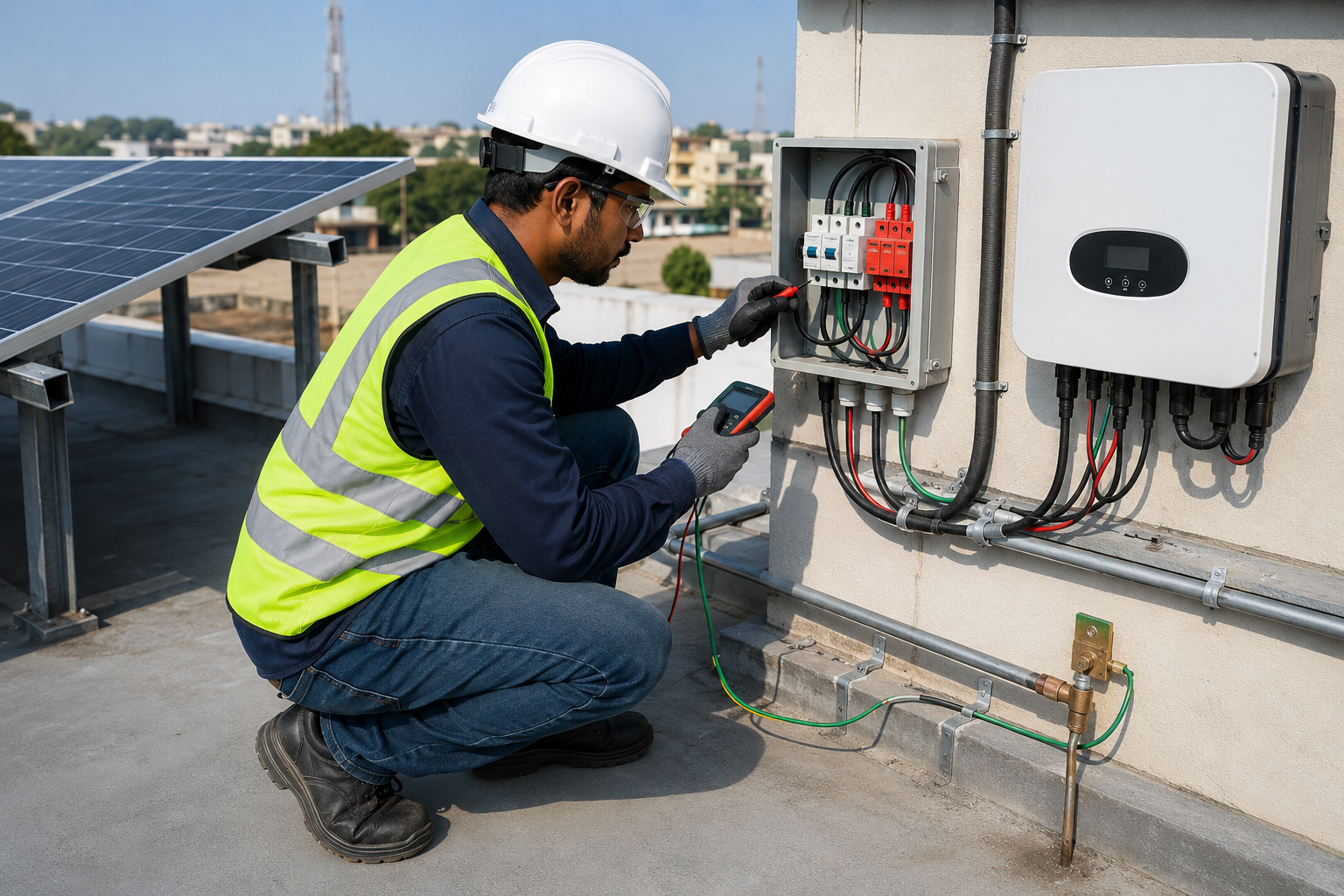
- Confirm whether an SPD is fitted at the DC combiner box and check its rating.
- Verify that there is a separate SPD on the AC side near the inverter output.
- Ask for the documented earth resistance test value.
- Check whether the SPD is Type 1, Type 2, or a combined unit.
- Confirm that the SPD and lightning protection setup follows recognised standards such as NF C 17-102 and UNE 21186:2011, and is CPRI tested.
Why Work With an Experienced Lightning Arrester Manufacturer?
Every rooftop is different. Building height, local storm activity, system size, and cable routing can all affect the appropriate level of protection.
Working with an established Lightning Arrester Manufacturer means the system can be engineered around actual site conditions instead of relying on a generic protection kit.
LES ECOTONIK SYSTEM has been active in lightning protection, surge protection, and earthing since 2005. The company is a Make in India organisation and holds ISO 9001, ISO 14001, and ISO 45001 certification. See our quality standards and certifications
Frequently Asked Questions
Yes. Induced surges can travel through grid connections regardless of how often lightning strikes locally, so low-activity areas are not completely risk-free.
Requirements can vary by state and building type. It is best to confirm the applicable local codes and project requirements for your specific rooftop installation rather than assume a blanket rule.
Many manufacturers exclude lightning and surge-related damage from warranty coverage when proper external protection was not installed. It is therefore important to check the specific warranty terms of your inverter.
A surge protection device, or SPD, protects connected equipment from surge energy entering through wiring. A lightning arrester is designed to intercept a direct lightning strike and safely divert the associated current to earth.
Do Rooftop Solar Panels Really Need Lightning Protection?
Rooftop solar systems face a real and often invisible risk from induced surges, not just direct lightning strikes. Standard solar installation covers basic electrical safety but usually does not provide complete lightning and surge protection.
If you are unsure whether your rooftop solar system is properly protected, it is worth getting the installation assessed before the next storm season.
Need a Site-Specific Solar Protection Assessment?
LES ECOTONIK SYSTEM designs and manufactures lightning and surge protection solutions engineered for real site conditions across India. Get in touch with our team for a site-specific assessment before the next storm season.
Visit our homepage to explore our complete range of lightning, surge protection, and earthing solutions.