Why Bangalore’s IT Parks and Tech Campuses Need Advanced Lightning Protection
Bangalore is India’s technology capital. It is the city where global software giants, homegrown startups, semiconductor firms, aerospace companies, and research institutions have all built their bases. The city’s IT corridors in Whitefield, Electronic City, Manyata Tech Park, Outer Ring Road, and Hebbal house thousands of crores worth of digital infrastructure running every single day without pause.
What most facility managers and campus developers do not factor in seriously enough is the city’s weather. Bangalore sits at an elevation of over 900 metres above sea level. It receives heavy pre-monsoon and monsoon thunderstorms between March and October every year. The combination of altitude, open land around tech parks, and tall structures makes Bangalore’s IT campuses significantly more exposed to lightning strikes than most people realise.
This blog explains why advanced lightning protection is not optional for Bangalore’s tech campuses and what the right protection strategy looks like.
Bangalore’s Weather Makes Lightning Risk Very Real
Bangalore experiences frequent thunderstorm activity, especially during the pre-monsoon months of March, April, and May.
The city’s elevation increases the likelihood of cloud-to-ground lightning strikes compared to lower-lying urban areas.
Large open campuses with tall buildings, rooftop cooling towers, and elevated antenna structures act as natural lightning attraction points.
Unlike coastal cities, Bangalore’s storms are often sudden and intense, leaving little warning time for occupants and facility teams.
Ground flash density in the Bangalore region is high enough to make lightning risk assessment mandatory for large tech campuses under IEC 62305 guidelines.
What Is at Stake Inside a Tech Campus
Data centres running mission-critical workloads for banking, healthcare, retail, and government clients.
Server rooms housing physical infrastructure worth tens of crores.
Networking equipment including routers, switches, and fibre termination panels that are highly sensitive to voltage surges.
UPS systems, precision air conditioning units, and power distribution boards spread across multiple floors.
Surveillance and access control systems that protect physical security of the campus.
Telecom towers and rooftop antennas that are among the tallest points on any campus and extremely vulnerable to direct strikes.
Fire detection and suppression systems that must remain functional at all times, especially during a storm event.
A single lightning strike, even one that hits a point 50 to 100 metres away from the building, can induce a surge powerful enough to damage all of the above systems simultaneously through shared power and data cables.
Why Standard Protection Is Not Enough for IT Campuses
A basic lightning rod or simple earthing pit is designed for residential or small commercial structures, not for the scale and sensitivity of an IT campus.
Tech campuses have multiple buildings, underground cable networks, elevated walkways, and shared power infrastructure that create complex surge pathways.
The density of electronic equipment inside these campuses means that even a small residual surge that bypasses basic protection can cause widespread equipment failure.
Many campuses use raised floor data rooms, which create additional challenges for routing down conductors and bonding metallic structures properly.
Rooftop solar panels, HVAC systems, and DG sets add multiple new risk points that need individual protection planning.
Standard earthing systems may not maintain the low resistance values required for safe lightning discharge in Bangalore’s rocky and laterite soil conditions.
What Advanced Lightning Protection Covers for Tech Campuses
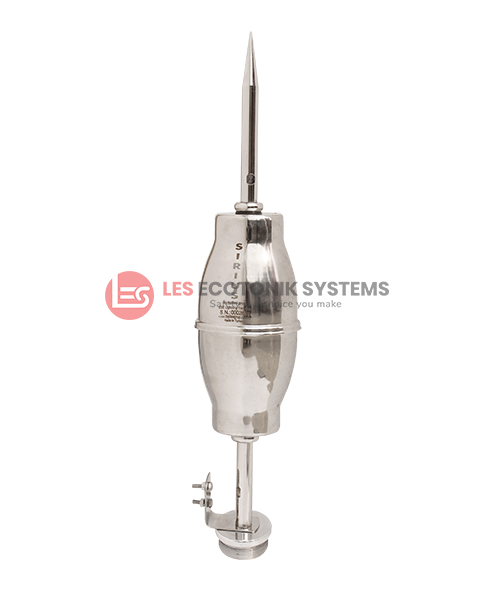
Early Streamer Emission arresters installed at the highest points of each building to intercept lightning before it reaches critical structures.
A properly designed down conductor network that routes energy safely from the arrester to the earth termination system without passing near sensitive equipment rooms.
A ring earth electrode system around each building connected to a low-resistance earth termination network.
Chemical earthing solutions specifically designed for Bangalore’s rocky soil where conventional earth pits fail to achieve acceptable resistance levels.
Surge Protection Devices installed at the main LT panel, sub-distribution boards, UPS input points, server room panels, and individual sensitive equipment locations.
Equipotential bonding of all metallic structures including cable trays, false flooring frames, server racks, and rooftop structures to prevent potential differences during a strike.
Lightning strike counters installed on each arrester to record strike events and support maintenance planning.
Separate protection planning for rooftop antennas, telecom towers, and solar arrays which carry their own independent risk profiles.
Planning a Lightning Protection System for a Multi-Building Campus
Begin with a site-wide lightning risk assessment as per IEC 62305 covering all buildings, open areas, underground cable routes, and rooftop installations.
Classify each building by Lightning Protection Level based on occupancy, equipment sensitivity, and height.
Design the air termination network for each building individually before integrating the down conductor and earth termination systems campus-wide.
Ensure the surge protection strategy is coordinated across all three levels, Type 1 at the main incoming panel, Type 2 at floor-level distribution boards, and Type 3 at point-of-use locations for sensitive equipment.
Plan for maintenance access to all installed components including test links on each down conductor, accessible earth pits, and inspectable SPD modules.
Document the complete system with as-built drawings, test reports, and earth resistance measurement records for compliance and insurance purposes.
LES Ecotonik System: Trusted Name Among Lightning Arrester Manufacturers in Bengaluru
When Bangalore’s IT parks and tech campuses need a protection partner they can rely on, LES Ecotonik System is the name engineering and facility teams turn to. As a leading Lightning Arrester Manufacturer in Bengaluru,LES Ecotonik System brings over three decades of field experience, ISO 9001, 14001, and 45001 certifications, and a complete product portfolio designed for complex, large-scale protection requirements.
What LES Ecotonik System Delivers for Bengaluru’s Tech Campuses
Site-specific risk assessments as per IEC 62305 before any product recommendation.
ESE and conventional lightning arrester systems suited to campus-scale deployments.
Chemical earthing solutions engineered for Bangalore’s challenging rocky and laterite soil.
Coordinated surge protection across all distribution levels from main panel to equipment level.
Complete installation, commissioning, and post-installation inspection support.
Products certified to all relevant Indian and international standards including IS 2309 and NFC 17-102.
How LES Ecotonik System Supports IT Campuses as a Lightning Arrester Manufacturer in Bengaluru
LES Ecotonik System works directly with campus developers, MEP consultants, EPC contractors, and facility management teams across Bengaluru to design and deliver lightning protection systems that match the actual risk profile of each campus. As an experienced Lightning Arrester Manufacturer in Bengaluru, the team at LES Ecotonik System understands that no two campuses are identical and that protection design must be tailored, not templated.
Key Advantages of Partnering with LES Ecotonik System
End-to-end protection from structural lightning arrester design to SPD selection and earthing.
Proven experience across data centres, IT parks, telecom facilities, and corporate campuses in Bengaluru.
Maintenance contracts and annual inspection programs to keep the system compliant and fully functional.
Fast technical response and on-site support during and after monsoon seasons.
Full documentation support for statutory compliance, insurance requirements, and audit readiness.
Conclusion
Bangalore’s IT parks and tech campuses are the backbone of India’s digital economy. The servers, networks, and systems housed inside these campuses cannot afford unplanned downtime caused by lightning events. Advanced lightning protection is not a luxury for these facilities. It is a fundamental safety and business continuity requirement.
LES Ecotonik System, a trusted Lightning Arrester Manufacturer in Bengaluru provides the expertise, certified products, and campus-scale protection solutions that Bangalore’s technology infrastructure demands. Protect what powers India’s digital future by choosing LES Ecotonik System as your lightning protection partner.