
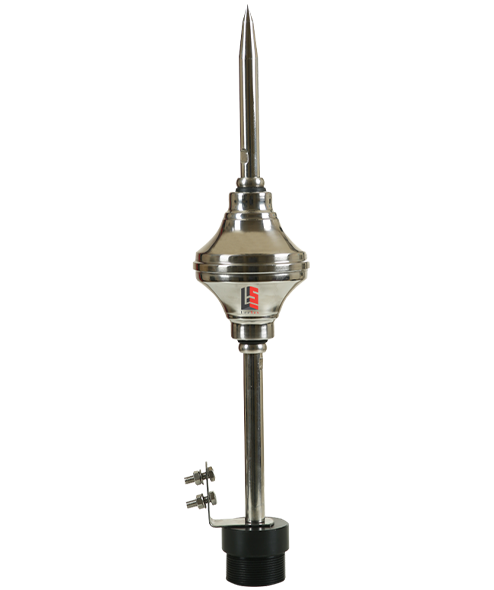
5 Warning Signs Your Lightning Arrester Needs to Be Replaced Right Now
Most building owners install a lightning arrester and forget about it. It sits through scorching summers, heavy monsoons, and cold winters. Years pass. Nobody checks it. Then one lightning strike happens and the damage reveals a silent truth: the arrester stopped working long ago.
A lightning arrester is not a permanent fixture. It is a protective device with a working lifespan. When it ages, corrodes, or gets physically damaged, it loses its ability to divert high-voltage surges away from your building and equipment. The result can be catastrophic electrical damage, fires, equipment failure, and in worst cases, loss of life.
Your arrester will always show signs before it completely fails. You just need to know what to look for.
Sign 1: Visible Physical Damage or Corrosion on the Arrester Body
Take a close look at the lightning arrester on your rooftop or mast. If you notice any of the following, that arrester is no longer reliable:
Cracks or chips in the outer housing
Broken or deformed fins
Green or white oxidation deposits around terminal connections
Corrosion at the down conductor joints or base
The outer casing protects the internal metal oxide varistor elements that do the actual protective work. Once that casing is compromised, moisture, dust, and pollutants enter and destroy the internals. Corroded connections raise electrical resistance and reduce the arrester’s ability to respond when a surge hits. A cracked or corroded arrester is essentially no protection at all.
Sign 2: Your Arrester Is More Than 10 to 15 Years Old
Lightning arresters are built to last, but not forever. The effective operational life of a lightning arrester is between 10 and 15 years under normal conditions.
In India, degradation happens faster because of:
Temperatures peaking above 45 degrees Celsius in many regions
High monsoon humidity for months at a stretch
Salt-laden coastal air in cities like Mumbai
Industrial pollutants in zones like Noida and Pune
Degraded arresters often look completely fine from a distance. This is why age alone is a valid replacement trigger. Check your installation date records. If those records do not exist, treat that as a warning sign in itself and arrange for a professional inspection immediately.
Sign 3: Abnormal Leakage Current During Testing
A healthy lightning arrester has extremely low leakage current. When internal components deteriorate, particularly the metal oxide varistor blocks, leakage current increases beyond safe limits. This kind of failure is invisible to the naked eye. The arrester looks intact from outside while quietly losing its protective capability from within.
Watch out for:
Leakage current readings above the manufacturer’s specified threshold
Inconsistent readings across multiple test cycles
Any reading flagged by your electrical engineer as outside safe range
If your facility operates critical equipment, data servers, manufacturing machinery, or hospital systems, annual testing is not optional. Any reading outside safe limits means the arrester must be replaced before the next monsoon season.
Sign 4: Frequent Equipment Damage or Unexplained Power Surges
If you have been experiencing any of the following, your lightning protection system is not doing its job:
Repeated damage to electronic equipment after storms
Circuit breakers tripping during thunderstorms
Sudden failure of electrical panels
Unexplained voltage fluctuations
A functioning arrester should intercept surge energy before it reaches your internal electrical network. Repeated incidents of equipment burnout indicate the arrester has lost its clamping capacity and is allowing dangerous surge energy to pass through instead of diverting it to the ground.
Do not keep replacing damaged equipment without addressing the root cause. If the arrester has handled multiple significant lightning events, the cumulative energy absorption may have exhausted its protective capacity permanently.
Sign 5: Loose or Degraded Down Conductor and Earth Connection
A lightning arrester functions as a complete system. The arrester on the roof, the down conductor along the building, and the earthing electrode in the ground all work together. If any part of this chain is compromised, the entire system fails.
Check for these issues:
Loose clamps or broken sections in the down conductor
Conductor that has come away from the wall or developed a gap
Visible rust on conductor joints
Earth pit resistance above acceptable limits as per IS 3043
High earth resistance makes your entire lightning protection system ineffective regardless of how good the arrester is. Everything must work together for real protection.
How LES Ecotonik Systems Keeps You Protected
LES Ecotonik Systems is one of India’s most trusted names in lightning protection, surge protection, and earthing solutions with over two decades of experience. As a certified Lightning Arrester Manufacturer, LES Ecotonik System delivers ISO-compliant products meeting IEC 62305 and NF C 17-102 standards.
LES Ecotonik Systems offers ESE lightning arresters, conventional lightning protection systems, surge protective devices, earthing and bonding solutions, and CT PT transformers, all built for India’s demanding climate and long-term reliability. Site assessment, installation guidance, and replacement support are also part of the complete service.
Conclusion
A damaged or degraded lightning arrester creates a false sense of security while offering zero real protection. Physical corrosion, old age, high leakage current, repeated surge damage, and compromised earthing are all clear signals that your system needs immediate attention. Do not wait for the next storm to find out. Act on these warning signs now, choose a certified product from a reliable Lightning Arrester Manufacturer like LES Ecotonik Systems, and ensure your building, your equipment, and the people inside are genuinely protected.