
Published: October 19, 2026 | 8 Min Read
How Can Lightning-Induced Surges Enter Industrial Equipment Through Outdoor Signal Cables?
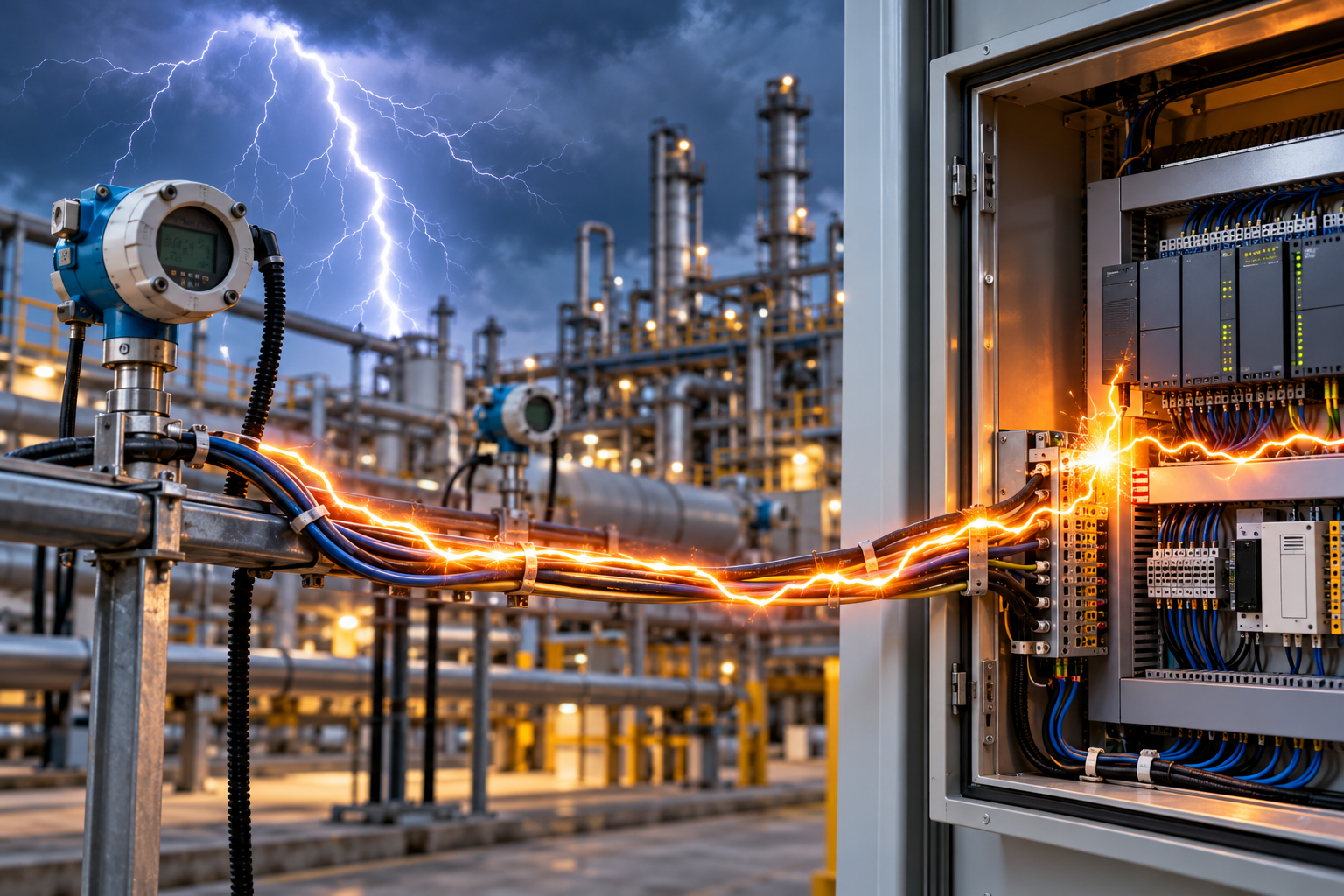
Industrial facilities rely on control systems, instrumentation, communication networks, and monitoring equipment to maintain reliable operations. Many of these systems use cables that connect outdoor instruments, sensors, and field devices to indoor control panels. Although these connections support essential industrial functions, they can also provide paths through which electrical disturbances reach sensitive equipment.
Understanding how lightning-induced surges enter industrial equipment helps engineers identify vulnerable connections and evaluate appropriate protective measures.
LES Ecotonik Systems provides electrical protection solutions, including surge protective devices, earthing and bonding systems, and control and instrumentation protection.
1. Why Outdoor Signal Cables Need Protection
Outdoor signal cables connect field equipment with monitoring and control systems. They may carry measurement signals, communication data, or control information between different parts of an industrial installation.
Examples include:
- Instrumentation cables connecting field sensors to control panels.
- Communication cables linking outdoor equipment with monitoring systems.
- Control cables connecting equipment across different installation areas.
- Signal connections between external devices and indoor electronic systems.
When these cables are exposed to electrical disturbances, connected equipment may experience transient voltages beyond its intended operating conditions.
The actual risk depends on factors such as cable routing, installation exposure, connected equipment, grounding arrangements, and the electrical characteristics of the circuit. Therefore, protection should be evaluated according to the specific installation rather than assuming every outdoor cable has the same level of risk.
2. How Lightning-Induced Surges Can Reach Industrial Equipment
Lightning-related surges can affect connected electrical systems through different mechanisms. Understanding these mechanisms helps engineers identify the relevant protection points.
Conducted Surges
A conducted surge travels through an electrically connected path. Lightning current or associated electrical disturbances can introduce transient overvoltages into connected conductive systems, potentially affecting equipment linked to those paths.
For example, an outdoor instrument connected to a control panel through a signal cable may create an electrical path between the field installation and indoor equipment.
Electromagnetically Induced Surges
Lightning produces rapidly changing electromagnetic fields. These fields can induce transient voltages in nearby conductive loops and cables, depending on their routing, geometry, and exposure.
Long cable runs and exposed installations should therefore be evaluated as part of the overall electrical protection design.
Differences in Electrical Potential
During a lightning event, different parts of an installation may temporarily experience different electrical potentials. If interconnected equipment is not appropriately considered within the grounding and bonding arrangement, these differences can contribute to electrical stress across connected interfaces.
The appropriate mitigation measures depend on the installation design and applicable engineering requirements.
3. Which Parts of an Industrial Installation Should Be Evaluated?
A useful assessment considers the entire connection between the outdoor equipment and the system it serves.
| Installation Area | Potential Concern | What Engineers Should Review |
|---|---|---|
| Outdoor field instruments | Exposure to electrical disturbances | Equipment interfaces and cable routing |
| Long signal cable runs | Induced transient voltages | Cable path, installation environment, and circuit characteristics |
| Building or control-panel entry | Surge transmission into connected equipment | Relevant cable-entry protection points |
| Power and signal interfaces | Multiple conductive paths | Compatibility and coordination of protective devices |
| Grounding and bonding network | Differences in electrical potential | Bonding continuity and grounding arrangement |
| Indoor control equipment | Exposure through connected circuits | Equipment withstand ratings and interface specifications |
This table identifies areas for technical evaluation. It does not establish that every installation requires the same protective devices or configuration.
4. How Surge Protective Devices Help Protect Signal Circuits
Surge protective devices (SPDs) are designed to limit transient overvoltages and divert surge currents according to their design and installation conditions. Selecting the appropriate device requires understanding the circuit being protected.
For signal and instrumentation circuits, engineers should consider the following:
- Signal characteristics: Identify the signal type and relevant electrical operating parameters.
- Equipment compatibility: Confirm that the protective device is suitable for the connected equipment and circuit.
- Installation location: Evaluate where the signal cable enters the building, panel, or protected equipment area.
- Grounding and bonding: Ensure the installation arrangement is compatible with the selected protection system.
- Coordination: Review how the proposed device works with other protection measures in the wider installation.
LES offers surge protection solutions for electrical protection applications. Explore the surge protective devices range to learn more about the product category.
The correct selection should be based on the actual installation requirements and relevant technical documentation.
5. Why Earthing and Bonding Matter
Surge protection should not be considered independently of the grounding and bonding arrangement. These elements form part of the wider electrical protection design.
Earthing establishes an electrical connection to the earth, while bonding connects conductive parts to help manage potential differences within the installation.
For industrial facilities, engineers should review:
- The existing earthing arrangement.
- Connections between relevant conductive components.
- Bonding of applicable equipment and installation parts.
- The grounding requirements of the selected SPDs.
- The relationship between signal protection and the wider lightning protection system.
The objective is to develop a coordinated protection arrangement that considers the installation as a whole rather than relying on a single component.
For related solutions, visit the earthing and grounding systems section of the LES website.
6. Practical Engineering Considerations for Outdoor Cable Protection
Before selecting protective equipment, engineers should collect information about the installation and its connected circuits.
Review the Cable Route
Identify where the cable runs, whether it passes through exposed areas, and where it enters buildings or control panels. Cable routing can influence exposure to electromagnetic disturbances and should be considered during the assessment.
Check Equipment Specifications
Review the operating voltage, signal type, connection arrangement, and relevant equipment withstand specifications. These details help establish the requirements for compatible protection.
Evaluate Existing Protection
Identify existing SPDs, grounding connections, bonding arrangements, and other relevant protection measures. This helps engineers understand the current installation before recommending modifications.
Consider Applicable Standards
The IEC 62305 series addresses lightning protection, while the IEC 61643 series covers surge protective devices and related applications. Engineers should confirm the applicable parts, editions, and project requirements before specifying a system.
Where relevant, the installation must also meet applicable Indian electrical requirements and project specifications.
Prepare Information for a Technical Assessment
When discussing industrial signal cable protection, provide the technical team with relevant information, such as:
- The type of industrial facility.
- The equipment connected to the outdoor signal cable.
- The signal and operating specifications, where available.
- The approximate cable route and installation environment.
- Existing surge protection and grounding arrangements.
- Available electrical drawings or equipment documentation.
This information helps establish the scope of the technical discussion. The final protective arrangement should be determined through an appropriate engineering assessment.
You can also explore the control and instrumentation protection products available through LES.
Frequently Asked Questions
Yes. Lightning-related disturbances can reach connected equipment through conducted electrical paths or electromagnetic induction. The extent of exposure depends on the installation and its protective measures.
Outdoor signal cables can experience induced transient voltages or conduct disturbances through connected circuits. Engineers should assess the cable route, connected equipment, and protection requirements.
Not necessarily. Protective devices must be suitable for the circuit, operating parameters, and connected equipment. The relevant specifications should be checked before selecting a device.
Grounding and bonding form part of the wider protection arrangement. Their design and connections influence how surge currents and electrical potential differences are managed within an installation.
Review the circuit characteristics, connected equipment, installation environment, and applicable technical requirements. Consult a qualified electrical engineer or the protection supplier when the correct device or arrangement is uncertain.
Protect Your Industrial Equipment with LES Lightning
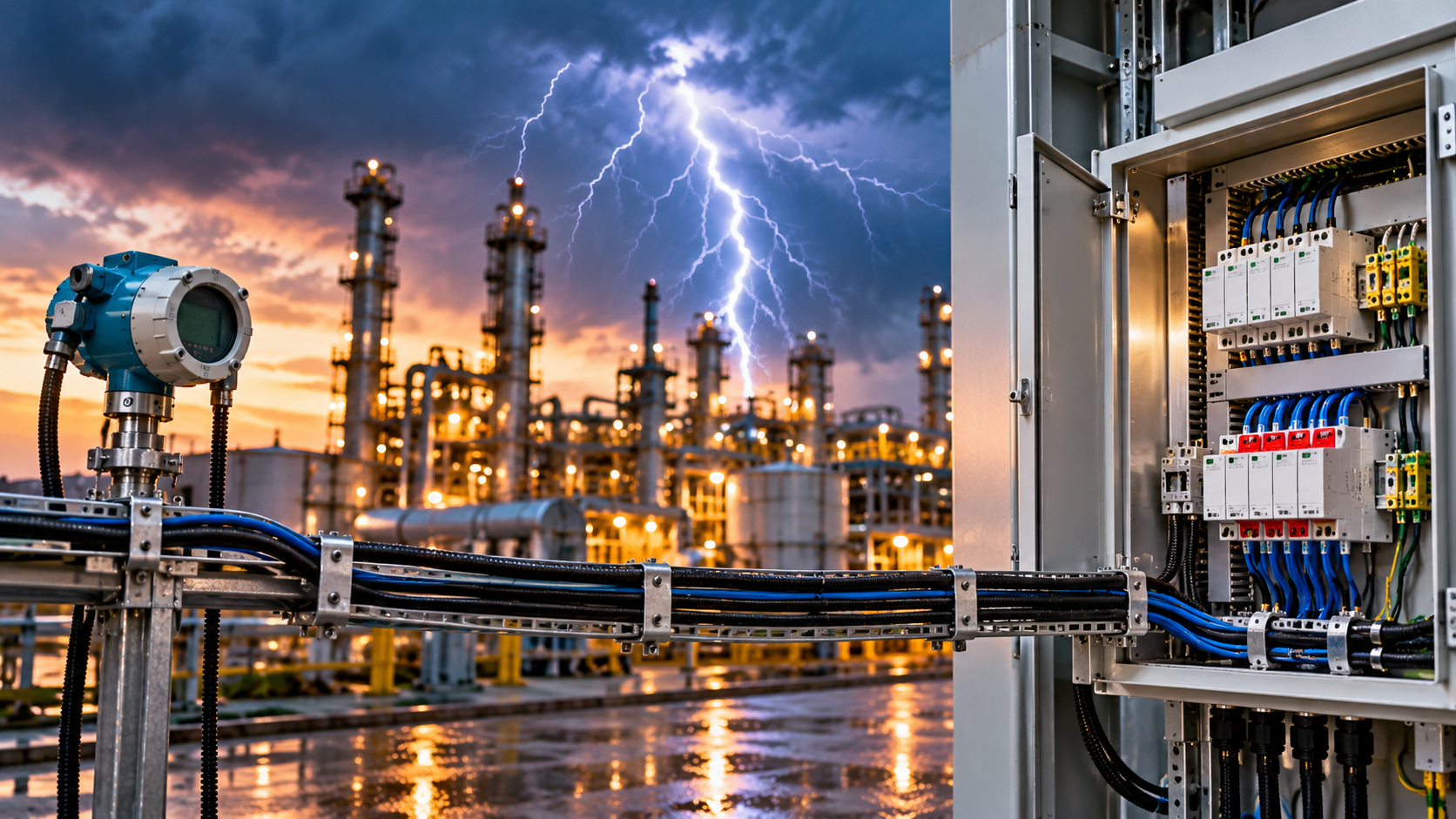
Outdoor signal circuits can create pathways through which lightning-related electrical disturbances affect sensitive industrial equipment. Evaluating cable routes, connected interfaces, surge protection, and grounding arrangements helps engineers identify the measures appropriate for each installation.
LES Ecotonik Systems provides electrical protection products and technical support for industrial and infrastructure requirements.
Discuss Your Outdoor Signal Cable Protection Requirements
Contact LES Ecotonik Systems to discuss your industrial application and the technical information needed to evaluate appropriate electrical protection solutions.
Phone: +91 98869 63195 / +91 63619 84430
Email: info@leslightning.com