
Published: October 12, 2026 | 8 Min Read
What Is Exothermic Welding Used for in Earthing Systems?
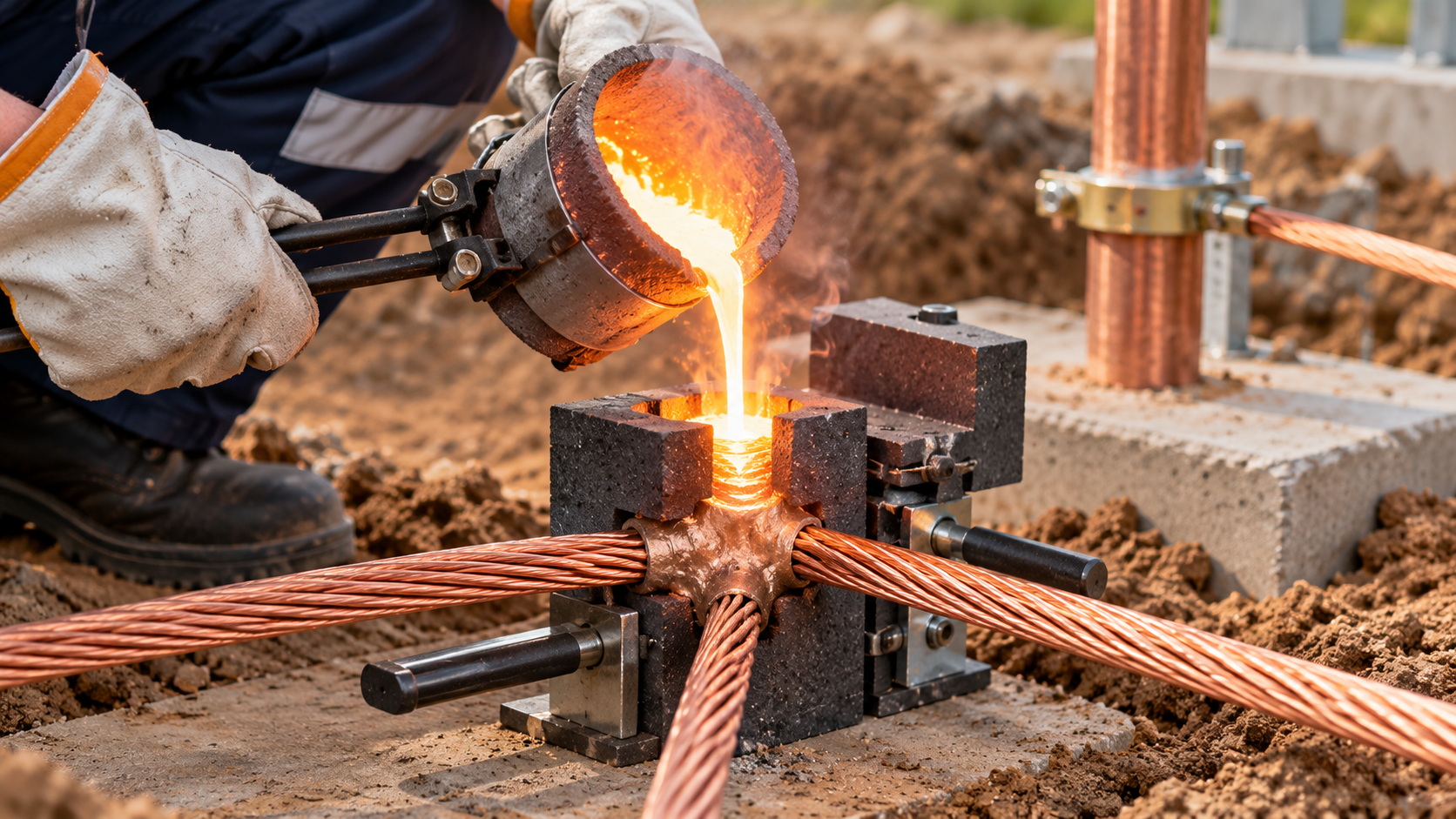
Exothermic welding is a connection method used in electrical earthing and grounding installations. It helps connect conductors and other compatible components within a grounding network. For industrial facilities, infrastructure projects, and electrical installations, selecting an appropriate connection method is an important part of developing a reliable earthing system.
LES Ecotonik Systems provides earthing, bonding and exothermic welding solutions for electrical protection applications.
What Is Exothermic Welding?
Exothermic welding is a process that uses a chemical reaction to produce heat and create a metallurgical connection between compatible conductors or components.
Unlike conventional mechanical connections, the process forms a welded joint. The suitability of this method depends on the conductor materials, connection configuration, installation conditions, and project specifications.
Exothermic welding is used in earthing and grounding applications where electrical connections form part of the overall protection system.
Why Is Exothermic Welding Important in Earthing Systems?
An earthing system connects relevant electrical components to an earth termination network. The integrity of the connections is important because the system must perform its intended function under the conditions for which it was designed.
Exothermic welding can support earthing installations in the following ways:
- Electrical continuity: Creates a conductive connection between compatible components.
- Connection integrity: Forms a welded joint rather than relying solely on a mechanical fastening method.
- Grounding network construction: Can be used to join conductors in suitable earthing arrangements.
- Project suitability: Provides an alternative connection method where the design and installation requirements call for exothermic welding.
The performance of the completed earthing system depends on more than the connection method alone. Correct design, compatible materials, proper installation, and appropriate inspection remain important.
Exothermic Welding vs. Mechanical Connections
Both welded and mechanical connections may be used in electrical installations, depending on the application and project requirements.
| Consideration | Exothermic Welding | Mechanical Connection |
|---|---|---|
| Connection method | Uses a heat-producing chemical reaction to form a welded joint. | Uses components such as clamps, bolts or other mechanical fittings. |
| Joint formation | Creates a metallurgical connection between compatible materials. | Holds conductors or components together mechanically. |
| Installation requirements | Requires compatible materials, the correct welding system and trained installation personnel. | Requires compatible fittings and correct installation or tightening procedures. |
| Selection factors | Conductor materials, connection design and project specifications. | Conductor materials, fitting suitability, accessibility and project specifications. |
The appropriate method should be selected according to the engineering design, applicable requirements, and manufacturer’s instructions. Neither method should be considered suitable for every application without technical evaluation.
Where Is Exothermic Welding Used?
Exothermic welding may be considered for suitable connections within earthing and grounding networks.
Potential applications include:
- Industrial electrical installations.
- Grounding networks in infrastructure projects.
- Earthing arrangements for power-related facilities.
- Electrical protection systems where the design specifies welded connections.
The exact application must be confirmed against the project design and the selected product’s technical documentation.
What Should You Consider Before Selecting an Exothermic Welding System?
Before choosing an exothermic welding solution, project engineers and contractors should review the following requirements.
| Selection Factor | What to Confirm |
|---|---|
| Conductor material | Whether the system is compatible with the conductors being joined. |
| Conductor dimensions | Whether the connection system supports the required conductor sizes. |
| Joint configuration | Whether the product supports the intended connection arrangement. |
| Site conditions | Whether the installation environment and working conditions are suitable. |
| Technical documentation | Whether the manufacturer’s instructions and project specifications are satisfied. |
| Installation capability | Whether qualified personnel and appropriate installation equipment are available. |
These checks help project teams identify a suitable connection method before installation begins.
How Does Exothermic Welding Fit into a Complete Earthing System?
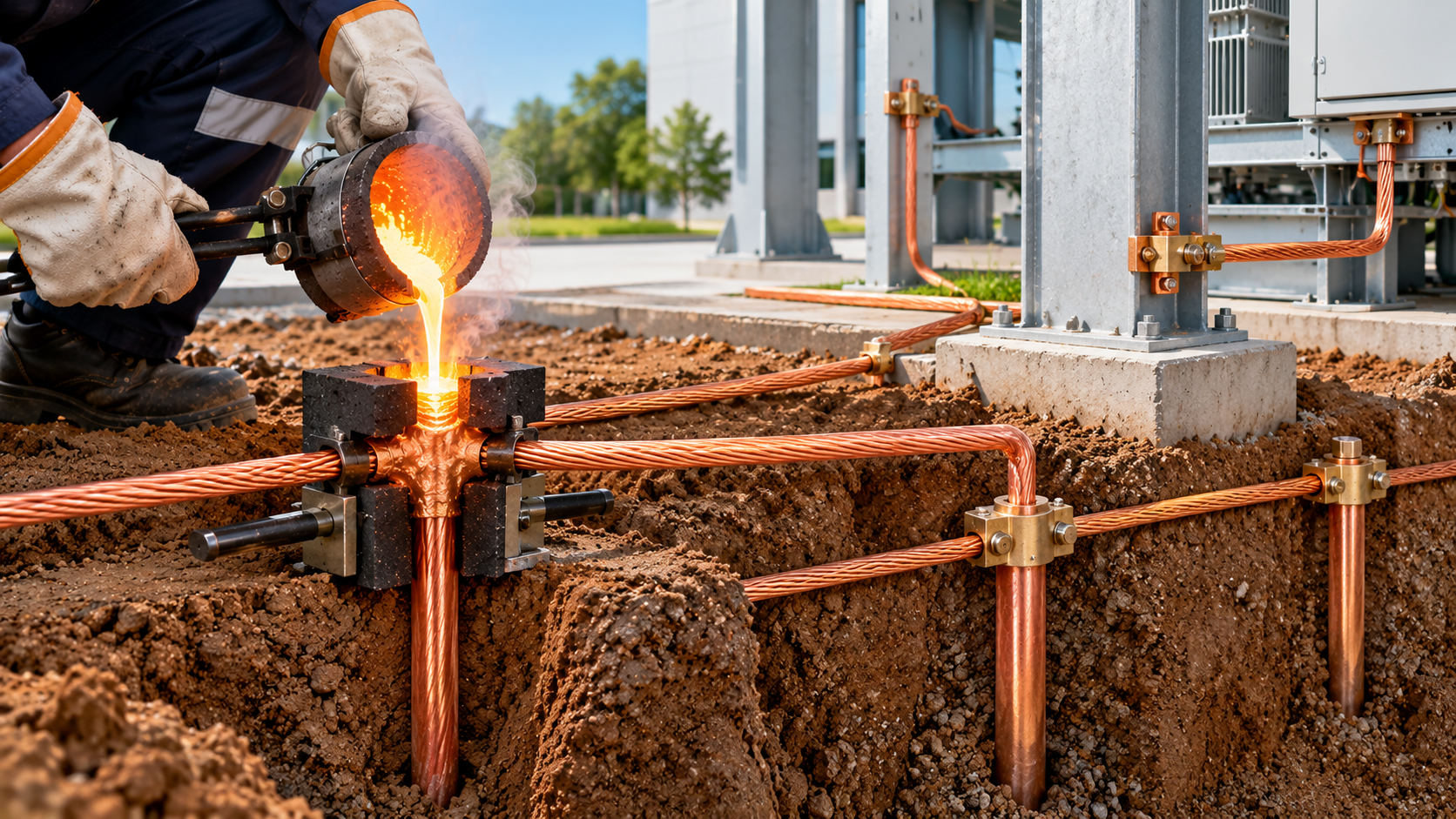
Exothermic welding is one part of an earthing system, not a replacement for the complete grounding design.
An earthing installation may include conductors, earth electrodes, bonding connections, and other components selected according to the electrical installation and its requirements.
When planning an earthing system, engineers should consider:
- The intended grounding arrangement and system design.
- Compatibility between conductors and connection components.
- The relationship between earthing and bonding.
- Applicable project requirements and technical documentation.
- Inspection and testing requirements for the completed installation.
Explore LES Ecotonik Systems’ earthing and bonding solutions and product range to learn more about its electrical protection offerings.
Frequently Asked Questions
Exothermic welding is used to create welded connections between compatible conductors or components in suitable earthing and grounding applications.
No. Exothermic welding forms a metallurgical joint using a heat-producing chemical reaction, while a mechanical connection uses fittings such as clamps or bolts.
Selection depends on conductor material and dimensions, joint configuration, installation conditions, project specifications, and the manufacturer’s instructions.
No. The connection method does not replace inspection of the complete earthing installation. The required inspection and testing should follow the applicable project requirements and technical guidance.
Conclusion
Exothermic welding is a connection method used in suitable earthing and grounding applications. Its role is to form a conductive joint between compatible components within a properly designed electrical protection system.
For the right solution, project teams should evaluate conductor compatibility, connection requirements, installation conditions, and technical specifications before selecting a system.
Planning an Earthing or Grounding Project?
Contact LES Ecotonik Systems to discuss your application and the appropriate electrical protection solutions.
Phone: +91 98869 63195 / +91 63619 84430
Email: info@leslightning.com
Website: https://leslightning.com