
Published: September 21, 2026 | 12 Min Read
Rainy Season Lightning Protection for Residential & Commercial Buildings
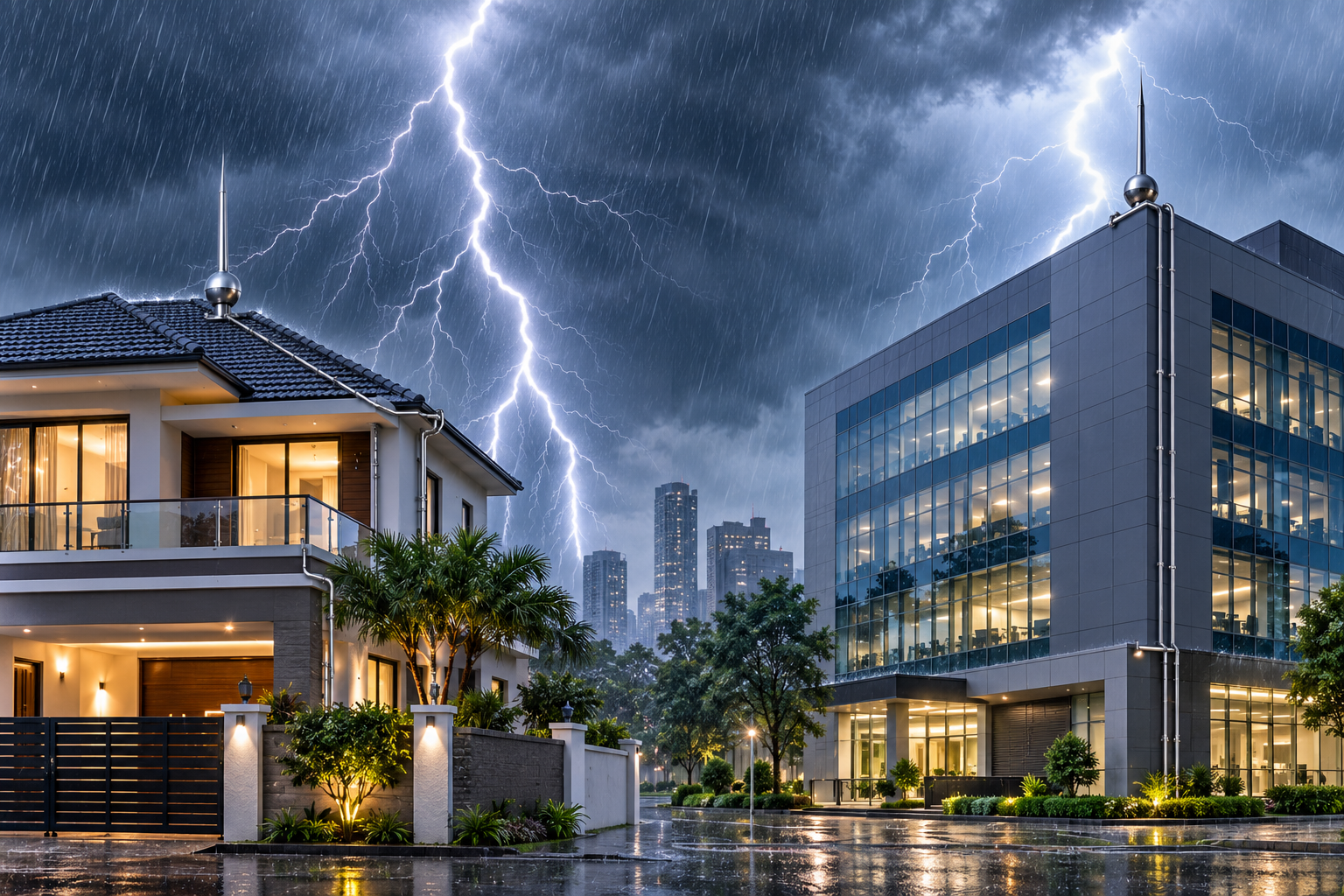
As the rainy season begins, thunderstorms and lightning create serious risks for residential and commercial buildings, homes, and connected electrical equipment. Lightning can affect not only the physical structure itself but also the sensitive electrical and electronic systems connected to it.
According to IEC 62305, lightning flashes directly to or near structures, including connected power lines, can create severe hazards for people, structures, installations, and equipment. This standard also emphasizes that true lightning protection should be selected through a formal risk management process rather than treated as a quick, one-size-fits-all product purchase.
A properly designed protection strategy combines external lightning protection, earthing, bonding, and surge protection to reduce the overall risk associated with lightning and transient overvoltages.
The appropriate lightning protection for residential & commercial buildings depends heavily on the property’s structure, electrical systems, geographic location, assessed risk, and applicable design requirements.
Why Lightning Protection Matters During the Rainy Season
Rain itself does not create a universal level of lightning risk for every property. However, thunderstorms accompanied by lightning create hazardous conditions, prompting the Indian Meteorological Department (IMD) to issue regular public safety advisories. The IMD advises people to remain indoors during lightning activity, avoid open areas, and, when safe to do so, unplug electrical and electronic appliances.
For property owners, seasonal preparation must go beyond simply switching off appliances during a storm. A building’s protection must be considered as a complete, interconnected system.
The basic protection chain is:
Lightning Risk → External Lightning Protection → Down Conductors → Earthing and Bonding → Surge Protection → Electrical & Electronic Equipment
The goal is not to “stop” lightning—no system can prevent lightning from occurring. The purpose of rainy season lightning protection is to reduce risk by providing appropriately designed protection measures and controlled paths for lightning-related currents and surges. IEC 62305 identifies risk management as the foundational basis for selecting adequate protection measures.
Can Lightning Damage Homes & Buildings Without a Direct Strike?
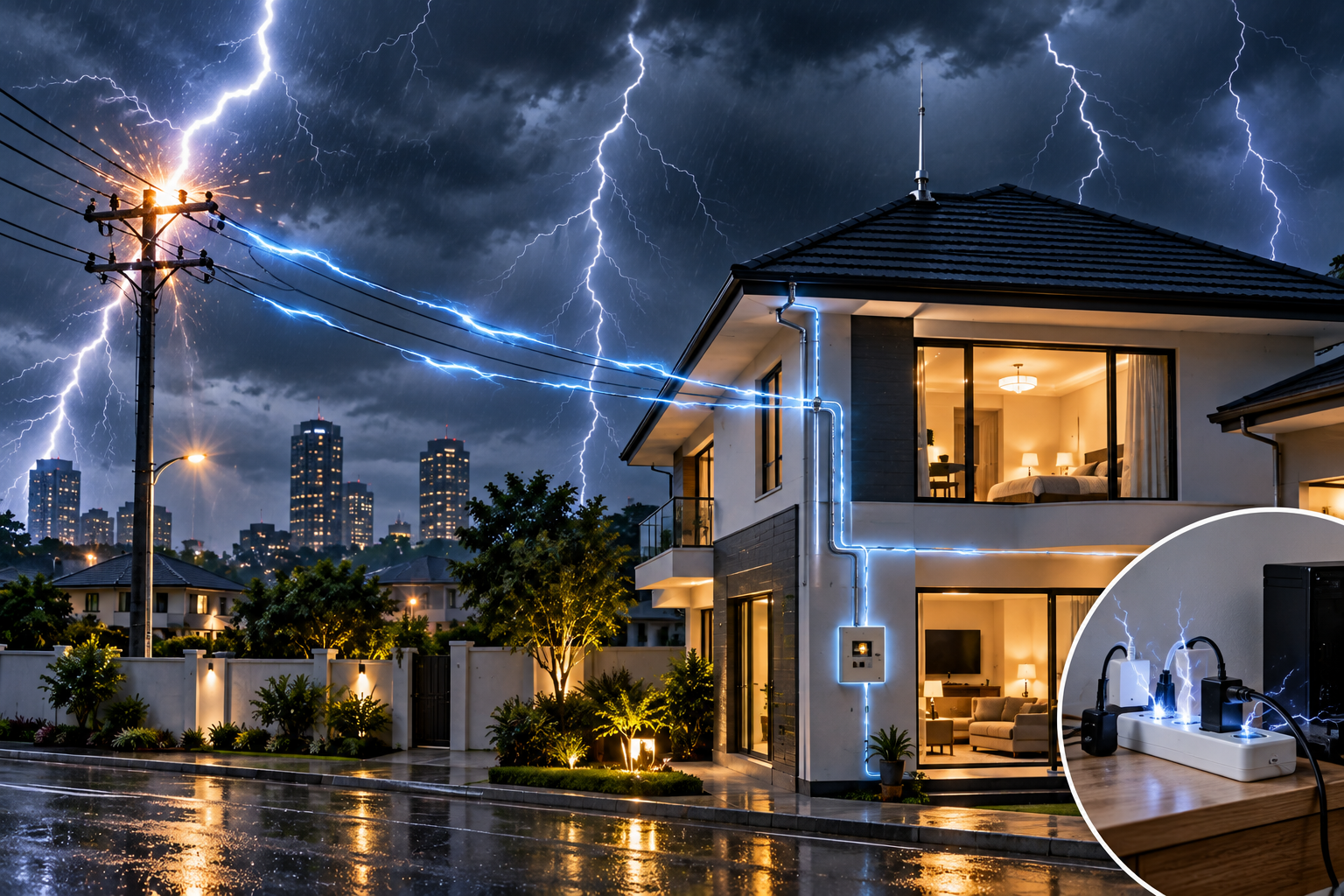
Yes.
A lightning flash can severely affect a structure or connected lines even when the building itself is not the direct strike point. Lightning-related electrical effects can enter through or affect connected power and communication systems, often resulting in massive damage to electrical and electronic installations. IEC 62305 specifically addresses protection against these lightning effects on electrical and electronic systems within structures.
This is why simply installing an external lightning rod is not automatically the same as protecting every electronic device inside a building.
A complete protection strategy may need to consider:
- External lightning protection
- Earthing
- Bonding
- Electrical surge protection
- Data and communication pathways
- Sensitive electronic equipment
- Solar PV systems
- Building-specific electrical architecture
What Can Lightning and Surge Events Damage?
Modern residential and commercial buildings contain more connected electronics than ever before.
Potentially affected equipment can include:
| Residential Applications | Commercial Applications |
|---|---|
| Televisions | Computers and servers |
| Air conditioners | CCTV and access-control systems |
| Refrigerators | Networking equipment |
| Washing machines | Building-management systems |
| Computers & Wi-Fi routers | Fire and security systems |
| CCTV systems | Automation and control equipment |
| Smart-home equipment | HVAC controls |
| Solar inverters | Sensitive office and IT equipment |
The actual protection requirements always depend on the property’s specific electrical design, connected systems, and formal risk assessment.
How Lightning Can Affect Residential & Commercial Buildings
There are several ways lightning-related energy can breach a property.
Direct or Nearby Lightning Effects
Lightning can interact directly with:
- Building structures
- Rooftop equipment
- External conductors
- Power infrastructure
- Communication lines
Electrical Surges
Transient overvoltages can travel rapidly through electrical systems and reach connected equipment. An SPD (Surge Protective Device) is designed to limit surge voltage and divert surge current rather than allowing the transient to reach protected equipment at its full severity. IEC 61643-11:2025 covers low-voltage AC surge protective devices designed to protect against direct and indirect lightning effects and other transient overvoltages.
Induced Effects
Lightning electromagnetic effects can also cause unwanted voltages in electrical and electronic systems without a direct physical connection. IEC 62305-4:2024 specifically covers surge-protection measures for electrical and electronic systems within structures to reduce permanent failures caused by the lightning electromagnetic impulse (LEMP).
What Does a Complete Lightning Protection System Include?
A reliable strategy is usually broader than a single product. It requires four integrated components.
1. External Lightning Protection
External lightning protection is intended to manage the physical effects of lightning on the structure through appropriately designed:
- Air-termination components
- Down conductors
- Earth-termination arrangements
- Connections and bonding
The detailed design depends on the structure, protection requirements, and applicable standards. IEC 62305-3:2024 covers protection against physical damage and life hazards and provides requirements for the design, installation, inspection, and maintenance of lightning protection systems.
2. Earthing & Grounding
Earthing is a critical part of a coordinated lightning and surge protection system. A properly designed earthing system provides an appropriate path for current and supports the operation of surge-protection measures.
For residential and commercial buildings, the required grounding arrangement can vary according to the electrical installation, site conditions, and specific project requirements.
Important Note: A simple statement such as “lower earth resistance always means complete lightning protection” is inaccurate and insufficient. The complete system must be considered, including conductors, connections, bonding, electrode arrangement, and installation quality.
3. Bonding
Bonding helps manage potential differences between conductive parts to prevent dangerous sparking. Depending on the installation, bonding considerations can include structural metalwork, electrical equipment, metallic services, and lightning protection components.
4. Surge Protection Devices (SPDs)
External lightning protection and surge protection for buildings serve related but distinct purposes. An SPD is installed as part of the electrical protection system to limit transient overvoltages and divert surge current away from sensitive equipment. IEC 61643-11:2025 specifies requirements, tests, and ratings for low-voltage AC SPDs.
Lightning Protection vs. Surge Protection
One of the most common misunderstandings is treating lightning protection and surge protection as the exact same thing.
| Lightning Protection | Surge Protection |
|---|---|
| Protects the structure against lightning-related physical effects. | Limits transient overvoltage and diverts surge current. |
| Includes external components such as air terminals and down conductors. | Uses surge protective devices at appropriate electrical locations. |
| Works with an earth-termination system. | Protects connected electrical/electronic equipment. |
| Addresses structural and life-safety protection. | Addresses electrical/electronic system protection. |
IEC 62305 separates physical-damage/life-hazard protection from measures intended to reduce failures of electrical and electronic systems. The two approaches must work together as part of a coordinated protection strategy.
Lightning Protection for Different Property Types
Lightning protection should not be treated as a solution solely for factories or high-rise buildings.
Individual Homes & Villas
Modern homes contain increasingly sensitive electronic systems, including smart TVs, routers, home automation, and solar inverters. Lightning protection for homes depends on the home’s structure, electrical installation, and assessed risk.
Apartments & Residential Buildings
Larger residential lightning protection systems must account for multiple electrical distribution points, rooftop equipment (like elevators and water pumps), common services, fire systems, and shared electrical infrastructure. Protection must be coordinated across the building.
Offices & Commercial Buildings
Commercial building lightning protection must safeguard IT equipment, servers, CCTV, access control, and HVAC controls. The high cost of equipment downtime makes surge protection a mandatory part of the overall electrical protection strategy.
Industrial & Infrastructure Buildings
Industrial sites involve automation, PLCs, control systems, and large electrical installations. The protection strategy here needs rigorous coordination between lightning protection, earthing, bonding, and surge protection.
7 Things to Check Before the Rainy Season
A seasonal inspection can help identify obvious issues before severe weather arrives.
- Check the Existing Lightning Protection System: Look for visible damage, loose connections, corrosion, damaged conductors, or missing components.
- Review the Earthing System: Check whether earthing records are available, earth connections remain intact, and if recent construction work has disturbed buried conductors.
- Inspect Surge Protection Devices: Check SPD status indicators (often turning from green to red if failed), physical damage, and installation condition.
- Review New Electrical Equipment: If the building recently added solar panels, CCTV, servers, or new electrical panels, the lightning and surge protection strategy must be reviewed.
- Check Rooftop Changes: New solar panels, water tanks, HVAC units, or communication antennas can drastically change the protection requirements or physical arrangement of a building.
- Keep Inspection Records: Maintain installation drawings, test reports, equipment details, and maintenance records.
- Schedule a Professional Inspection: Completed lightning protection installations should be professionally inspected and tested, including the condition of conductors, bonds, joints, and earth electrodes.
What Should You Do During an Active Thunderstorm?
Installed protection and personal storm safety are not the same thing. During active lightning conditions, always follow official weather-safety instructions.
The Indian Meteorological Department advises people to:
- Stay indoors and avoid open areas.
- Avoid taking shelter under trees.
- Stay away from objects that conduct electricity.
- Follow local weather alerts.
- Unplug electrical and electronic appliances when it is safe to do so.
Do not treat a lightning protection system as permission to remain outdoors during a thunderstorm.
When Should Residential & Commercial Buildings Get a Lightning Protection Assessment?
A professional assessment is highly recommended when:
- Constructing a new building.
- Installing rooftop solar.
- Adding major electrical equipment or upgrading a commercial building.
- Installing communication equipment.
- Experiencing repeated electrical surge failures.
- Modifying an existing lightning protection system.
- Existing protection documentation is unavailable.
A risk-based assessment is always preferable to selecting products first and determining the design afterward. IEC 62305-2 provides the risk-management framework used to evaluate lightning-related risk and select appropriate protection measures.
How Professionals Provide Lightning Protection Installation
A professional lightning protection installation should follow a structured process rather than simply bolting a lightning arrester to the roof.
- Site Assessment: Review building characteristics, location, roof configuration, existing electrical systems, and connected equipment.
- Protection Assessment: Identify lightning exposure, structural considerations, electrical risks, and existing protection gaps.
- System Design: Develop the appropriate combination of external lightning protection, earthing, bonding, and surge protection.
- Product Selection: Select components according to the project design and applicable standards.
- Installation: Install the protection system strictly according to the approved design.
- Inspection & Testing: Inspect conductors, bonds, joints, earth electrodes, SPDs, and overall system condition.
- Maintenance: A lightning protection system should be inspected periodically and reviewed after any significant building or electrical-system changes.
Common Lightning Protection Mistakes
- Installing a System Without Assessing the Property: A generic product cannot account for every building configuration.
- Assuming an External Lightning System Protects Every Device: Electrical and electronic systems usually require additional surge-protection measures to protect electronics from lightning.
- Ignoring Earthing and Bonding: The external protection system must be coordinated with an appropriate earthing and bonding arrangement to function safely.
- Selecting an SPD by One Number: SPD selection should consider the actual electrical system and applicable requirements rather than one headline rating alone.
- Forgetting About New Building Equipment: Adding solar, CCTV, or communication equipment changes the protection requirements.
- Never Inspecting the System: Lightning protection is an installed safety system that requires routine inspection and maintenance.
Pre-Monsoon Building Lightning Protection Checklist
Use this as a practical checklist for your facility management or maintenance team:
- External lightning protection inspected for physical damage.
- Air-termination components securely fastened.
- Down conductors checked for continuity.
- Connections and bonds inspected for corrosion.
- Earthing system reviewed and tested.
- SPD status indicators checked on electrical panels.
- Rooftop modifications (Solar, HVAC) assessed for protection coverage.
- CCTV/data/communication systems considered for surge protection.
- Previous inspection records located and reviewed.
- Professional inspection scheduled for comprehensive testing.
Frequently Asked Questions
The need for lightning protection should be determined from the property’s characteristics, risk, and applicable requirements. A professional assessment can help determine what protection measures are appropriate for the building based on the IEC 62305 risk management framework.
Yes. Commercial buildings contain people, electrical infrastructure, communication systems, and highly sensitive electronics. Lightning risk should be assessed as a mandatory part of the building’s overall protection planning.
Yes. Lightning flashes near structures and connected lines can create massive hazardous electrical effects. IEC 62305-4 specifically addresses the protection of electrical and electronic systems against lightning electromagnetic effects (LEMP).
Earthing is a foundational part of a coordinated lightning protection system. The complete design must consider external protection, conductors, earth termination, and bonding as applicable to the project.
External lightning protection primarily addresses the structure and provides a lightning-current path to ground. Electrical and electronic systems usually require additional, dedicated surge-protection measures (SPDs) to prevent damage.
No. SPDs and external lightning protection serve entirely different functions. They must form complementary parts of a coordinated protection strategy.
No protection system can guarantee zero damage in every possible lightning event. The objective is to drastically reduce the risk of structural fire, life safety hazards, and equipment failure through an appropriately designed and maintained protection system.