
Published: August 10, 2026 | 8 Min Read
Valve Type vs Metal Oxide (ZnO) Lightning Arresters: Which One Should You Choose in Pune?
If you’re specifying lightning protection for a project in Pune, you’ve likely come across two arrester technologies: valve type (gapped silicon carbide) and metal oxide, or ZnO (gapless). Both exist to do the same job — divert dangerous surge currents safely to ground — but they work differently, and that difference affects protection level, maintenance, and long-term reliability. This guide breaks down how each one works and which suits your project.
Quick Answer Metal oxide (ZnO) arresters are the modern standard for most applications. They respond faster, need no spark gaps, and offer a lower protection level than valve-type arresters. Valve-type arresters use older gapped-SiC technology and are largely being phased out, although some legacy installations still use them. For new industrial, commercial, or residential projects in Pune, ZnO arresters are almost always the better choice.
How Does a Valve Type Lightning Arrester Work?
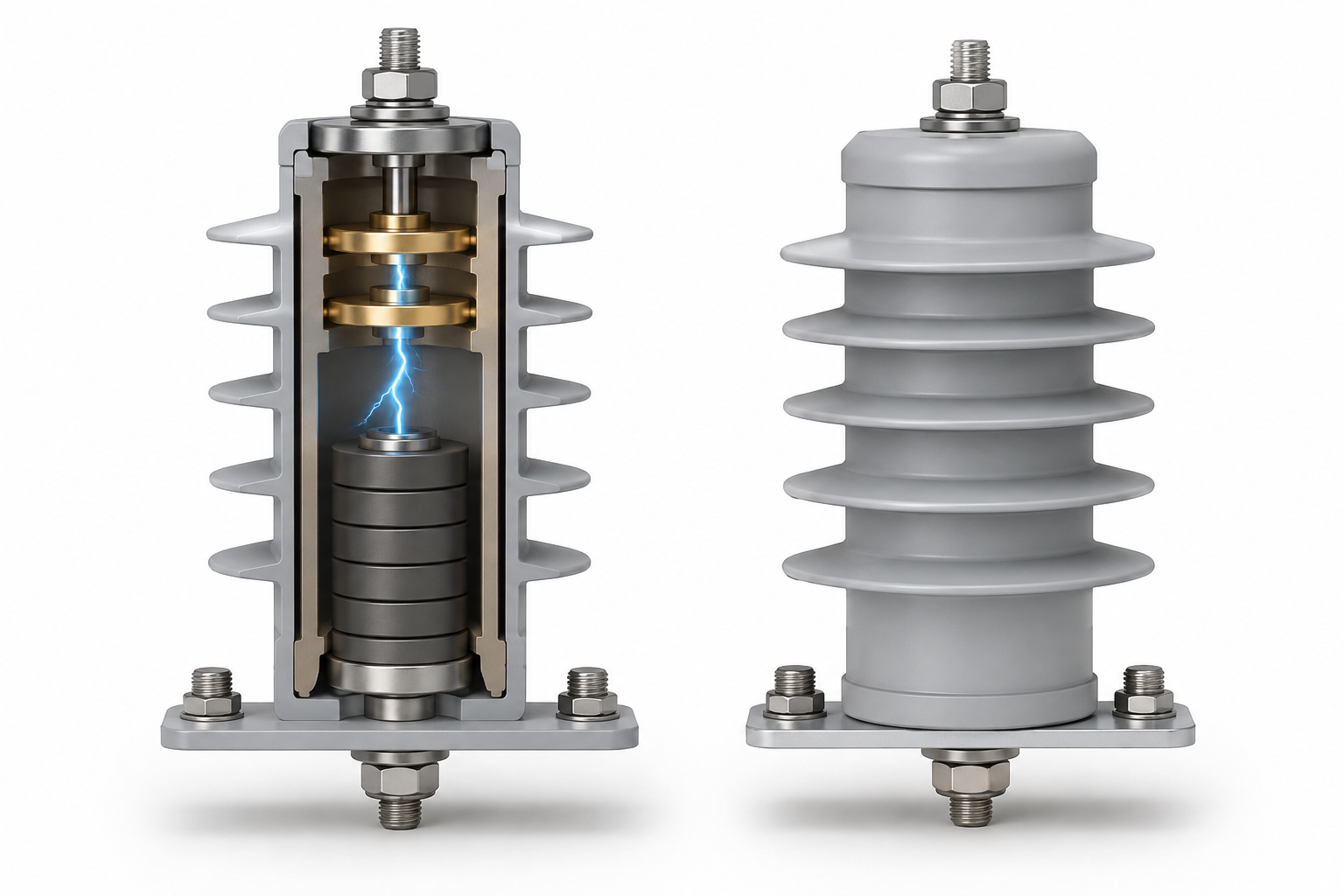
A valve-type arrester uses series spark gaps combined with silicon carbide (SiC) blocks. Under normal operating voltage, the gaps stay open, blocking current flow.When a surge hits, the gaps break down (spark over), allowing the SiC blocks to conduct the surge current to ground. Once the surge passes, the gaps need to interrupt the follow current from the system before returning to their non-conducting state.
This gap-based design was the industry standard for decades, but it comes with inherent limitations: the response isn’t instantaneous, since the gap has to spark over first, and the mechanical gap components are subject to wear over time.
How Does a Metal Oxide (ZnO) Lightning Arrester Work?
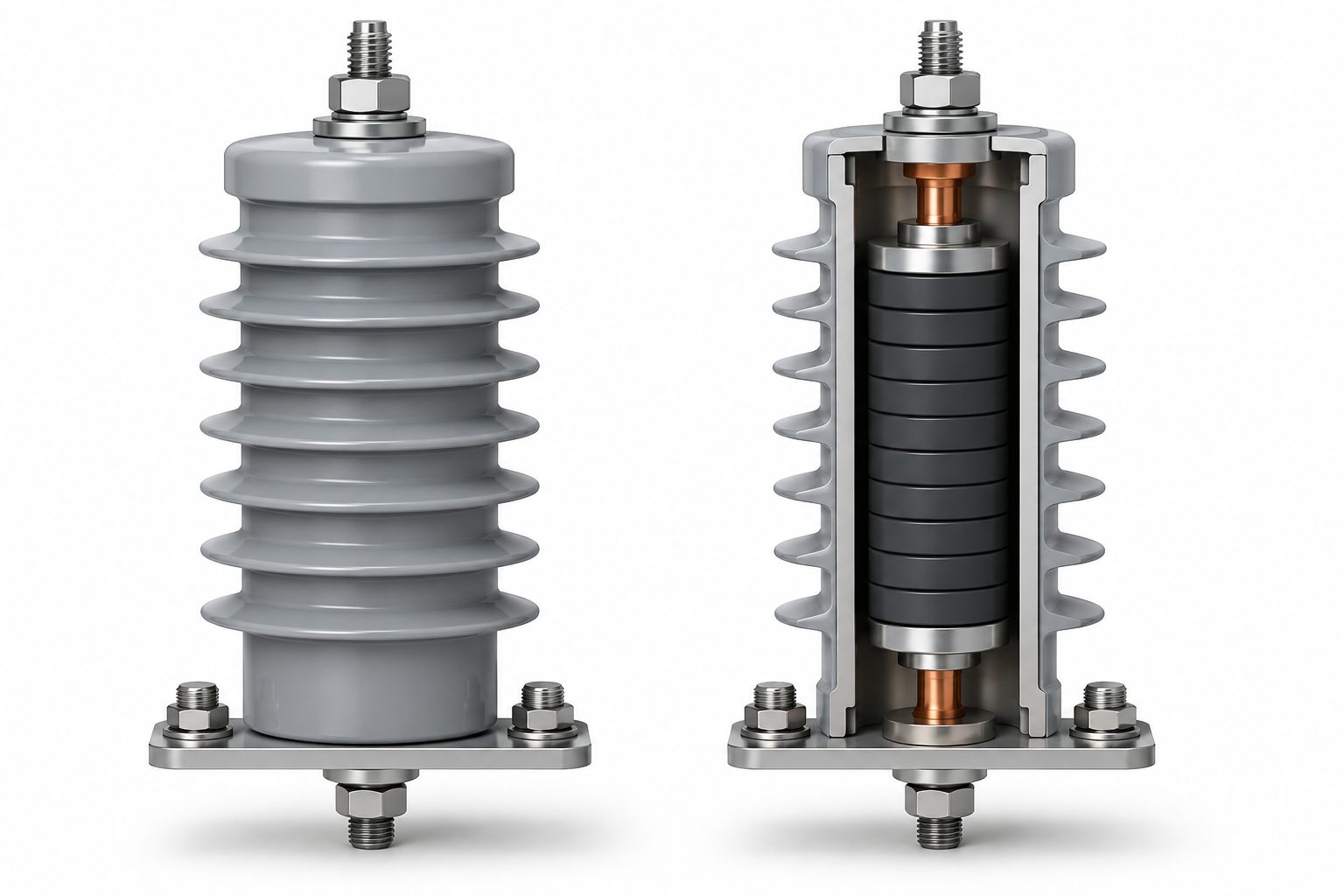
Metal oxide arresters use zinc oxide (ZnO) blocks with highly non-linear resistance, and critically, they don’t need spark gaps at all. At normal system voltage, the ZnO blocks present very high resistance, allowing only a tiny leakage current to pass. The moment voltage rises during a surge, the resistance drops sharply, letting the surge current flow to ground almost instantly.
Why Gapless Design Matters
Without a gap to spark over first, ZnO arresters respond faster and offer a lower protective level, meaning connected equipment sees less voltage stress during a surge event. This is one of the main reasons ZnO has become the preferred technology across most new installations.
Explore LES Ecotonik’s Lightning Arrester Manufacturer solutions in Pune for ZnO-based protection systems designed for industrial and commercial projects.
Valve Type vs ZnO: Key Differences at a Glance
| Factor | Valve Type (Gapped SiC) | Metal Oxide (ZnO, Gapless) |
|---|---|---|
| Response time | Slower — depends on gap spark-over | Faster — near-instant resistance drop |
| Protection level | Higher residual voltage | Lower residual voltage |
| Moving/mechanical parts | Yes (spark gaps) | No |
| Maintenance needs | Higher, due to gap wear | Lower |
| Typical use today | Legacy/older installations | New industrial, commercial, and residential projects |
| Size and footprint | Generally bulkier | More compact |
Which One Should You Choose for Your Pune Project?
For New Industrial and Commercial Installations
ZnO arresters are the clear choice. Faster response, lower protective level, and less maintenance make them better suited to protecting sensitive modern electrical and electronic equipment, which is increasingly the norm in industrial parks and commercial developments across Pune.
For Legacy System Upgrades
If you’re maintaining or upgrading an older installation that currently uses valve-type arresters, it’s worth evaluating whether a switch to ZnO makes sense, especially if the existing gapped units are aging or showing signs of wear. In most cases, upgrading improves protection without requiring a full system redesign.
For Residential and Small Commercial Setups
ZnO arresters are typically preferred here too, mainly due to their compact size and lower maintenance requirements — practical advantages for smaller installations where space and upkeep matter more.
Frequently Asked Questions
Pricing varies by manufacturer and rating, but ZnO arresters are the dominant choice in new installations largely because their lower maintenance needs and better performance offset any difference in upfront cost over the arrester’s lifespan.
Technically yes, but most modern electrical codes and project specifications favor metal oxide arresters due to their superior response time and lower protection level, making valve type an increasingly rare choice for new work.
Valve type arresters typically have a visibly larger housing to accommodate the internal spark gap assembly, while ZnO arresters are more compact. Checking the manufacturer’s nameplate or datasheet is the most reliable way to confirm.
No, that’s the defining feature of metal oxide arresters. The ZnO blocks themselves provide the non-linear resistance needed to block normal voltage and conduct surge current, eliminating the need for a mechanical gap.
Choosing the Right Arrester Technology for Pune
For most new projects in Pune, whether industrial, commercial, or residential, metal oxide (ZnO) arresters offer clear advantages over older valve-type technology: faster response, lower protection level, and less maintenance over the system’s lifetime. Valve-type arresters still exist in legacy installations, but they’re increasingly the exception rather than the standard.
LES Ecotonik System has been manufacturing lightning arresters and protection systems for industrial, commercial, and residential clients, with ISO-certified production and compliance with IEC 62305 standards.
Not sure which arrester technology fits your Pune project? Get in touch with LES Ecotonik System for the right recommendation based on your site and equipment needs.